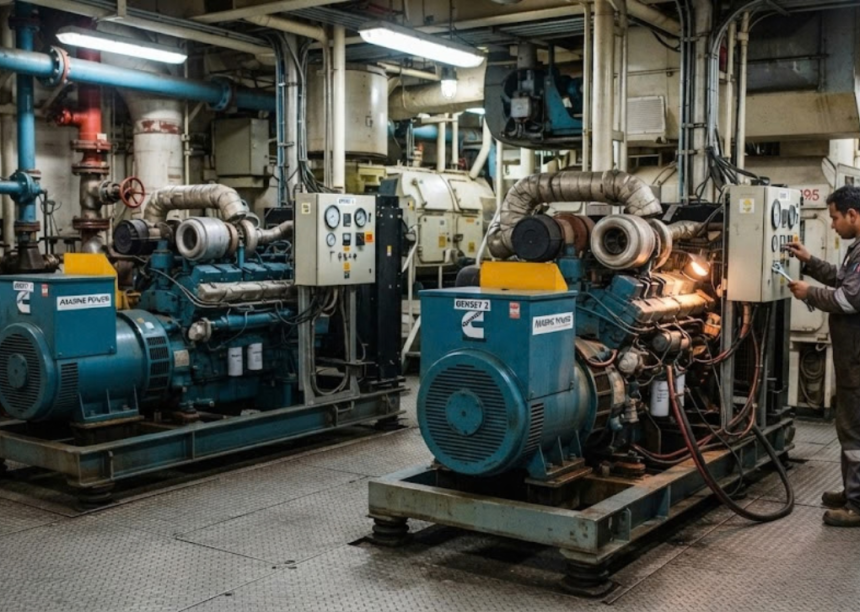
Reliable electricity is essential for safe and efficient vessel operations, and Marinegensets.com is a relevant starting point for anyone researching marine generator solutions. Whether you operate a commercial fishing boat, manage a fleet of offshore vessels, or own a recreational yacht, understanding marine generator technology can help you make better decisions about onboard power generation.
Marine generator sets, commonly called marine gensets, supply electricity to equipment ranging from navigation instruments and communication systems to refrigeration units, lighting, and auxiliary machinery. Unlike conventional land-based generators, marine models must operate in environments characterized by moisture, salt exposure, vibration, restricted installation space, and demanding operating schedules.
This guide explores the marine power generation market, the technical considerations involved in selecting a generator, common maintenance requirements, and the factors buyers should investigate when evaluating specialist websites and equipment suppliers.
It also explains how to assess generator specifications, calculate electrical loads, compare diesel and alternative power systems, and avoid expensive purchasing mistakes.
What Is Marinegensets.com?
Marinegensets.com is a domain associated by name with marine generator sets and onboard power generation. Its exact business ownership, current product catalog, manufacturer relationships, pricing, and service capabilities should be confirmed directly through the website before making purchasing decisions.
For buyers researching marine electrical equipment, a specialist supplier website can serve several important purposes. These include comparing generator specifications, identifying compatible power systems, requesting technical documentation, and contacting equipment specialists.
A comprehensive marine generator resource typically addresses the needs of several audiences, including commercial vessel operators, yacht owners, shipbuilders, marine engineers, and fleet maintenance professionals.
Why Marinegensets.com Is Relevant to Marine Power Research
Marine power generation involves more than purchasing an engine connected to an alternator. Buyers must evaluate electrical output, fuel efficiency, cooling requirements, installation constraints, regulatory considerations, and long-term maintenance expenses.
When evaluating Marinegensets.com, visitors should look for information that supports these decisions rather than relying exclusively on advertised generator capacity or promotional descriptions.
Useful supplier information includes technical data sheets, engine specifications, alternator details, warranty conditions, spare-parts availability, and installation support.
A website that makes these details accessible can help buyers compare equipment more effectively and reduce uncertainty before requesting a quotation.
Understanding Marine Generator Sets and Their Applications
A marine generator set is an integrated power generation system that converts mechanical energy into electrical energy. Most conventional marine gensets combine an internal combustion engine with an alternator, a control system, and supporting components.
The engine produces mechanical power by burning fuel, while the alternator converts that mechanical energy into electricity. Additional systems regulate voltage, control engine speed, manage cooling, and protect the equipment against abnormal operating conditions.
Marine generators are generally designed to support either continuous electrical demand or intermittent auxiliary loads, depending on their rating and intended application.
Essential Components of a Marine Genset
Although configurations vary between manufacturers, a conventional diesel marine generator generally contains the following components:
-
Diesel engine: Supplies the mechanical energy required to drive the alternator.
-
Alternator: Converts rotational mechanical energy into electrical power.
-
Voltage regulator: Maintains electrical output within the specified operating range.
-
Cooling system: Removes excess heat through an appropriate marine cooling arrangement.
-
Fuel system: Delivers filtered fuel to the engine at the required pressure.
-
Control panel: Provides monitoring, operating controls, and protective functions.
-
Exhaust system: Directs combustion gases away from the machinery space.
-
Mounting system: Supports the equipment and helps manage vibration.
The compatibility and quality of these components influence generator reliability, maintenance requirements, and operating performance.
A properly integrated system must also work with the vessel’s electrical distribution network, ventilation arrangement, and operational requirements.
Common Applications of Marine Generators
Marine gensets are used across commercial, industrial, and recreational maritime operations. Their specific responsibilities depend on vessel design, installed equipment, and the availability of alternative power sources.
| Vessel type | Typical generator applications |
|---|---|
| Commercial fishing vessels | Refrigeration, deck machinery, lighting, and electronics |
| Cargo ships | Auxiliary machinery, accommodation loads, and onboard services |
| Luxury yachts | Air conditioning, entertainment systems, and domestic appliances |
| Offshore support vessels | Operational equipment, communications, and auxiliary power |
| Passenger vessels | Lighting, catering equipment, ventilation, and passenger services |
| Research vessels | Scientific instruments, laboratory equipment, and navigation systems |
Some vessels rely on generators as their primary source of electricity when operating away from shore power. Others use them to supplement battery banks, renewable energy systems, or other onboard electrical sources.
The appropriate generator configuration depends on the vessel’s electrical architecture and operating profile.
What Marinegensets.com Actually Offers as a Content Platform
There is an important distinction between the website’s name and its broader editorial purpose. In a public LinkedIn post, MarineGensets describes Marinegensets.com as a developing digital content platform covering technology, business, finance, education, law, home improvement, and lifestyle.
This means readers should not assume that the platform is exclusively a marine equipment store or that it directly sells generators. Its name is closely associated with marine power equipment, but its publicly described editorial scope is considerably wider.
Technology and Digital Developments
Technology content can help readers understand software, emerging digital tools, cybersecurity, artificial intelligence, and the practical implications of technological change.
For businesses operating in industrial sectors, these subjects can be particularly useful when evaluating automation, digital monitoring, predictive maintenance, and connected equipment.
Business and Financial Information
Business and finance articles can provide context for purchasing decisions, operational planning, cost management, and commercial development.
Marine businesses, for example, must consider capital expenditure, financing, insurance, fuel costs, depreciation, and maintenance when investing in equipment.
Education, Law, and Everyday Knowledge
Educational and legal information can help readers develop a broader understanding of technical concepts, professional responsibilities, and regulatory requirements.
Home improvement and lifestyle coverage also extend the platform’s potential audience beyond readers interested in marine engineering.
The most useful approach is to evaluate each article according to its own subject, evidence, publication date, and author credentials.
Marinegensets.com Guide to Different Types of Marine Generators
Marine generator systems are available in several configurations. Each offers different advantages depending on the vessel’s size, operating conditions, fuel infrastructure, and electrical requirements.
1. Marine Diesel Generators
Diesel generators are widely used in commercial shipping, offshore operations, fishing vessels, and larger recreational boats.
Their established technology, availability across a broad range of capacities, and compatibility with conventional marine fuel systems make them a practical option for many applications.
Diesel-powered equipment still requires appropriate ventilation, emissions compliance, fuel filtration, and regular maintenance.
2. Marine Gasoline Generators
Gasoline-powered generators are found in some smaller recreational marine applications. They can offer compact configurations, although their suitability depends on the vessel and installation environment.
Gasoline vapors present a significant fire and explosion hazard. Equipment installed in gasoline-powered vessels must meet applicable ignition-protection, ventilation, and fuel-system requirements.
A general-purpose portable generator should never be treated as an automatic substitute for a properly installed marine generator.
3. Marine Gas and Dual-Fuel Generators
Gas-powered and dual-fuel generators are used in selected commercial maritime applications where the required fuel infrastructure is available.
Dual-fuel systems may operate using natural gas and a pilot fuel or switch between operating modes, depending on their engineering design.
These systems introduce additional requirements involving fuel storage, gas detection, ventilation, crew training, and regulatory approval.
4. Hybrid Marine Power Systems
Hybrid systems combine conventional generators with batteries, power electronics, and energy-management controls.
A battery can support temporary electrical loads, reduce the need for generator operation during periods of low demand, and help manage changes in power consumption.
However, the financial and environmental benefits depend on the vessel’s operating profile, charging strategy, battery capacity, and overall system design.
How to Choose the Right Marine Generator
Choosing the correct generator requires an accurate understanding of the vessel’s electrical needs. Purchasing equipment solely because it offers a high advertised power rating can lead to unnecessary expense and inefficient operation.
The following considerations are particularly important when comparing marine generator specifications.
Calculate the Total Electrical Load
Start by identifying every electrical device that may operate simultaneously. Record its running power, expected operating duration, and starting requirements.
Consider the following illustrative load schedule for a recreational vessel:
| Electrical equipment | Estimated running power |
|---|---|
| Air conditioning | 2,000 W |
| Refrigeration | 400 W |
| Lighting | 300 W |
| Navigation equipment | 250 W |
| Battery charger | 800 W |
| Water pump | 500 W |
| Total | 4,250 W |
The combined running load in this example is 4.25 kW. This figure does not automatically mean that a 4.25 kW generator is sufficient.
Motor starting currents, simultaneous operating conditions, power factor, ambient-temperature derating, and future electrical requirements must also be considered.
A qualified marine electrician or generator supplier should validate the final capacity against the manufacturer’s technical specifications.
Understand kW and kVA Ratings
Two measurements commonly appear on generator specification sheets: kilowatts (kW) and kilovolt-amperes (kVA).
Kilowatts represent real electrical power, while kilovolt-amperes represent apparent power. Their relationship depends on the electrical load’s power factor.
The basic relationship is:
For example, a generator rated at 10 kVA with a rated power factor of 0.8 corresponds to 8 kW of real power.
Buyers should compare both ratings and confirm that the generator can support the vessel’s actual electrical characteristics.
Check Voltage and Frequency
Marine generators are available with different voltage and frequency configurations. Common frequency options include 50 Hz and 60 Hz, while voltage requirements depend on the vessel’s electrical distribution system.
A generator must be compatible with the equipment it supplies. Incorrect voltage or frequency can damage electrical appliances, motors, and control systems.
Evaluate Noise and Vibration
Generator noise can affect passenger comfort, crew working conditions, and the overall onboard experience.
Sound-insulated enclosures, suitable mounting arrangements, and correctly engineered exhaust systems can help manage noise and vibration.
Always compare manufacturer measurements taken under clearly stated operating conditions rather than relying on descriptions such as silent or ultra-quiet.
Marinegensets.com and the Importance of Fuel Efficiency
Fuel efficiency is one of the most important considerations in marine generator ownership. Fuel expenses can become substantial when a vessel operates for extended periods or requires electricity throughout the day.
However, comparing generators solely by their hourly fuel consumption can be misleading. A generator producing more electricity may consume more fuel per hour while still operating more efficiently.
A more useful measure is the amount of fuel consumed per kilowatt-hour of electricity generated.
For example, consider two hypothetical generators operating at comparable loads:
| Performance measure | Generator A | Generator B |
|---|---|---|
| Electrical output | 8 kW | 8 kW |
| Fuel consumption | 2.4 L/hour | 2.0 L/hour |
| Fuel consumption per kWh | 0.30 L | 0.25 L |
In this illustrative comparison, Generator B uses less fuel to produce the same amount of electricity.
Actual performance depends on engine design, operating load, ambient conditions, fuel quality, and maintenance.
For meaningful comparisons, buyers should request manufacturer fuel-consumption curves at several load levels rather than relying on a single advertised figure.
Installation Requirements for Marine Generator Systems
Even a well-designed generator can perform poorly when installed incorrectly. Marine installations must account for restricted machinery spaces, vessel movement, cooling arrangements, electrical protection, and exhaust safety.
Professional installation should follow the equipment manufacturer’s instructions and the applicable vessel standards.
Cooling and Ventilation
Marine generators produce substantial heat during operation. Without adequate cooling, excessive temperatures can damage engine components and cause protective shutdowns.
Depending on the generator design, cooling arrangements may include heat exchangers, raw-water circuits, keel cooling, or other approved systems.
The machinery space must also provide sufficient ventilation for combustion and heat management.
Exhaust and Carbon Monoxide Protection
Generator exhaust contains hazardous combustion products, including carbon monoxide.
An improperly designed exhaust system can allow dangerous gases to enter occupied spaces or accumulate near the vessel.
Exhaust routing, water-injection arrangements where applicable, ventilation, and appropriate carbon monoxide detection should be addressed by qualified marine professionals.
Electrical Integration
The generator must connect safely to the vessel’s electrical distribution system.
This may require appropriate circuit protection, grounding or bonding arrangements, transfer equipment, and controls that prevent unintended interaction between incompatible power sources.
Where shore power and generator power are both available, the installation must use a suitable switching arrangement.
Marine Generator Maintenance: Preventing Costly Failures
Preventive maintenance helps protect the generator against premature wear, unexpected shutdowns, and declining performance.
Maintenance intervals vary by manufacturer, engine model, operating conditions, and accumulated running hours. The manufacturer’s service manual should always take precedence over generalized schedules.
Essential Maintenance Activities
A practical maintenance program generally includes:
-
Checking engine oil and coolant levels.
-
Inspecting fuel filters and fuel-system connections.
-
Monitoring cooling-system performance.
-
Checking belts, hoses, and mounting hardware.
-
Inspecting electrical connections for corrosion or damage.
-
Recording operating hours and scheduled servicing.
-
Testing protective alarms and shutdown functions according to approved procedures.
Operators should also monitor unusual vibration, unexpected temperature changes, abnormal exhaust conditions, and variations in electrical output.
These symptoms can indicate developing problems that require professional investigation.
Why Maintenance Records Matter
A detailed maintenance log provides a history of the generator’s condition and servicing.
For commercial operators, this information can support maintenance planning, equipment inspections, warranty discussions, and future purchasing decisions.
It also makes it easier to identify recurring problems rather than repeatedly treating individual symptoms.
How to Evaluate Marinegensets.com for Reliability and Trustworthiness
When using Marinegensets.com as an information resource, readers should assess the quality of individual articles rather than assuming that every published statement has been independently verified.
This is especially important for technical, financial, and legal subjects, where outdated or inaccurate information can have practical consequences.
Check Author Expertise and Sources
Look for clear author information, relevant professional qualifications, publication dates, and references to authoritative sources.
For marine engineering topics, useful references may include equipment manufacturers, classification societies, technical manuals, and the International Maritime Organization (IMO).
For financial or legal topics, official regulatory publications and appropriately qualified professionals provide more dependable foundations than unsupported general advice.
Distinguish Editorial Content From Commercial Recommendations
An informational article and a commercial product recommendation serve different purposes.
Readers should establish whether a website directly sells the products it discusses, receives affiliate commissions, publishes sponsored material, or simply provides educational content.
For Marinegensets.com, any current commercial partnerships, product availability, or supplier relationships should be verified through its official disclosures.
Verify Information Before Making Major Decisions
Technical specifications, prices, regulatory requirements, and product availability can change.
Before purchasing marine equipment, confirm the relevant information with the manufacturer or an authorized supplier. For vessel modifications, consult a qualified marine engineer and check applicable flag-state and classification requirements.
Marinegensets.com and Emerging Trends in Marine Power Technology
Marine power generation continues to evolve as vessel operators seek greater operational flexibility, improved energy management, and compliance with applicable environmental requirements.
Several technologies are influencing the development of modern onboard electrical systems.
Smart Generator Monitoring
Modern control systems can collect operating information such as engine temperature, oil pressure, electrical output, running hours, and alarm conditions.
When properly configured, remote monitoring can help maintenance teams identify abnormal operating trends and plan inspections.
Connected monitoring systems also introduce cybersecurity considerations, particularly when they interact with vessel networks or allow remote control.
Battery-Assisted Power Generation
Battery energy storage can complement conventional generators by supplying electricity during selected operating periods.
Depending on the system design, batteries may reduce unnecessary generator running time and help manage short-duration changes in electrical demand.
The benefits must be evaluated against battery cost, weight, installation requirements, thermal management, and expected service life.
Emissions and Environmental Compliance
Environmental requirements are an increasingly important consideration in marine equipment procurement.
Applicable requirements may involve nitrogen oxides, sulfur oxides, greenhouse-gas emissions, fuel characteristics, and vessel-specific operating restrictions.
Compliance depends on factors such as the vessel’s classification, engine specifications, installation date, operating region, and relevant regulations. Buyers should verify these requirements with the appropriate authorities and technical specialists.
Frequently Asked Questions About Marinegensets.com
1. What is Marinegensets.com, and what information does it provide?
Marinegensets.com is a digital content platform whose publicly described editorial interests include technology, business, finance, education, law, home improvement, and lifestyle.
Its name is also relevant to searches about marine generator sets, although readers should distinguish its broader editorial identity from specialist marine equipment suppliers. Before relying on a particular article, check its sources, author information, and publication date.
2. Does Marinegensets.com sell marine diesel generators?
Its publicly described identity does not establish that it operates as a direct marine generator retailer. A verified product catalog, current inventory, authorized dealership status, and purchasing terms would be needed to establish its commercial role.
Anyone intending to purchase equipment should confirm the seller’s legal business details, manufacturer authorization, warranty arrangements, and after-sales support before making a payment.
3. What size marine generator is suitable for a boat?
The appropriate generator size depends on the vessel’s simultaneous electrical loads, starting currents, voltage, frequency, and intended operating conditions.
For example, a vessel with a combined running demand of 4 kW may require additional capacity to accommodate motor starting and other operating considerations. A proper load calculation and manufacturer specification review are necessary before selecting a generator.
4. How long does a marine diesel generator last?
A marine generator’s service life depends on its design, duty cycle, operating environment, maintenance history, and the quality of its installation.
Well-maintained equipment can operate for many thousands of hours, but there is no universally applicable lifespan. Buyers evaluating used generators should review service records, running hours, operating condition, and any available inspection results.
5. How can readers use Marinegensets.com effectively?
Start by identifying the subject you want to research and selecting articles that address your specific question.
For technical topics, compare the information with manufacturer documentation and recognized industry references. For purchasing decisions, request current quotations and specifications directly from verified suppliers rather than relying exclusively on general online articles.
Conclusion: Making Better Use of Marinegensets.com
Marinegensets.com is best understood through its publicly described role as a digital content platform with interests spanning technology, business, finance, education, and other practical subjects. Its name also provides a natural connection to marine generator research, where reliable technical information is essential for making informed equipment decisions.
For anyone researching onboard power systems, the most important considerations include electrical capacity, fuel efficiency, installation requirements, maintenance, safety, and regulatory compliance. Understanding these factors makes it easier to compare generators and recognize the difference between useful technical information and unsupported promotional claims.
Visit
to explore its available content, check the publication dates and sources of relevant articles, and verify any technical or commercial claims before acting on them. When purchasing or installing marine equipment, use manufacturer documentation and qualified professional advice to support your final decision.