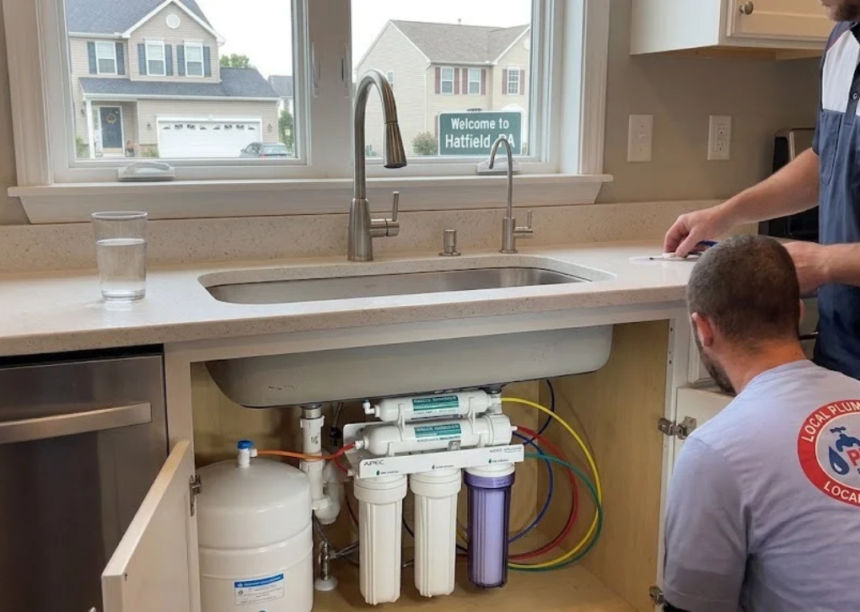
Finding the right reverse osmosis filter in Hatfield, PA, can make a noticeable difference in the taste, quality, and consistency of your household drinking water. Whether you’re concerned about PFAS chemicals, lead from older plumbing, unpleasant chlorine flavors, or dissolved minerals, choosing the right filtration system starts with understanding what is actually in your water.
Not every Hatfield household needs an expensive purification system. Some homes can address their concerns with a certified carbon filter, while others benefit from the broader contaminant reduction offered by Reverse+osmosis+filter+hatfield+pa
This guide explains how reverse osmosis works, what local water quality reports reveal, how much installation typically costs, and what homeowners should check before purchasing a system. You’ll also learn how to distinguish genuine filtration certifications from marketing claims that sound impressive but reveal little about actual performance.
Why Consider a Reverse Osmosis Filter in Hatfield, PA?
Clean drinking water is an everyday necessity, but household water quality involves more than whether tap water looks clear. The source of the water, treatment methods, distribution infrastructure, and plumbing inside the property can all influence what eventually reaches your glass.
A reverse osmosis filter in Hatfield, PA, provides an additional treatment step at the point where drinking water is used. Most residential systems are installed beneath the kitchen sink, producing filtered water for drinking, cooking, and filling reusable bottles.
Homeowners commonly investigate RO filtration for several reasons:
- Contaminant reduction: Certified systems can reduce specific substances such as lead, arsenic, nitrates, and certain PFAS chemicals.
- Improved taste: Carbon prefilters and postfilters can reduce chlorine-related flavors and odors.
- Lower dissolved mineral content: RO membranes remove many dissolved salts and minerals.
- Convenience: A dedicated drinking-water faucet reduces dependence on bottled water.
- Greater control: Homeowners can select and maintain a treatment system based on their individual water quality concerns.
One important distinction deserves attention: installing an RO system does not automatically mean the original water supply was unsafe. It may simply provide an additional level of treatment or improve the drinking experience.
Understanding Water Quality in Hatfield, Pennsylvania
Before purchasing a reverse osmosis filter in Hatfield, PA, identify your property’s water supplier and review its current drinking water quality information.
Hatfield is located in Montgomery County, where homes may have different water supply arrangements depending on their exact location.
North Penn Water Authority and Local Drinking Water
The North Penn Water Authority (NPWA) is an important public drinking water provider in the North Penn region. Hatfield Township’s official resident resources identify NPWA as a drinking water utility serving the area.
According to NPWA, its water sources can include wells and treated surface water from the Forest Park Water Treatment Plant in Chalfont. The plant treats water originating from the North Branch Neshaminy Creek and Lake Galena system using processes that include ozone disinfection and membrane filtration.
NPWA released its 2026 Annual Drinking Water Quality Report on May 26, 2026, reporting that the water supplied to its customers met or exceeded applicable primary state and federal drinking water standards. The report provides an important starting point for customers evaluating the need for additional home filtration.
Residents can review the latest information through the North Penn Water Authority water quality reports.
Remember that utility monitoring results describe the public water system, not every individual faucet. Plumbing materials, household treatment devices, and building-specific conditions can affect water quality after it enters a property.
Hatfield Township Municipal Authority Is Different
Another local organization, the Hatfield Township Municipal Authority (HTMA), primarily handles wastewater collection and treatment. Its responsibilities should not be confused with the drinking-water supply services provided by NPWA.
If you are unsure who supplies your property, check your water bill or ask your municipality. A Hatfield mailing address alone is not enough to establish the drinking-water source.
What About Private Wells?
Some properties depend on private wells rather than a public utility. Pennsylvania generally does not regulate private homeowner wells in the same way it regulates public drinking water systems.
The Pennsylvania Department of Environmental Protection recommends annual private-well testing for total coliform bacteria, nitrates, total dissolved solids (TDS), and pH. Additional testing may be necessary based on nearby land uses, previous test results, flooding, or other potential contamination sources.
A reverse osmosis filter for a Hatfield, PA, property using well water should be selected only after suitable laboratory testing. Otherwise, homeowners risk spending money on a treatment system that does not address their actual water problems.
What Contaminants Can Reverse Osmosis Remove?
The biggest advantage of a reverse osmosis filter in Hatfield, PA, is its ability to reduce a broad range of dissolved substances through a semipermeable membrane.
However, the effectiveness of an individual unit depends on its design, membrane condition, operating pressure, maintenance, and tested contaminant-reduction claims.
| Water quality concern | How reverse osmosis can help |
|---|---|
| Lead | Certified systems with an appropriate lead-reduction claim can substantially reduce lead at the drinking-water tap. |
| PFAS chemicals | RO can reduce certain PFAS, including PFOA and PFOS, when the system has verified performance claims. |
| Arsenic | Certain certified systems reduce arsenic, although performance depends on its chemical form and water conditions. |
| Nitrates and nitrites | Suitable RO membranes can reduce these dissolved contaminants. |
| Fluoride | Reverse osmosis can substantially reduce fluoride levels. |
| Dissolved salts | RO generally lowers total dissolved solids, including many mineral salts. |
| Chlorine taste and odor | Carbon filtration stages commonly improve taste and odor. |
| Bacteria and viruses | RO membranes can provide a physical barrier, but microbiologically unsafe water may require dedicated disinfection and verified treatment. |
The Centers for Disease Control and Prevention explains that RO can remove various microorganisms and reduce numerous chemical contaminants. It also advises consumers to check each system’s labeling for specific treatment capabilities.
PFAS and Drinking Water in Pennsylvania
PFAS, often called forever chemicals, are a large group of manufactured substances associated with industrial processes and many consumer products.
Pennsylvania established maximum contaminant levels of 14 parts per trillion for PFOA and 18 parts per trillion for PFOS in 2023. The federal Environmental Protection Agency subsequently established limits of 4 parts per trillion for each substance in its 2024 drinking water regulation.
As of October 2026, EPA has proposed changes affecting the implementation deadlines and other elements of the federal PFAS rules. These proposals should not be mistaken for proof that Hatfield’s drinking water exceeds a safety standard.
For residents specifically concerned about PFAS, a reverse osmosis filter in Hatfield, PA, may be a reasonable additional treatment option. Choose a model independently certified for the relevant PFAS reduction claims rather than assuming every RO system performs equally.
Current regulatory information is available from the EPA’s PFAS drinking water program.
How Does a Reverse Osmosis Water Filter Work?
A household RO system uses pressure to move water through a membrane that separates much of the dissolved material from the treated water. The process produces two streams: purified water for consumption and concentrated reject water that flows to a drain.
A typical under-sink reverse osmosis filter in Hatfield, PA, includes several filtration stages working together.
Stage 1: Sediment Prefiltration
Water first passes through a sediment filter designed to capture particles such as dirt, rust, and suspended debris. This protects downstream filters and helps prevent premature membrane fouling.
Stage 2: Activated Carbon Filtration
The next stage commonly uses activated carbon to reduce chlorine, certain organic substances, and unpleasant tastes or odors. Chlorine removal is particularly important because exposure to chlorine can damage some commonly used RO membranes.
Stage 3: Reverse Osmosis Membrane
The RO membrane performs the principal dissolved-contaminant separation. Water molecules pass through the membrane while many dissolved salts and other contaminants are retained in the concentrate stream.
Stage 4: Storage or Direct-Flow Delivery
Traditional systems store treated water in a pressurized tank so it is available when the faucet opens. Tankless models use a different delivery arrangement, often involving an electric pump and higher rated production capacity.
Stage 5: Final Carbon Polishing
Many systems pass treated water through a final carbon filter before it reaches the faucet. This stage is designed primarily to improve drinking-water taste after storage or processing.
Some systems also include remineralization cartridges that add selected minerals back into the treated water. These cartridges are generally about taste and water chemistry rather than adding a necessary health benefit for people with balanced diets.
Choosing the Best Reverse Osmosis Filter in Hatfield, PA
Choosing a water purification system requires more than comparing the number of filtration stages printed on the box. The most useful specifications concern proven contaminant reduction, water efficiency, reliability, and ongoing maintenance.
Look for NSF/ANSI 58 Certification
The NSF/ANSI 58 standard covers requirements for reverse osmosis drinking water treatment systems, including material safety, structural integrity, TDS reduction, and performance information.
Not every system certified under this standard has been independently verified to reduce every possible contaminant. Specific claims, such as lead, arsenic, or nitrate reduction, must be checked separately.
Before buying a reverse osmosis filter for Hatfield, PA, verify the exact model in a recognized certification body’s product directory. Look for the manufacturer, model number, applicable standard, and contaminant-reduction claims.
You can learn more from NSF’s explanation of NSF/ANSI 58.
Compare Tank and Tankless Systems
Two common RO system configurations serve different household needs.
| Feature | Tank-based RO | Tankless RO |
|---|---|---|
| Water storage | Uses a pressure tank | Usually produces water on demand |
| Space requirements | Tank occupies cabinet space | Often more compact |
| Electricity | Many models operate without electricity | Many models require electricity |
| Flow experience | Depends on stored water and tank pressure | Depends on pump and membrane capacity |
| Maintenance | Includes tank and filter inspection | Includes filters, pump, and electronic components |
| Ideal application | Conventional residential kitchens | Homes prioritizing compact equipment or higher dispensing capacity |
A tankless reverse osmosis filter in Hatfield, PA, may appeal to homeowners with limited cabinet space. However, tankless technology is not automatically superior in contaminant reduction, and electricity requirements should be considered.
Check Capacity and Water Pressure
Manufacturers often describe RO production capacity in gallons per day (GPD). A 50-GPD or 75-GPD system may be suitable for many households, but published production figures commonly reflect controlled testing conditions.
Real-world production depends on incoming water pressure, temperature, membrane condition, and water chemistry. A unit advertised at 100 GPD should not be assumed to dispense that amount under every household condition.
Check the manufacturer’s minimum operating pressure before installation. Properties with insufficient pressure may require a compatible booster pump.
Reverse Osmosis Filter Hatfield PA: Installation and Equipment Costs
Cost is a major consideration when homeowners compare drinking-water filtration options. The total investment includes the equipment, professional installation when required, replacement cartridges, and possible plumbing modifications.
According to HomeGuide’s published national pricing research, a typical under-sink RO system costs approximately $300 to $950 installed, depending on configuration. These are broad U.S. estimates rather than verified Hatfield contractor quotations.
Estimated Residential RO Costs
| Expense | General planning estimate |
|---|---|
| Basic RO equipment | $150–$350 |
| Advanced or tankless equipment | $300–$600+ |
| Typical under-sink system installed | $300–$950 |
| Individual replacement filters | $20–$100, depending on model |
| Additional plumbing work | Quoted separately |
These figures are approximate national market ranges based on published cost research. Actual Hatfield prices, especially for premium equipment or complicated installations, may differ.
A reverse osmosis filter in Hatfield, PA, becomes more affordable over time when replacement parts are readily available and the system does not rely on unusually expensive proprietary cartridges.
The Five-Year Ownership Cost Matters More
Imagine purchasing an RO system for $400 and paying $200 for installation. If maintenance averages $100 annually, the five-year equipment, installation, and routine-filter cost would be approximately $1,100 before membrane replacement, additional repairs, water, or electricity.
This is an illustrative budgeting calculation, not a fixed market quote. A system with a low upfront price can become more expensive when replacement cartridges are proprietary or frequently required.
When comparing a reverse osmosis filter for Hatfield, PA, ask the seller for the complete replacement schedule and current cartridge prices. This gives you a more realistic ownership estimate than the purchase price alone.
Is Reverse Osmosis Better Than Carbon Filtration or a Water Softener?
Not every water quality problem calls for the same treatment technology. A targeted filtration method may be less expensive and more efficient than installing RO unnecessarily.
| Treatment type | Main purpose | Best suited for |
|---|---|---|
| Activated carbon | Reduces certain chemicals, chlorine, tastes, and odors | Taste improvement and specific certified contaminant reduction |
| Reverse osmosis | Reduces many dissolved contaminants | Drinking and cooking water requiring broader treatment |
| Water softener | Removes hardness minerals through ion exchange | Scale prevention and soap performance |
| UV disinfection | Inactivates certain microorganisms | Microbial treatment when appropriately designed |
| Sediment filtration | Removes suspended particles | Rust, dirt, and particulate problems |
A water softener and a reverse osmosis system are not interchangeable. A softener primarily treats calcium and magnesium throughout the home, while a typical RO system produces a smaller amount of treated drinking water.
For example, a homeowner dealing with mineral scale on showerheads should investigate hardness treatment rather than assuming a kitchen RO filter will solve the problem. A household concerned about dissolved nitrates in drinking water may have a stronger reason to consider certified reverse osmosis treatment.
How to Install a Reverse Osmosis Filter in Hatfield, PA
Professional installation helps ensure the system is connected correctly, drains properly, and does not create unnecessary leakage risks.
Under-sink systems typically connect to the cold-water supply and use a separate drinking-water faucet or compatible dispensing connection. Installers also need to arrange an appropriate drain connection and verify that the unit fits beneath the sink.
What Happens During Installation?
An installer generally confirms the available cabinet space, operating pressure, plumbing connections, and equipment specifications. The system is then mounted, connected, flushed, and checked for leaks and correct operation.
Certain installations may require a countertop faucet opening or modifications to existing connections. Plumbing materials, backflow protection, and drain arrangements should follow the applicable local code and manufacturer’s instructions.
A correctly installed reverse osmosis filter in Hatfield, PA, should be accessible for cartridge replacement. Avoid configurations that require dismantling major plumbing components every time routine maintenance is needed.
Installation in Older Homes
Older properties may present additional challenges, including restricted under-sink space, aging shutoff valves, or outdated plumbing. These conditions can increase installation complexity and should be inspected before equipment is purchased.
If lead exposure is the primary concern, evaluating service-line and interior plumbing materials is also important. A point-of-use filter can reduce exposure at a drinking-water faucet, but it does not replace the long-term value of correcting problematic plumbing.
Water Waste and Environmental Efficiency
One overlooked issue with reverse osmosis filtration is the water discharged during treatment. RO systems must separate contaminants into a reject-water stream, and the amount varies considerably among models.
The EPA reports that conventional point-of-use systems can discharge five gallons or more for every gallon of treated water. In contrast, RO systems meeting the EPA WaterSense efficiency specification must discharge no more than 2.3 gallons per gallon of treated water under the applicable test conditions.
For homeowners concerned about water conservation, selecting a WaterSense-labeled reverse osmosis filter in Hatfield, PA, is worth considering. The label addresses efficiency and performance requirements rather than simply advertising an impressive membrane capacity.
EPA provides more information through its WaterSense reverse osmosis guidance.
Maintenance: Keeping Your Reverse Osmosis System Effective
Even an expensive water purifier can become less effective if neglected. Filter cartridges accumulate material, membranes age, and seals or tubing may eventually require attention.
Maintenance frequency depends on water quality, household consumption, and the manufacturer’s recommendations.
Typical Maintenance Schedule
| Component | Common planning interval |
|---|---|
| Sediment prefilter | Approximately 6–12 months |
| Carbon prefilter | Approximately 6–12 months |
| RO membrane | Often 2–5 years |
| Carbon postfilter | Approximately 6–12 months |
| Storage tank and tubing | Inspect periodically and sanitize according to manufacturer instructions |
| System performance | Check periodically and whenever unusual changes occur |
These intervals are general examples, not universal replacement requirements. Some manufacturers specify shorter or longer schedules, especially for high-use or challenging water conditions.
Signs Your RO System Needs Attention
Reduced faucet flow, unusually slow tank recovery, persistent leakage, unexpected pump cycling, or a significant change in the treated water’s TDS reading may indicate a maintenance issue.
A change in taste can also justify inspection, although it does not identify a specific contaminant. If your system is intended to address a known health-related contamination issue, follow the manufacturer’s testing requirements and obtain appropriate laboratory confirmation where necessary.
Regular maintenance is especially important when using a reverse osmosis filter in Hatfield, PA, to reduce a documented contaminant rather than solely to improve taste.
Why a TDS Meter Cannot Prove Your Water Is Safe
Many RO owners use inexpensive handheld meters to measure total dissolved solids before and after filtration. These devices provide a useful indication of dissolved mineral content and can help reveal major changes in membrane performance.
However, a low TDS reading does not establish that water is free from lead, PFAS, bacteria, or other hazardous contaminants. A TDS meter cannot reliably identify the individual chemicals present at health-relevant concentrations.
For accurate contaminant analysis, use a qualified laboratory and select tests corresponding to your specific concerns.
An important distinction is that testing the incoming water identifies the original problem, while testing treated water helps evaluate the treatment system. Both may be appropriate when a homeowner is addressing a confirmed contamination issue.
How to Find a Reliable Reverse Osmosis Installer in Hatfield
Purchasing reliable equipment is only part of the process. Installation quality, warranty support, and access to maintenance services can affect the long-term value of the system.
Homeowners looking for a reverse osmosis filter in Hatfield, PA, should compare providers serving Hatfield and the surrounding North Penn communities, including Lansdale, Colmar, Montgomeryville, and Souderton.
Before committing to an installer, ask these questions:
- Which exact system will you install? Request the manufacturer and model number, then independently verify the certification claims.
- Does the system address my water test results? Ask for the performance data sheet covering the contaminants of concern.
- What does the installation price include? Confirm the faucet, tubing, connections, possible drilling, and any additional plumbing labor.
- What are the annual maintenance costs? Request written cartridge prices and replacement intervals.
- What efficiency rating does the system have? Compare wastewater production rather than relying only on advertised filtration stages.
- What warranty and service support are available? Confirm parts coverage, installation workmanship terms, and future service availability.
For plumbing work, check applicable Pennsylvania licensing and local requirements, insurance, and references. Avoid providers who use alarming claims about local water contamination without showing credible testing evidence.
Common Mistakes When Buying a Reverse Osmosis System
Some water filtration purchases fail to deliver the expected value because homeowners focus on marketing claims instead of their actual needs. Understanding the most common mistakes can prevent avoidable expenses.
Buying Without Testing
Purchasing an expensive multi-stage system before identifying the water quality problem may result in unnecessary features. Test first or review your utility report, then choose the treatment approach.
Assuming More Filtration Stages Always Mean Better Water
A seven-stage system is not automatically more effective than a five-stage model. Independent certification, membrane performance, correct installation, and maintenance matter far more than the stage count.
Ignoring Replacement Cartridge Availability
Some attractive systems depend on proprietary cartridges that become difficult or expensive to replace. Confirm long-term parts availability before purchasing.
Treating RO as a Universal Well-Water Solution
A reverse osmosis filter in Hatfield, PA, should not be treated as a substitute for comprehensive well-water assessment. Unsafe microbial contamination, elevated iron, severe sediment, or other source-water conditions may require pretreatment, disinfection, or a different system design.
The CDC emphasizes that no single household water treatment method protects against every possible water quality problem.
Frequently Asked Questions
1. Is a reverse osmosis filter necessary for homes in Hatfield, PA?
Not necessarily. The decision depends on your household’s water source, the specific contaminants or aesthetic problems present, and whether a simpler certified filter can address them.
For NPWA customers, the 2026 annual report states that supplied water meets or exceeds applicable primary drinking-water standards. Nevertheless, a homeowner may choose an additional point-of-use system for taste improvement or added contaminant reduction.
Private-well owners should take a different approach because routine public-utility monitoring does not cover their wells. Laboratory results are particularly valuable when determining whether RO is appropriate.
2. How much does a reverse osmosis filter cost in Hatfield, PA?
A basic under-sink system commonly falls within a national installed price range of approximately $300 to $950. Premium equipment, complicated plumbing changes, and additional treatment stages can increase the total.
Local quotations may differ from these benchmarks, so compare written estimates from qualified installers. Ask for equipment, labor, annual filters, membrane replacement, and warranty terms separately.
A reverse osmosis filter for a Hatfield, PA, home should be evaluated on its expected lifetime cost, not just the first payment.
3. Can reverse osmosis remove PFAS and lead from drinking water?
Reverse osmosis can reduce PFAS and lead, but performance varies among systems. Buyers should confirm that the exact model has independently verified reduction claims for the relevant substances.
The EPA recommends examining appropriate NSF/ANSI 53 or NSF/ANSI 58 certifications for PFAS reduction. Certification to a general standard alone does not guarantee that every contaminant reduction claim has been tested.
A certified filter also needs correct installation and replacement according to manufacturer guidance. If laboratory testing identifies a significant contamination problem, seek appropriate public-health or water-treatment advice rather than relying solely on an unverified filter.
4. How often should I replace my reverse osmosis filters?
Many household RO systems require sediment and carbon filter replacement approximately every 6–12 months. Membrane replacement intervals may be considerably longer, commonly around two to five years, depending on the unit and source-water conditions.
Actual replacement requirements vary, so the manufacturer’s schedule takes priority. High sediment loads, poor pretreatment, and increased water consumption can shorten service life.
If your reverse osmosis filter in Hatfield, PA, was installed to reduce a particular contaminant, schedule appropriate performance checks as well as routine cartridge changes.
5. Is reverse osmosis water safe to drink every day?
Water produced by a properly selected, installed, and maintained residential RO system is generally suitable for everyday drinking when the source-water conditions and system’s intended use are appropriate. Removing some dissolved minerals does not automatically make the water unhealthy.
Reverse osmosis can lower calcium and magnesium content, sometimes changing the taste. Some households prefer systems with optional remineralization stages, although ordinary dietary intake is generally the main source of these nutrients.
The crucial consideration is whether the treated water meets the household’s actual safety requirements. For contaminated private-well water, appropriate testing and any necessary pretreatment or disinfection remain essential.
Useful Resources for Hatfield Homeowners
Reliable information is available from public agencies and established certification organizations. These resources can help homeowners make better decisions before purchasing filtration equipment.
| Resource | What it provides |
|---|---|
| North Penn Water Authority | Local utility information, drinking-water quality reports, and customer resources |
| Pennsylvania DEP Water Testing | Private-well testing recommendations and certified laboratory guidance |
| EPA PFAS Filter Guidance | Guidance on finding water filters certified for PFAS reduction |
| NSF | Drinking-water treatment certification information and product verification |
| EPA WaterSense | Reverse osmosis efficiency and performance information |
Use these resources alongside your own water test results and the manufacturer’s technical documentation. They provide a stronger basis for choosing equipment than unsupported advertising claims.
Conclusion: Choosing the Right Reverse Osmosis Filter in Hatfield, PA
A quality reverse osmosis filter in Hatfield, PA, can be a valuable investment for homeowners seeking improved drinking-water taste and broader reduction of certain dissolved contaminants. The best system, however, is not necessarily the one with the most stages, the highest price, or the boldest marketing promises.
Start by identifying your water supplier and reviewing the latest water quality information. If you rely on a private well or have specific contamination concerns, arrange appropriate laboratory testing before selecting equipment.
Next, compare independently certified RO models, confirm their contaminant-reduction claims, examine water efficiency, and calculate realistic maintenance costs. Obtain clear installation estimates and make sure replacement parts and support will remain available.
The smartest next step is simple: understand your water first, then choose a filtration system proven to address what you actually need. That approach delivers better value, reduces unnecessary spending, and helps ensure your household receives dependable drinking-water treatment for years to come.