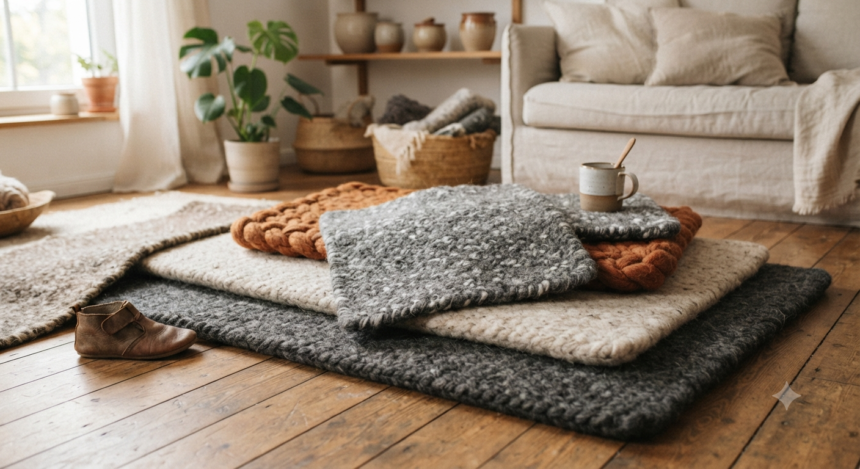
Wollmatten are wool-based mats, pads, batts, or felted sheets used for comfort, insulation, sound control, crafts, gardening, and interior protection. That broad definition matters because a soft yoga mat, a dense pressing pad, a garden mulch fleece, and a building-insulation batt may all be sold under a similar name, yet they perform completely different jobs.
The smartest way to choose Wollmatten is not to ask, “Is wool good?” but, “Which construction, density, treatment, and backing fit my exact use?” This guide explains those distinctions, shows where wool’s natural properties are genuinely useful, and highlights the product details that buyers often overlook.
What Are Wollmatten?
The German word combines Wolle, meaning wool, and Matten, meaning mats. In commercial use, however, it can describe multiple formats made from virgin wool, sheep’s wool, recycled wool, felt, wool blends, or layered materials with a textile, rubber, latex, jute, or synthetic backing.
Manufacturing method changes performance. Needle-punched felt is typically compact and dimensionally stable, woven wool offers a more textile-like surface, high-pile wool feels soft and warm, while lofted batts trap more air and are suited to thermal or acoustic insulation.
Common Wollmatten categories include:
- Floor and entrance mats for warmth, dirt capture, and interior styling
- Yoga and meditation mats for cushioning during slower practices
- Pressing and quilting mats that retain heat around fabric
- Insulation batts or rolls for roofs, walls, ceilings, cavities, and services
- Acoustic panels and underlays that help reduce reflected or transmitted sound
- Garden mats and wool fleece for mulching, moisture retention, and gradual nutrient release
- Protective felt pads for furniture, packaging, instruments, and craft projects
That range is why product names alone are unreliable. Always read the material composition, thickness, mass per square metre, intended application, and care instructions before comparing prices.
Why Wollmatten Perform Differently From Synthetic Fibres
Wool is a keratin-based protein fibre with a crimped structure and a scaled outer surface. The crimp helps create small air pockets, while the fibre can absorb water vapour internally and still feel comparatively dry at the surface.
This combination supports thermal buffering, moisture management, odour resistance, resilience, and sound absorption. Woolmark notes that wool can absorb substantial moisture vapour and that its structure helps retain odour molecules, which is one reason wool textiles often require less frequent washing than many synthetics.
Wool is also naturally difficult to ignite compared with many common fibres. That does not make every wool product fireproof, because backing materials, adhesives, finishes, density, and final product testing determine the actual fire classification.
For construction products, technical data must take priority over general fibre claims. BauNetz Wissen reports thermal conductivity values for sheep-wool insulation in a range of roughly 0.035 to 0.046 W/(m·K), but the declared value of the specific certified product is the figure that belongs in a building calculation.
Main Benefits of Wollmatten
1. Warmth Without a Plastic Feel
Wool slows heat transfer partly by holding still air within its structure. A high-pile mat can make a cold floor feel more comfortable, while a lofted insulation batt can reduce heat flow through a properly designed building assembly.
The benefit depends on thickness and construction. A thin decorative mat may feel warm underfoot but should never be treated as a substitute for certified insulation.
2. Moisture Regulation
Wool can take up and release moisture vapour as ambient conditions change. In interiors, that may help moderate short-term humidity fluctuations, although it cannot fix leaks, condensation caused by poor design, or inadequate ventilation.
Sheep-wool insulation is described as vapour-open and hygroscopic, with some technical references reporting moisture uptake of up to about one-third of its own weight under specified conditions.
3. Acoustic Comfort
Fibrous, porous materials can dissipate part of the energy carried by sound waves. Thick, open wool structures are therefore useful in acoustic absorbers, wall panels, ceiling elements, underlays, and cavities.
Do not confuse sound absorption with full soundproofing. Reducing echo inside a room requires different design decisions from blocking traffic noise through a wall.
4. Natural Resilience
A wool fibre can bend repeatedly and recover better than many brittle plant fibres. That resilience is useful in floor coverings, cushioning layers, pressing pads, and products that are compressed during storage or use.
Density still matters. Loose, low-mass products can flatten faster in high-traffic areas, while dense felt may remain stable but offer less softness.
5. Renewable and Biodegradable Fibre
Wool grows again as sheep produce a new fleece, and untreated wool can biodegrade through microbial activity under suitable conditions. The International Wool Textile Organisation describes wool as renewable and biodegradable, while also emphasizing that environmental assessment should consider the full product life cycle.
A wool label does not automatically guarantee a low-impact product. Farming practices, transport, washing, dyeing, moth protection, backing, adhesives, durability, repairability, and end-of-life options all influence the real footprint.
Wollmatten by Application
Wollmatten for Yoga and Meditation
Wool yoga surfaces are best suited to Yin yoga, restorative yoga, breathwork, meditation, sound therapy, and other low-movement practices. Their warmth and softness can be valuable during long seated or reclined poses, especially on cold floors.
For dynamic flows, check grip carefully. A deep pile can feel unstable under the hands and feet, while a smooth underside may slide unless it includes an appropriate non-slip backing.
Useful buying details include:
- Pile height and total thickness
- Fibre content and backing material
- Mulesing policy or animal-welfare certification
- Washability and drying instructions
- Finished size after edge binding
- Whether the surface sheds during early use
A thick wool surface is not automatically the best choice. People who need strong wrist stability, precise foot placement, or high-friction grip may prefer a thinner, firmer mat or use wool as a removable topper over a conventional yoga base.
Wollmatten for Building Insulation
Insulation versions are usually supplied as flexible rolls, batts, strips, or stuffing wool. They can be used between rafters and studs, in ceilings, around pipes, in service cavities, and in acoustic assemblies when the product approval permits that application.
Choose by declared thermal conductivity, thickness, density, fire class, dimensional stability, pest protection, emissions data, and installation approval. Flexible wool can fit irregular cavities well, but careless compression or gaps will reduce real-world performance.
Some products are promoted for binding indoor pollutants such as formaldehyde. Research and specialist sources support wool’s capacity to interact with certain aldehydes, but buyers should look for product-specific evidence rather than assuming every treated or blended mat performs identically.
Installation must follow local building rules. Moisture control, airtightness, vapour management, electrical clearances, fire detailing, and protection from persistent wetting require a system-level design, not a material-only decision.
Thickness Is Not the Only Insulation Metric
Many buyers compare insulation products solely by thickness. That approach can be misleading because two mats of identical thickness may have different declared thermal conductivity values, densities, compression behaviour, and installation requirements.
The most useful comparison is usually the thermal resistance delivered at the installed thickness. A product should also remain stable enough to avoid slumping, gaps, or excessive compression over time.
Wool Insulation and Moisture
The ability to absorb water vapour does not mean wool insulation can be installed in a leaking roof or permanently damp wall. Hygroscopic performance relates mainly to moisture vapour, not unlimited exposure to liquid water.
Any source of penetrating rain, plumbing leakage, rising damp, or sustained condensation must be corrected. Wet building assemblies require investigation rather than reliance on the absorbency of the insulation.
Wollmatten in the Garden
Garden wool mats can act as a biodegradable mulch layer around vegetables, shrubs, young trees, or container plants. They shade the soil, slow surface evaporation, suppress some weed growth, and gradually break down.
Raw wool also contains nitrogen and other nutrients, but release is slow and variable. The German Environment Agency identifies fresh sheep’s wool or swollen wool pellets as a possible physical deterrent around plants and notes their role as a long-term fertilizing material.
Use garden-grade, untreated material whose origin and processing are known. Avoid dyed, contaminated, heavily mothproofed, resin-bonded, or synthetic-backed products in edible beds unless the manufacturer explicitly approves that use.
How to Position Garden Wool Mats
Place the material around the plant while leaving a small gap around delicate stems and trunks. Direct, constantly moist contact with the crown of a sensitive plant may encourage rot or create shelter for unwanted organisms.
Water the soil before installation and secure lightweight mats against wind. Check underneath periodically, especially during prolonged wet weather, rather than leaving the material completely undisturbed for an entire season.
Do Wool Mats Stop Every Slug?
No physical barrier guarantees complete protection. Wool can create a dry, fibrous surface that some slugs and snails may avoid, but performance changes with moisture, mat thickness, decomposition, alternative access routes, and local pest pressure.
Use it as one part of an integrated strategy. Removing hiding places, watering early in the day, protecting young plants, encouraging natural predators, and inspecting beds regularly may be equally important.
Wollmatten for Pressing, Quilting and Crafts
A dense wool pressing mat reflects and retains heat, allowing fabric to receive warmth from above and below during pressing. Quilters value this effect for seams, blocks, appliqué, and small detailed work.
The trade-off is odour and heat transfer. Natural wool may release a temporary animal-fibre smell when warm, and prolonged pressing on a delicate table can transfer heat or moisture to the surface below, so a protective barrier is sensible.
Look for a flat, tightly compressed surface without soft depressions. Poorly compacted material can distort blocks, shed fibres, or produce uneven pressure beneath a hot iron.
A pressing mat should not replace an ironing board for every task. Large garments, long seams, steam-intensive work, and fabrics requiring movement may still be easier to handle on a conventional padded board.
Wollmatten for Floors and Furniture Protection
Floor mats and dense felt pads offer a quieter, warmer contact surface than many hard synthetics. They can protect timber, stone, glass, instruments, shelves, drawers, and furniture legs from abrasion.
For entrance areas, confirm whether the mat can cope with wet shoes. Wool handles vapour well, but a constantly soaked mat without airflow can develop odour, staining, backing failure, or microbial problems.
Backing selection is especially important on polished floors. Latex, rubber, adhesive films, and plasticized coatings can react with some finishes or trap moisture, so flooring-manufacturer guidance should be checked before long-term placement.
How to Choose the Right Product
Start with the application, then assess the measurable specifications. The following checklist prevents most expensive mistakes:
- Confirm composition. Look for the percentage of virgin wool, recycled wool, other fibres, binders, backing, and coatings.
- Match density to the task. Loft is useful for insulation; high density is better for pressing, impact protection, and dimensional stability.
- Check dimensions under use conditions. Include pile height, compression, edge binding, and any expected shrinkage.
- Review treatments. Ask about dyes, moth protection, flame treatments, latex, adhesives, and antimicrobial finishes.
- Verify certifications. Construction products need relevant declarations and approvals; textile products may offer traceability, organic, animal-welfare, or chemical-safety standards.
- Read cleaning limits. “Natural” does not mean washable, and “wool” does not guarantee identical care.
- Calculate lifetime cost. A durable, repairable product can be better value than a cheap mat that sheds, compresses, or delaminates quickly.
For building use, request a technical data sheet and declaration of performance where applicable. For yoga, flooring, or household use, prioritize surface feel, stability, backing, odour, shedding, and realistic maintenance.
Questions to Ask Before Ordering
Product pages often emphasize softness, natural origin, or sustainability while omitting practical specifications. Before purchasing, ask the seller:
- Is the stated thickness measured under load or without compression?
- What percentage of the complete product is wool?
- Does it contain synthetic support fibres or resin?
- Has the wool received moth, flame, stain, or antimicrobial treatment?
- Can replacement sections be ordered later?
- Is the product approved for the advertised application?
- What happens if it becomes fully saturated?
- Is a sample available before a large order?
A supplier who provides precise, documented answers is generally more useful than one relying entirely on broad terms such as eco-friendly, premium, or natural.
Potential Drawbacks of Wollmatten Buyers Should Know
Wool products can cost more upfront than mass-produced synthetic alternatives. They may also shed loose fibres initially, develop temporary packaging or lanolin-related odours, or attract textile pests if they are stored dirty and undisturbed.
Allergy language deserves care. Many people tolerate clean wool products well, but irritation can come from coarse fibres, dust, dyes, finishes, lanolin residues, or unrelated allergens trapped in the mat.
Moth resistance is not automatic. Clothes-moth larvae can feed on wool rugs, felt, upholstery, and stored wool items, especially in quiet areas where debris accumulates; clean storage, regular inspection, airflow, and vacuuming reduce the risk.
Sustainability claims can also be oversimplified. A blended product with plastic backing may be difficult to recycle or compost even when its face fibre is natural.
Other limitations may include:
- Higher drying times after deep cleaning
- Possible shrinkage or felting
- Variable natural colour and texture
- Limited suitability for permanently damp locations
- Compression under concentrated loads
- Sensitivity to harsh alkaline cleaners
- Difficulty separating bonded layers at end of life
None of these issues makes wool inherently unsuitable. They simply reinforce the need to compare the complete product rather than judging it by fibre name alone.
Care and Maintenance for Wollmatten
First follow the manufacturer’s label because construction, dyes, backing, and treatments vary. Woolmark’s general care guidance emphasizes that wool is naturally stain- and odour-resistant and often benefits from less frequent washing.
For household products:
- Vacuum gently using a suction setting suitable for the pile
- Blot spills promptly instead of rubbing them deeper
- Use minimal water and a wool-safe cleaner when permitted
- Dry flat with good airflow and away from intense direct heat
- Rotate floor mats to distribute wear and sunlight exposure
- Store fully clean and dry in a breathable, pest-resistant cover
Never assume a large mat is machine washable. Wet wool becomes heavy, and an unsuitable wash cycle can cause felting, shrinkage, distortion, dye movement, or backing separation.
Removing Odours Safely
Start by airing the mat in a dry, shaded, well-ventilated place. Many temporary smells caused by packaging, storage, natural fibre residues, or mild moisture exposure can decrease without aggressive cleaning.
Avoid masking an unexplained odour with heavy fragrance. Persistent mustiness may indicate moisture retention, contamination, or a problem beneath the mat that should be identified before reuse.
Storing Wool Mats
Clean the mat before storage because body oils, food particles, hair, and organic debris can increase pest attraction. Make sure it is completely dry before rolling or placing it in a protective cover.
Store it away from damp walls, leaking pipes, and extreme heat. Inspect stored items periodically rather than assuming an unopened box guarantees protection.
Are Wollmatten Worth the Price?
They are worth considering when wool’s specific advantages solve a real problem: cold-floor comfort, low-motion yoga, natural acoustic absorption, flexible insulation, heat-retaining pressing, or biodegradable garden coverage. They are less compelling when the product will stay permanently wet, face heavy abrasive traffic, require frequent hot washing, or compete mainly on the lowest purchase price.
The best value usually comes from matching structure to use. Paying for premium fine wool makes sense near bare skin, while insulation or garden applications may perform well with coarser grades that have little value in apparel.
Compare cost per year of useful service, not just purchase price. A well-made mat that can be cleaned, repaired, rotated, or repurposed may deliver better value than a cheaper alternative that quickly compresses or separates from its backing.
FAQ About Wollmatten
What are Wollmatten made from?
They may be made from virgin sheep’s wool, recycled wool, wool felt, woven wool, or blends containing plant-based or synthetic fibres. Some also include latex, rubber, jute, polyester scrim, resin binders, dyes, or protective treatments, so the front label never tells the whole story.
Check both fibre composition and complete-product composition. A product advertised as having a 100% wool surface may still include a synthetic backing, adhesive layer, or supporting mesh.
Can Wollmatten be washed in a washing machine?
Only when the care label explicitly allows it. Agitation, heat, and sudden temperature changes can felt or shrink wool, while water can damage glued, rubberized, or layered backings.
Large mats may also exceed the safe wet-weight capacity of a domestic washing machine. Spot cleaning, professional extraction, gentle hand washing, or specialist rug cleaning may be more appropriate depending on the construction.
Do wool mats attract moths?
Textile moth larvae can feed on keratin fibres, particularly when products contain food residues, skin oils, hair, or other organic dirt. Regular cleaning, inspection, movement, and dry storage reduce risk, while permanent building products should use a documented protection system appropriate to their certification.
Adult moths are not usually responsible for the visible fibre damage. The larvae feed in sheltered, low-disturbance areas, which is why the undersides of rugs, edges near furniture, storage boxes, and dark cavities deserve attention.
Are wool mats safe for people with allergies?
There is no universal answer because reactions may involve fibre coarseness, lanolin, dust, mould, dyes, finishes, or unrelated allergens. Sensitive users should review the full material disclosure, choose a low-emission product, test contact where practical, and seek medical advice for known severe allergies.
Terms such as hypoallergenic should not be accepted without context. A clean, untreated wool surface and a resin-bonded, chemically finished product may produce very different experiences.
How long do Wollmatten last?
Service life depends on fibre quality, density, backing, traffic, moisture exposure, cleaning, ultraviolet exposure, and pest control. A dense, well-maintained indoor mat can remain useful for years, while a biodegradable garden version is intentionally designed to break down over time.
Signs that replacement may be needed include permanent compression, backing separation, widespread pest damage, persistent contamination, loss of dimensional stability, or a decline in performance that cannot be corrected through cleaning or repair.
Conclusion: Choose by Function, Not by the Word “Wool”
Wollmatten can be warm, resilient, moisture-buffering, acoustically useful, and long-lasting, but only when the product design matches the job. The term is a category label, not a performance guarantee.
Define the application first, compare composition and measurable specifications second, and verify treatments, care requirements, and certifications before buying. For insulation, request certified technical data; for household use, inspect stability and backing; for gardening, choose untreated material approved for soil contact.
Do that before comparing prices. You will be far more likely to choose a mat that performs properly, lasts longer, and delivers the environmental or comfort benefits you actually expect.