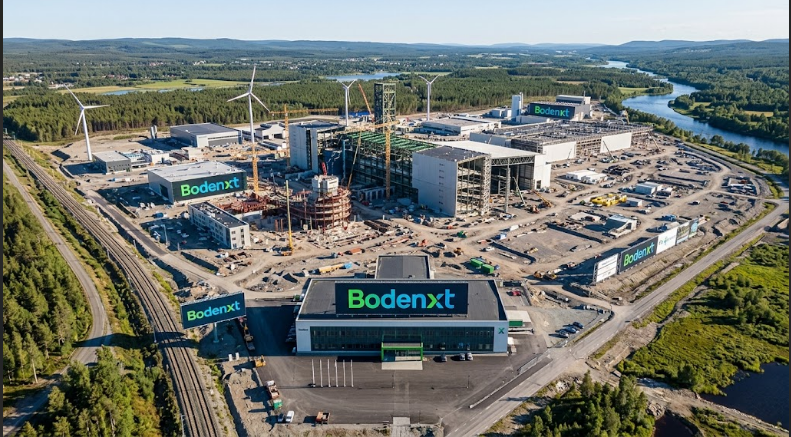
Bodenxt is the Municipality of Boden’s coordinated platform for managing one of northern Sweden’s most ambitious industrial and social transformations. Rather than treating a new steel plant as an isolated investment, the initiative connects industry, housing, infrastructure, workforce development, business growth and everyday community life into one operating model.
The municipality describes the change as a development leap comparable to roughly 20 years of normal growth compressed into only a few years. That level of acceleration requires more than conventional urban planning.
That distinction matters. Bodenxt is not a private technology startup or a single construction project; it is a cross-organizational governance framework designed to help an entire municipality absorb rapid green reindustrialization without losing sight of residents, public services or long-term resilience.
What Is Bodenxt?
At its core, Bodenxt is a municipal transformation platform. It was created to coordinate the practical consequences of large-scale investment in Boden, especially the establishment of Stegra’s integrated green hydrogen, green iron and green steel plant.
The platform grew partly from lessons learned during the COVID-19 pandemic, when municipal teams had to work faster across conventional departmental boundaries. Boden later applied that collaborative approach to industrial expansion, creating workstreams led by people chosen for their ability to solve specific problems rather than simply by seniority or departmental ownership.
Official descriptions organize the work around four broad themes: living and housing, infrastructure, skills supply and business development. Elsewhere, the municipality describes five subprojects by separating infrastructure above ground from infrastructure below ground, which explains the apparent difference in the published totals.
Bodenxt at a Glance
- Location: Boden Municipality in northern Sweden
- Purpose: Coordinate rapid green industrial and community transformation
- Primary accelerator: Stegra’s green steel establishment
- Core areas: Housing, infrastructure, talent, business and public-service capacity
- Operating principle: Manage transformation through shared processes rather than isolated departments
- Wider ambition: Create ecological, economic and social value that lasts beyond the construction boom
These elements show why the initiative should be understood as a community-development model, not merely an industrial campaign. Its success depends on whether multiple systems can expand together without producing damaging social or financial imbalances.
Why Boden Became a Center for Green Reindustrialization
Boden offers a combination that is difficult to reproduce in densely populated industrial regions: access to renewable electricity, available land, grid connections, raw-material routes and regional logistics. Stegra identifies those conditions, together with local and international talent, as key reasons for locating its flagship plant there.
The industrial site itself illustrates the scale. Stegra states that its Boden facility covers about 270 hectares and combines three linked production systems: green hydrogen, green iron and green steel.
A 700-megawatt hydrogen plant is planned as part of the integrated site, while the company targets annual production of five million tonnes of green steel by 2030. These are significant industrial ambitions, even by European manufacturing standards.
Instead of using coal to remove oxygen from iron ore, the planned process uses green hydrogen. Stegra says this integrated approach can reduce carbon dioxide emissions by up to 95% compared with conventional steelmaking, while renewable electricity supports the wider production chain.
This is where Bodenxt becomes strategically important. A plant of this size does not only require concrete, machinery and power; it changes traffic flows, housing demand, school enrollment, water systems, local procurement, recruitment needs, cultural integration and municipal finances.
The Five Practical Pillars of Bodenxt
1. Skills Supply and Workforce Development
Green industrial projects compete for engineers, electricians, technicians, operators, construction specialists and digital professionals. Recruiting them is only the first step.
A municipality must also help newcomers find housing, education, childcare, language support, social networks and career opportunities for accompanying partners. Without those supporting systems, successful recruitment may not lead to long-term retention.
Boden has therefore linked recruitment with relocation services, educational collaboration and local job matching. Municipal reporting describes close coordination between its relocation team and Stegra’s recruiters, as well as roughly 40 shared workstreams focused on maximizing local benefits.
This approach turns talent attraction into a retention strategy. A skilled worker may accept a job because of the salary or mission, but the household stays when daily life works.
2. Living, Housing and Community Integration
Rapid industrial growth can create a two-speed housing market. Permanent residents compete for limited homes while temporary contractors need immediate accommodation.
Boden has responded through new residential development, contractor housing, move-in support and closer coordination with property owners. The challenge is not simply to add beds but to match housing supply with different types of demand.
Good transformation planning must distinguish between short-term construction peaks, long-term population growth and the needs of families, single workers, international recruits and established residents. Building too little creates shortages, while building too much temporary capacity can leave underused assets after construction activity declines.
Bodenxt treats housing as social infrastructure. Schools, preschools, leisure facilities, safety, public space and community belonging are part of the same equation.
Municipal leaders have argued that childcare centers and football fields deserve attention alongside transformer stations and industrial roads because both determine whether population growth becomes permanent.
3. Infrastructure Above Ground
Above-ground infrastructure includes roads, railways, bridges, public transport, industrial access routes, energy facilities and logistics links. These assets determine whether raw materials can enter the region efficiently and finished products can reach customers reliably.
Rail is especially important. In June 2026, Stegra announced an agreement with state-owned freight operator Green Cargo to manage flows between the Boden plant and ports used for inbound materials and outbound products.
The arrangement connects the inland production site with broader maritime and national logistics networks. Stegra has also established relationships involving the ports of Luleå, Skellefteå and Umeå.
For Bodenxt, such infrastructure is not merely an industrial service. New transport capacity also affects residents, land use, emergency planning, noise, road safety and future business locations.
4. Infrastructure Below Ground
The least visible systems are often the most critical. Water supply, wastewater treatment, district heating, electricity distribution, fiber connectivity and utility corridors must all be sized for a future that may arrive much faster than traditional planning cycles anticipate.
Below-ground planning also creates opportunities for industrial symbiosis and circularity. Industrial excess heat, treated water, material by-products and shared energy systems can potentially support nearby businesses or community services when technical, environmental and commercial conditions align.
The important lesson is sequencing. Utilities must be planned before demand peaks, yet investment must remain financially responsible.
That requires scenario modeling, staged construction and clear agreements about who pays for capacity that serves both industry and the wider municipality. Poorly structured financing could leave residents carrying costs associated primarily with industrial development.
5. Business Development and Local Value Creation
A major industrial investment can generate enormous regional spending, but local companies do not benefit automatically. Smaller firms may lack procurement knowledge, certification, workforce capacity or the cash flow needed to compete for large contracts.
Bodenxt therefore includes business development as a core workstream rather than an afterthought. The aim is to help existing companies understand changing demand, strengthen supplier readiness and identify opportunities in construction, maintenance, logistics, hospitality, professional services, technology and circular production.
This matters after the build phase too. A resilient local economy should not depend on one project or a temporary wave of contractors.
The strongest legacy would be a broader ecosystem of suppliers, startups, service companies and skilled workers capable of serving multiple industries. That would allow the local economy to retain knowledge and investment even as individual construction contracts end.
The Role of Stegra in the Boden Transformation
Stegra is the main industrial accelerator, but Bodenxt is broader than Stegra. The company is constructing an integrated plant that combines hydrogen production, direct reduction of iron and steelmaking within one industrial system.
Stegra says its facility will be Europe’s first greenfield steel mill in 50 years. It also describes the hydrogen installation as Europe’s largest electrolyzer facility and expects the plant to produce five million tonnes of green steel annually by 2030.
The integrated production concept is central to the project. Renewable electricity is intended to power electrolysis, hydrogen is intended to replace fossil fuels during iron reduction, and the resulting green iron will be processed into steel.
The project also has European policy relevance. In April 2026, Sweden’s Agency for Economic and Regional Growth recognized the Boden plant as a Strategic Net-Zero Project, placing it among initiatives considered important to the European Union’s climate and industrial-resilience goals.
Still, responsible analysis should separate company targets from completed outcomes. Production volumes, emissions reductions and commissioning schedules remain forward-looking claims until operations demonstrate them consistently at commercial scale.
Why the Bodenxt Governance Model Is Different
Many places manage large investments through separate plans: one for industry, one for housing, another for transport and another for education. That structure can create gaps because each department optimizes its own mandate while problems move across organizational boundaries.
Bodenxt uses a process-based model. Coordinators and working groups are organized around shared outcomes, with the municipality, municipal companies, businesses and other stakeholders contributing where their authority or expertise is needed.
The model offers four practical advantages:
- Earlier problem detection: Housing, skills and utility constraints can be identified before they become emergencies.
- Clearer dependencies: Teams can see how a delayed rail link or school expansion affects recruitment and operations.
- Faster coordination: Decisions move through shared workstreams instead of repeated departmental handoffs.
- Broader accountability: Industrial success is evaluated alongside quality of life, inclusion and local economic value.
Its success, however, depends on transparent priorities, credible budgets and public trust. Cross-functional governance can become confusing when decision rights are unclear or when speed reduces opportunities for meaningful resident participation.
Social Sustainability: The Test That Matters Most
Green industrial policy often focuses on carbon intensity, megawatts and investment totals. Those metrics are important, but they do not reveal who benefits, who carries the disruption or whether newcomers and long-term residents feel included.
A socially sustainable version of Bodenxt must therefore answer harder questions. Are housing costs manageable? Can local workers access new careers? Are international families able to navigate schools and public services?
It must also examine whether established neighborhoods receive investment or whether most public and private resources flow toward industrial zones. Those distributional questions can determine how much public support the transition retains.
Boden has joined Sweden’s Climate Neutral Cities 2030 initiative through Viable Cities. That national program brings together 48 Swedish cities and emphasizes climate neutrality alongside a good quality of life within planetary boundaries.
The connection reinforces a crucial principle: the green transition cannot be judged solely by cleaner production. It must also create a community that people can afford, trust and participate in.
Economic Opportunities Created by Bodenxt
The most obvious opportunities are tied to steel and construction, but the economic footprint is considerably wider. Demand can grow for accommodation, food services, engineering, transport, recruitment, training, software, maintenance, environmental monitoring and multilingual support.
Potential opportunity areas include:
- Industrial maintenance and technical services
- Rail, warehousing and port-linked logistics
- Workforce training and vocational education
- Residential construction and property management
- Renewable-energy and water-system services
- Circular businesses using heat or material side streams
- Digital tools for planning, recruitment and community services
- Tourism, retail and hospitality serving a larger population
Investors and entrepreneurs should avoid assuming that every green-transition opportunity is immediate. The better approach is to map each opportunity against procurement timelines, customer concentration, required certifications, labor availability and post-construction demand.
Businesses should also separate temporary demand from structural demand. Contractor accommodation may surge during construction, for example, while maintenance, logistics and workforce services could remain relevant throughout plant operations.
Risks and Challenges Boden Must Manage
Ambitious transformation always carries execution risk. The first is timing mismatch: homes, schools and utilities may be needed before tax revenues and permanent population growth fully materialize.
That gap can create financial pressure for a municipality. It may have to invest early while the expected economic benefits remain dependent on construction schedules, recruitment success and wider market conditions.
The second is concentration risk. When a municipality’s growth story becomes closely associated with one flagship investment, financing delays, construction changes or market shifts can affect suppliers, housing demand and public expectations.
The third is social imbalance. Residents may support climate goals but still object to congestion, rising rents, construction disruption or decisions they perceive as remote.
Continuous public communication must therefore include costs, uncertainties and trade-offs, not only promotional success stories. Trust is more likely to survive setbacks when residents have already received realistic information.
The fourth is measurement. Bodenxt needs indicators that track more than project completion.
Useful measures include:
- Housing affordability
- Local procurement rates
- School and childcare capacity
- Workforce retention
- New business formation
- Infrastructure reliability
- Resident sentiment
- Verified emissions performance
- Public-service waiting times
- Long-term municipal debt exposure
Without such measurements, a transformation can appear successful from an investment perspective while producing hidden social or fiscal problems.
What Other Cities Can Learn from Bodenxt
The Boden model is most relevant to regions facing a sudden industrial, energy or infrastructure investment. Its central lesson is simple: prepare the community system, not just the project site.
Cities can apply the approach by:
- Mapping cross-sector dependencies early. Connect permits, utilities, housing, transport, education and workforce needs in one planning view.
- Creating outcome-based workstreams. Organize teams around problems such as relocation or supplier readiness rather than departmental charts.
- Building scenarios, not one forecast. Model slower, expected and accelerated growth paths.
- Protecting local legitimacy. Publish progress, costs, risks and community impacts in accessible language.
- Planning beyond construction. Test whether new housing, services and businesses remain viable after temporary labor demand declines.
- Tracking social value. Measure inclusion, affordability and resident experience alongside investment and emissions.
Copying Bodenxt literally would be a mistake because every place has different institutions, markets, legal powers and demographics. The transferable value lies in its integrated governance logic.
How the Project Should Be Evaluated
A credible evaluation should separate inputs, outputs and outcomes. Money invested, land prepared and meetings held are inputs, while completed housing units, transport connections and training programs are outputs.
Outcomes reveal whether those activities actually improved the municipality. They include stable employment, lower industrial emissions, successful workforce retention, affordable housing, reliable public services and stronger local companies.
Independent verification will be particularly important for environmental performance. Projected emissions reductions should eventually be compared with measured electricity sources, hydrogen production, operational efficiency, supply-chain impacts and actual steel output.
Social performance needs the same discipline. Resident surveys, housing-cost data, business participation figures and school-capacity statistics can reveal whether the benefits are reaching the wider community.
Frequently Asked Questions About Bodenxt
Is Bodenxt a company?
No. Bodenxt is a transformation and coordination platform associated with the Municipality of Boden.
It brings together work on housing, infrastructure, skills, business development and wider community planning connected to rapid green industrial growth. It should not be confused with a private commercial company or standalone industrial facility.
What is the relationship between Bodenxt and Stegra?
Stegra’s green steel establishment is the main accelerator behind the current transformation, while the municipal platform addresses the wider consequences. Stegra is responsible for developing and operating its industrial facilities.
The municipality coordinates many of the systems needed for community growth, including planning, public services, housing, infrastructure and local business support. The two entities therefore have different responsibilities even though their work is closely connected.
What does Stegra plan to produce in Boden?
The company is building an integrated facility for green hydrogen, green iron and green steel. Hydrogen produced using renewable electricity is intended to replace coal during the iron-reduction process.
Stegra targets five million tonnes of annual green steel output by 2030 and says its process can reduce carbon dioxide emissions by up to 95% compared with conventional steelmaking. These figures remain company targets that will need to be validated through operational performance.
Why is housing such an important part of the project?
Large industrial developments bring construction workers, permanent employees and families into a relatively short housing cycle. Without enough appropriate housing, recruitment becomes harder, rents may rise and existing residents can feel displaced.
Housing is therefore directly connected to labor supply, social stability and long-term population retention. Successful planning must balance temporary contractor demand with permanent residential development.
Can the Bodenxt model work in other countries?
Yes, but as a governance principle rather than a fixed template. Cities can adapt its cross-departmental coordination, scenario planning and focus on community-wide effects.
Legal authority, municipal finance, energy markets, public-participation rules and local demographics will shape how the model works elsewhere. The objective should be to copy the integrated thinking, not every individual structure.
Conclusion: How to Follow and Evaluate the Transformation
Bodenxt deserves attention because it treats green reindustrialization as a whole-society challenge. The platform links industrial ambition with the less glamorous systems that determine whether growth succeeds: housing, utilities, schools, logistics, talent, local enterprise and community trust.
Readers evaluating the initiative should follow verified milestones rather than headlines alone. Watch the commissioning of Stegra’s integrated facilities, housing delivery, infrastructure performance, workforce retention, local-business participation and published climate outcomes.
For policymakers, the next step is to map the dependencies surrounding any major investment before construction pressure peaks. For businesses, it is to identify real procurement needs, understand qualification requirements and build capacity early.
For residents, the most valuable action is continued participation. Ask how benefits and costs are distributed, follow municipal decisions and demand transparent evidence that the transformation is improving everyday life rather than simply increasing investment totals.