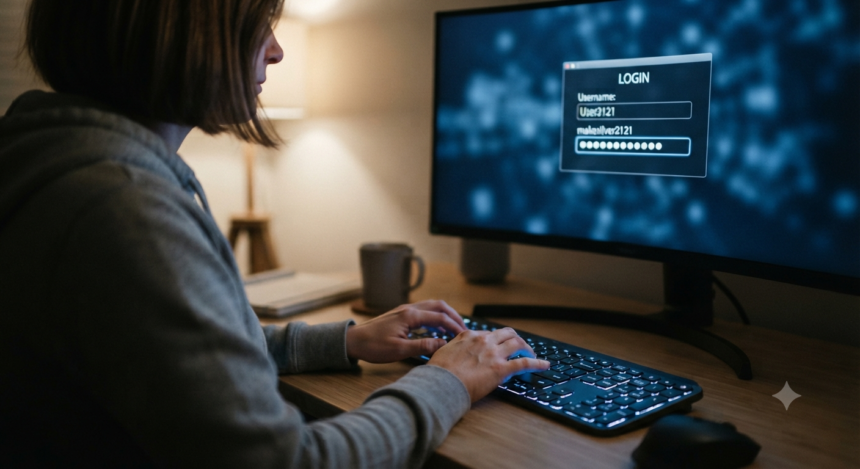
Password makesilver2121 appears online as a search phrase connected with password-security articles rather than as the documented name of an official app, security protocol, or recognized authentication standard. That distinction matters. A phrase that resembles a real credential should never be copied into an account simply because a website describes it as “strong.”
The safest interpretation is educational: use the phrase as a case study in how passwords are evaluated, guessed, reused, exposed, and replaced. Public search results attach the term to general password advice, but they do not establish a verified owner, product, or technical origin.
What Is Password Makesilver2121?
At face value, Password makesilver2121 looks like a password-style string made from a familiar word, a second readable word, and repeated digits. That may feel more complex than a short dictionary word, yet visual complexity is not the same as strong security.
Attackers do not guess passwords only by trying random characters. Modern cracking tools test common words, predictable suffixes, repeated years, keyboard patterns, substitutions, breached credentials, and combinations that humans frequently choose. A readable phrase followed by repeated numbers can therefore be much easier to predict than its length suggests.
It is also important not to confuse online repetition with legitimacy. Several low-authority pages discuss the term as a general cybersecurity topic, but repetition across blogs does not prove that it is a product, recognized method, or recommended password.
Is It an Actual Password?
It could be used as one by somebody, but there is no reliable public evidence proving whose credential it is, where it originated, or whether it has been used for a specific account. Publishing guesses about ownership would be irresponsible and potentially harmful.
Treat Password makesilver2121 as compromised for practical purposes because it is publicly visible and searchable. A password does not need to appear in a confirmed breach database before it becomes a poor choice; once a credential is printed openly on webpages, forums, screenshots, or social posts, it should not protect anything valuable.
Why Password Makesilver2121 Is Not a Safe Login Choice
The main weakness is predictability. The string contains human-readable components and a repeated numeric ending, both of which fit patterns commonly targeted by automated guessing.
A secure password should be long, unique, and difficult to predict. Current NIST guidance requires a minimum of 15 characters when a password is the only authentication factor and recommends allowing passwords up to at least 64 characters. NIST also emphasizes screening proposed passwords against lists of common or compromised values rather than relying on rigid composition tricks.
1. It Contains Dictionary-Style Language
Readable words are easy to remember, but a single word or obvious word combination may be included in password dictionaries. Attackers expand those dictionaries with capitalization changes, number endings, separators, and common substitutions.
The problem is not that words can never be used. Randomly selected multiword passphrases can be strong. The problem is predictable selection, especially when the phrase resembles something already indexed online.
2. The Number Pattern Is Easy to Model
The ending “2121” repeats a short sequence. Repeated digits, dates, birth years, and simple number runs are common human habits, so cracking software prioritizes them.
This is why adding four familiar digits does not automatically transform a weak base into a secure credential. The result may look busy to a person while remaining highly guessable to a machine.
3. It Is Publicly Searchable
Once Password makesilver2121 appears in indexed content, it loses the secrecy required of a real password. Search visibility gives attackers another candidate for targeted guessing and makes the phrase unsuitable for email, banking, social media, cloud storage, workplace systems, or administrator accounts.
A basic rule works well: never use an example password you found online. Examples are teaching aids, not credentials.
4. Reuse Can Multiply the Damage
Password reuse turns one exposed login into a chain reaction. Credential-stuffing attacks take stolen username-and-password pairs and automatically test them across other services, exploiting the fact that many people reuse the same credentials. The U.S. Federal Trade Commission has specifically warned businesses about this attack pattern.
If Password makesilver2121 has been reused on multiple accounts, changing it on only one service is not enough. Every account using the same or a slightly modified version should receive a completely new password.
What a Strong Password Looks Like in 2026
Strong password advice has changed. Older guidance often pushed frequent password changes and mandatory mixtures of uppercase letters, lowercase letters, numbers, and symbols. Those rules can encourage predictable behavior, such as changing “Password1!” to “Password2!”
Modern guidance prioritizes length, uniqueness, blocklists, and password managers. NIST states that services should not impose arbitrary composition rules and should not force periodic changes unless there is evidence that a password has been compromised.
A strong password should be:
- Unique: Used for one account only.
- Long: Preferably 15 characters or more for a password-only login.
- Unpredictable: Not based on names, dates, quotes, usernames, brands, or public details.
- Privately generated: Created by a trusted password manager or genuinely random method.
- Protected by MFA: Backed by a second authentication factor whenever available.
Password Makesilver2121 Versus a Random Passphrase
A useful comparison is not “letters versus symbols.” It is human predictability versus randomness.
Password makesilver2121 follows a visible structure: readable text plus repeated digits. A random passphrase generated from several unrelated words has far more possible combinations, particularly when the words are selected independently rather than chosen as a familiar sentence.
Do not copy a sample passphrase from an article. Generate your own inside a reputable password manager. Published examples become candidates for attackers the moment they appear online.
Better Construction Principles
For an account you must memorize, use several unrelated words selected randomly, then add separators only if the service permits them. Avoid personal stories, famous quotations, song lyrics, addresses, pet names, teams, and predictable endings.
For accounts you do not need to memorize, let a password manager generate a long random string. That removes human pattern-making from the process and makes it easier to maintain a different credential for every service.
How to Replace Password Makesilver2121 Safely
If you currently use Password makesilver2121, or any close variation, change it from a trusted device. Do not merely capitalize a letter, replace an “a” with “@,” or add another digit.
Follow this sequence:
- Secure your primary email first. Email controls password resets for many other accounts.
- Create a unique replacement. Use a password manager to generate and store it.
- Change every reused copy. Search your password vault or browser audit for duplicate credentials.
- Sign out other sessions. Revoke unfamiliar devices, remembered browsers, and app sessions.
- Enable MFA. Prioritize email, banking, cloud storage, social media, and work accounts.
- Review recovery options. Remove outdated phone numbers, backup emails, and unknown recovery methods.
- Check account activity. Look for unfamiliar logins, forwarding rules, purchases, messages, or profile changes.
CISA recommends strong passwords, password managers, and multifactor authentication as core steps for safer online accounts. MFA adds a second identity check, reducing reliance on the password alone.
Why a Password Manager Is the Best Upgrade
Replacing Password makesilver2121 is easier when the new credential is generated and stored automatically.
Remembering dozens of unique, random credentials is unrealistic for most people. A password manager solves that problem by generating, storing, and autofilling passwords in an encrypted vault.
The user only needs to protect the vault with a strong master passphrase and MFA. This makes it practical to replace Password makesilver2121 with a different high-entropy password on every website.
Useful password-manager features include:
- Random password and passphrase generation
- Duplicate-password detection
- Warnings about weak or exposed credentials
- Secure synchronization across trusted devices
- Autofill that reduces typing on lookalike phishing pages
- Emergency-access and recovery options
Choose a reputable provider with transparent security documentation, independent audits, strong encryption, and a clear recovery model. Also secure the email account connected to the manager because recovery messages may be sent there.
Add MFA, but Choose the Strongest Option Available
After removing Password makesilver2121, MFA provides a separate barrier that a guessed or stolen password cannot satisfy by itself.
Multifactor authentication requires another proof of identity in addition to the password. Even when an attacker learns the password, they still need the second factor.
Not all MFA methods offer equal protection. A hardware security key or passkey is generally more resistant to phishing than a code that can be copied into a fake login page. Authenticator-app codes are often preferable to SMS, although any supported MFA is usually better than password-only access for a sensitive account.
CISA describes MFA as an extra security layer that may use a code, app, biometric check, or other factor. For important accounts, save backup codes offline and register more than one secure recovery method.
How to Check Whether a Password Has Appeared in Breaches
Never paste an active password into random “strength checker” websites. A dishonest checker could collect the exact credential it claims to test.
A recognized service such as Have I Been Pwned’s Pwned Passwords can check whether a password appears in known breach data using a privacy-preserving method. The password is hashed locally, and only a small prefix of the hash is sent for comparison, so the complete password is not transmitted.
Even so, the safest response to Password makesilver2121 is replacement, not reassurance. Its public visibility alone makes it inappropriate for continued use.
Common Password Myths That Create False Confidence
The discussion around Password makesilver2121 exposes several outdated assumptions about what makes credentials secure.
Myth: More Symbols Always Mean More Security
Symbols help when they are randomly generated, but predictable substitutions are widely known. “P@ssw0rd!” remains weak because attackers test common substitutions automatically.
Length and unpredictability matter more than decorative complexity. A long random credential is usually safer than a short, clever-looking pattern.
Myth: Changing One Character Stops Reuse Attacks
Variants such as adding “1,” changing the year, or capitalizing the first letter preserve the original structure. Attackers build mutation rules specifically to test these variations.
A reused password should be replaced with an unrelated credential, not cosmetically edited.
Myth: Passwords Must Be Changed Every Month
Routine forced changes can encourage weaker patterns and incremental updates. NIST guidance instead supports changing a password when there is evidence of compromise, while using screening, rate limits, and MFA as ongoing defenses.
Myth: A Long Password Is Automatically Safe
Length is powerful, but a long famous quote, public phrase, or repeated pattern may still be guessable. A strong password combines sufficient length with uniqueness and low predictability.
That is another reason Password makesilver2121 should not be judged by character count alone.
Guidance for Website Owners and IT Teams
Search interest in Password makesilver2121 also highlights a content-design problem: publishers should never label a publicly displayed sample as a safe password.
Businesses should not teach users that a keyword-like example is secure merely because it contains letters and numbers. Authentication design should make safer choices easy.
A modern password policy should:
- Require adequate length and permit long passphrases
- Reject common, expected, and compromised passwords
- Allow paste and password-manager autofill
- Avoid arbitrary composition rules
- Avoid forced periodic resets without evidence of compromise
- Rate-limit failed attempts and detect automated abuse
- Store passwords with a modern, salted, computationally expensive password-hashing method
- Offer MFA and phishing-resistant authentication options
- Provide clear alerts for new devices and suspicious sessions
These controls align more closely with current NIST guidance than old “one uppercase, one symbol, change every 30 days” policies.
Password Makesilver2121 Security Checklist
Before leaving this guide, confirm that Password makesilver2121 is not saved in your browser, password vault, notes app, spreadsheet, messaging history, or account-recovery records. Delete insecure copies only after replacing the credential everywhere it was used.
Your immediate security checklist should include:
- Replace the password with a unique, randomly generated credential.
- Change related versions that use different numbers or capitalization.
- Update every account where the credential was reused.
- Turn on MFA for email and other high-value accounts.
- Sign out unknown or inactive devices.
- Review recent account activity.
- Confirm that recovery details belong to you.
- Remove passwords stored in unsecured documents or messages.
- Run a security scan on devices showing suspicious behavior.
- Never publish or share the replacement password.
Frequently Asked Questions
What does Password makesilver2121 mean?
It is an online search phrase presented by several blogs as a password-security topic. There is no authoritative evidence that it names an official product, protocol, company, or recognized cybersecurity technique.
Its best use is as an example of why publicly visible, patterned credentials should not be trusted.
Is Password makesilver2121 a strong password?
No. It contains readable language, a predictable repeated number pattern, and is publicly indexed.
A password should be unique, private, long, and difficult to predict. This phrase fails the privacy and unpredictability tests even before any breach status is considered.
What should I do if I already use it?
Change it immediately on every account where it appears. Start with your email, financial accounts, password manager, cloud storage, and workplace logins.
After changing it, sign out other sessions, inspect recent activity, update recovery information, and enable MFA.
Can I make it secure by adding symbols or capital letters?
Small edits are not enough. Attackers routinely test capitalization changes, symbol substitutions, and numeric suffixes, so a modified version may remain closely related and guessable.
Replace it with a completely unrelated password generated by a password manager.
How can I create a password I will not forget?
Use a password manager for most accounts. For the master password or another credential you must remember, create a long passphrase from multiple randomly selected, unrelated words.
Keep that passphrase private, never reuse it, and protect the account with MFA.
Conclusion: Treat Public Password Examples as Burned Credentials
Password makesilver2121 is valuable as a cybersecurity lesson, not as a login secret. Its readable structure, repeated digits, and public visibility demonstrate why a password can look complex while remaining weak in practice.
Replace any identical or related password with a long, unique credential generated by a reputable password manager. Then enable MFA, review active sessions, update recovery information, and remove reused passwords from every account.
Do not settle for a clever-looking phrase. Build an authentication system in which one guessed, phished, or exposed credential cannot unlock the rest of your digital life.