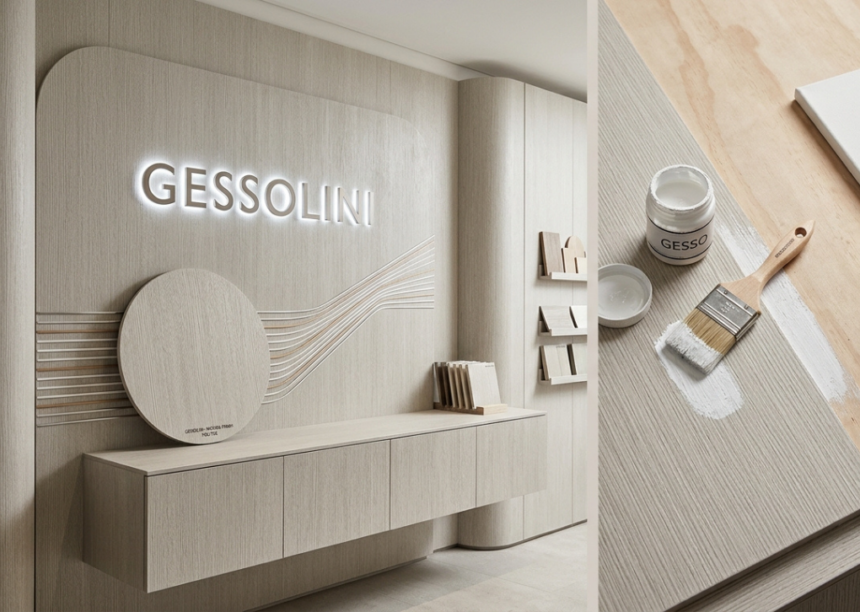
Gessolini is one of those search terms that looks as if it should have a simple definition—yet the deeper you look, the more contradictory the answers become. Some websites describe it as an Italian luxury fashion brand. Others call it a historic tailoring method, an art material, a design philosophy, or a word for “little chalks.” The most useful answer is more nuanced: Gessolini does not currently have one widely established, authoritative definition, and its meaning depends heavily on context.
That distinction matters. A good explanation should separate documented linguistic and publishing evidence from claims that have simply been repeated online. This guide does exactly that, using Italian language references, art terminology, and the websites operating under the name to explain what can—and cannot—be verified.
What Is Gessolini?
At present, Gessolini is best understood as an ambiguous term and digital name rather than a universally recognized object, technique, fashion house, or historical movement. It appears online in several unrelated contexts, including publishing, branding, art-related explanations, and speculative discussions of Italian craftsmanship.
Two active websites use the name prominently. Gessolini.com describes itself as a general-interest publishing platform covering topics such as entertainment, fashion, business, lifestyle, technology, and news. Its homepage contains articles across food, health, travel, education, and other categories.
A separate .org website using the same name also presents itself as a blogging and information platform focused on daily articles, lifestyle, technology, business, and market topics.
So, when a user searches the term today, one of the most concrete interpretations is simply the name of an online content or publishing property.
The Gessolini Meaning: What the Italian Language Evidence Shows
Many articles connect the word to Italian, usually by linking it to gesso. That part is plausible. Treccani, one of Italy’s leading language and encyclopedia references, defines gesso as gypsum and also documents its broader uses for chalk, plaster, casts, sculpture, and artistic work.
The complication comes with the ending.
Italian commonly forms diminutives with suffixes such as -ino, -etto, and -ello. Treccani specifically identifies -ino as a productive diminutive suffix and explains that it can indicate reduced size or an attenuated quality.
That makes an interpretation such as “small pieces of gesso” linguistically conceivable. But linguistic plausibility is not the same as dictionary attestation.
Is Gessolini Really Italian for “Little Chalks”?
This is where many competing pages overstate the evidence.
Treccani lists gessetto as the standard Italian diminutive of gesso for a stick or piece of chalk used for writing or drawing. Its plural is gessetti. Treccani also notes gessino in another, less common sense referring to a small plaster figure.
That means it is risky to present the term as the ordinary Italian word for classroom chalk. A more accurate formulation is this: the term resembles a possible Italian-derived formation, but “little chalks” is not the standard translation supported by the strongest dictionary evidence located for this research.
This is a crucial information-gain point because several online articles repeat the “little chalks” definition as settled fact. One such page explicitly describes the word that way, while other sites give entirely different meanings.
Gessolini and Gesso: The Real Artistic Connection
The strongest semantic association surrounding the name is not with fashion. It is with gesso, a real and well-documented artistic material.
In English art terminology, gesso refers to a preparation containing gypsum or whiting with a binder such as glue, traditionally applied to a surface before painting or gilding. Merriam-Webster defines it both as prepared plaster or gypsum used in painting and relief work and as a paste spread on a surface to prepare it for painting or gilding.
Historically, gesso has been important in panel painting, gilding, sculpture, decorative arts, and surface preparation. That history makes the term sound credible when placed beside Renaissance art, artisan workshops, textured finishes, or traditional materials.
But credibility by association can create misinformation.
Is It a Type of Art Primer?
Some recent articles describe Gessolini as a refined variation of gesso or as a modern primer. Others are more cautious and explicitly acknowledge that the term is not widely recognized in standard art references or academic publications.
The careful position is clear: do not treat the name as a standardized art-material category unless a specific manufacturer defines and documents a product under that name.
If you are buying an art supply, check the actual product specification. Look for the binder, filler, recommended substrate, absorbency, drying time, sanding characteristics, flexibility, archival claims, and whether the coating is formulated for acrylic, oil, tempera, gilding, wood panel, canvas, or another surface.
The product label matters more than the name.
Why So Many Conflicting Definitions Exist
Search engines often expose a strange lifecycle for rare terms. A phrase begins appearing on a few websites, writers infer meaning from its spelling, other sites paraphrase those interpretations, and the repeated claims gradually start to look established.
That appears to be happening here.
Different pages currently describe the term as:
- an Italian-inspired creative or branding concept;
- a fashion or luxury identity;
- an artistic material connected to gesso;
- a traditional tailoring or textile craft;
- a decorative surface-design idea;
- a term meaning small chalks;
- or simply a digital publishing brand.
The problem is not that every interpretation is impossible. The problem is that they cannot all be treated as equally verified.
A strong research process ranks evidence. Official first-party descriptions, recognized dictionaries, museum resources, academic references, trademark records, product documentation, and established trade sources should carry more weight than anonymous lifestyle posts repeating one another.
Is Gessolini a Luxury Italian Fashion Brand?
Several pages make surprisingly specific claims about Gessolini as a premium Italian fashion house, describing luxury leather, tailoring, sustainability practices, men’s and women’s collections, authenticity cards, serial numbers, and even boutiques in global fashion capitals. One prominent page makes these assertions in detail.
Those claims require stronger evidence than a blog post.
For a genuine luxury fashion brand, you would normally expect independently verifiable signals: an official commercial website with a product catalog, corporate information, named designers or founders, retailer listings, trademark data, press coverage, stockists, fashion-week records, or traceable physical boutiques.
The available search evidence reviewed for this article does not establish those details strongly enough to repeat them as fact. Therefore, describing the name as a globally established Italian luxury label would be premature.
How to Verify a Brand Claim Before Buying
If you encounter a product sold under this name, use a verification checklist rather than relying on search snippets:
- Find the legal business identity. Look for a registered company name, address, VAT or tax information, and clear customer-service details.
- Check trademark databases. Confirm whether the mark is registered, by whom, and in which product classes.
- Inspect the domain history. A recently created content site is not evidence of a decades-old heritage brand.
- Verify authorized retailers. Do not assume a boutique is official because another article mentions it.
- Examine returns and payment protection. Reputable ecommerce operations publish clear terms.
- Look for independent coverage. Real brands leave a trail outside their own websites and affiliate-style articles.
This approach protects shoppers from fabricated provenance, counterfeit claims, and invented brand histories.
Could Gessolini Be a Surname?
The word also looks surname-like to English speakers because many Italian family names end in -ini. That resemblance is not meaningless. Treccani notes that -ino/-ini endings occur widely in Italian surnames and can derive historically from personal names, places, occupations, characteristics, and altered forms.
Still, spelling alone cannot prove that a particular term is an established surname, identify its geographic origin, or reveal a family lineage.
If you are researching genealogy, treat the name as a lead rather than a conclusion. Search civil registers, parish archives, immigration records, census databases, surname distribution tools, and historical documents using exact spelling plus likely variants.
Gessolini as a Digital Brand or Coined Identity
One explanation fits the online evidence particularly well: the word functions effectively as a coined digital identity.
Rare names have practical branding advantages. They can be memorable, visually distinctive, easier to associate with one entity in search results, and flexible enough to support a broad editorial or commercial concept. Several recent articles explicitly frame the term as a brand name, creative identity, username, design concept, or abstract label rather than a fixed dictionary word.
That interpretation also explains why meanings are multiplying. Once a rare word gains search visibility, creators can project new stories onto it.
For marketers, that is both an opportunity and a warning. A coined term can be powerful, but its narrative must be backed by verifiable brand assets, consistent positioning, and transparent ownership if it is expected to earn trust.
How to Evaluate Information About Gessolini
Because the search landscape is noisy, readers need a better method than choosing the most confident-looking article.
Use this hierarchy.
1. Identify the Context
Ask what the page is actually discussing. Is it a website, an art supply, a fashion product, a surname, a design philosophy, or language history?
The same spelling can be used for unrelated things.
2. Look for Primary Evidence
If a page claims a founder, launch year, material formula, boutique location, historical tradition, or product collection, check for the primary record behind it.
Specific claims should have specific evidence.
3. Separate Etymology From Definition
A word may resemble gesso and still not be a recognized derivative with the meaning a blogger assigns to it. Etymological speculation is not a substitute for dictionary attestation.
4. Check Whether Sources Are Independent
Ten websites repeating the same unsupported story do not equal ten independent confirmations. Look for original reporting, official records, academic references, or named experts.
5. Treat Commercial Claims More Strictly
If money, health, safety, authenticity, or investment is involved, raise the verification threshold.
An attractive origin story is not proof that a product is authentic, archival, sustainable, handmade, Italian-made, or luxury grade.
What Searchers Probably Mean When They Look Up Gessolini
Search intent around the term can be divided into a few practical categories.
Definition intent: “What does it mean?” These users want a clear explanation and often encounter conflicting answers.
Language intent: “Is it Italian?” These searches focus on gesso, diminutive suffixes, pronunciation, and whether “little chalks” is a valid translation.
Art intent: “Is it a material?” These users may be trying to understand gesso, primers, plaster, chalk, textured finishes, surface preparation, or decorative techniques.
Brand intent: “Is it a company?” Here the user wants ownership, products, legitimacy, reviews, authenticity, or an official website.
Navigational intent: Some users simply want the publishing website that carries the name.
A page that addresses all five intents—with evidence—will be more useful than one that picks a dramatic definition and builds an unsupported history around it.
Key Facts at a Glance
The clearest evidence-based takeaways are:
- The term has no single, universally established meaning in the sources reviewed.
- The strongest direct evidence shows the name being used by general-interest publishing websites.
- The Italian word gesso is genuine and means gypsum/plaster, with additional uses relating to chalk and artistic materials.
- Italian uses productive diminutive suffixes including -ino, but the standard word for a small stick of chalk is gessetto, not Gessolini.
- Claims that the term denotes an established luxury fashion house, ancient tailoring discipline, or standardized art primer should be independently verified before being repeated as fact.
- In modern online usage, the word can plausibly function as a coined brand, site name, or creative identity.
Frequently Asked Questions About Gessolini
What does Gessolini mean?
There is no single authoritative definition that covers every use of the term. Online, it appears as the name of publishing sites and is also interpreted by third-party articles as an Italian-inspired creative, artistic, fashion, or branding concept.
The safest definition depends on the context in which you encountered it.
Is Gessolini an Italian word?
It has an Italian-looking structure and is frequently associated with gesso, the Italian word for gypsum, plaster, and in some contexts chalk. Italian also uses the diminutive suffix -ino.
However, the standard dictionary word for a small stick of chalk is gessetto, so it is misleading to present the disputed term as an unquestionably standard Italian translation for “little chalks.”
Is Gessolini the same thing as gesso?
No. Gesso is an established material and dictionary term used in art, plasterwork, and surface preparation.
The other term is not equivalently standardized in authoritative art references, so the two should not be used interchangeably unless a specific product manufacturer explicitly defines them that way.
Is Gessolini a real fashion brand?
Some websites describe it as a luxury Italian fashion brand, but those claims should be treated cautiously unless supported by verifiable company records, an official retail operation, trademark data, established stockists, or credible independent fashion coverage.
A third-party article alone is not sufficient evidence of brand history, boutiques, collections, or authenticity systems.
Why is Gessolini appearing in search results?
The term has been used by content websites and has also become the subject of numerous explanatory articles. Because it is uncommon, pages targeting the keyword can gain visibility quickly, and repeated interpretations may create the appearance of a settled meaning even when the underlying sources disagree.
Conclusion: Use Context and Evidence, Not Repetition
Gessolini is interesting precisely because the web has not settled on one meaning. The name has a real digital presence, a plausible linguistic association with Italian gesso, and strong branding potential. What it does not yet have is enough authoritative evidence to justify every confident story attached to it.
If you are researching the word, start with context. If you mean the publishing platform, go to its first-party site. If you mean an art material, inspect the manufacturer’s technical documentation and compare it with established gesso terminology. If you mean a fashion brand, verify the company, trademark, retailer network, and provenance before buying.
That is the safest—and most useful—way to understand Gessolini: follow the evidence, distinguish interpretation from fact, and verify any commercial or historical claim before relying on it.