Finding an article about Florida is easy. Knowing whether it answers your question, reflects current information, or deserves a second source is harder. Floridahottopics.com is a general-interest publication that combines Florida-oriented stories with national trends, entertainment, technology, lifestyle advice, and practical explainers.
That broad mix is both its appeal and the reason readers should understand how the site works. Someone researching a Tampa car purchase may arrive through a search result, while another visitor might discover an article about artificial intelligence, personal finance, or a celebrity. The most useful approach is to treat the website as a place to discover subjects and gather context, then verify consequential details where they originate.
This guide looks at the publication’s visible categories, examples of its recent coverage, its stated privacy practices, and the difference between general articles and authoritative sources. It also explains how to find useful material quickly and assess what you read without assuming that every post is equally relevant or reliable.
What Is Floridahottopics.com?
According to its About Us page, the publication focuses on subjects trending across the United States, especially Florida. The site describes coverage of celebrities, entertainment, interests, technology, and news. Its actual article archive extends into health, business, finance, home improvement, and how-to content.
Floridahottopics.com is not a Florida government portal or a narrowly focused local newspaper. It is better understood as a multi-category online magazine or news-and-features website. Its posts include topical explainers, practical advice, human-interest coverage, and pieces about products or services, so the reader’s needs matter when choosing an article.
On the homepage, readers can see article titles, publication dates, bylines, topic labels, and excerpts. Older posts are available through archive navigation. These basic features help visitors distinguish a timely update from an older evergreen guide, although the presence of a date or byline alone does not establish factual accuracy.
What Topics Does Floridahottopics.com Cover?
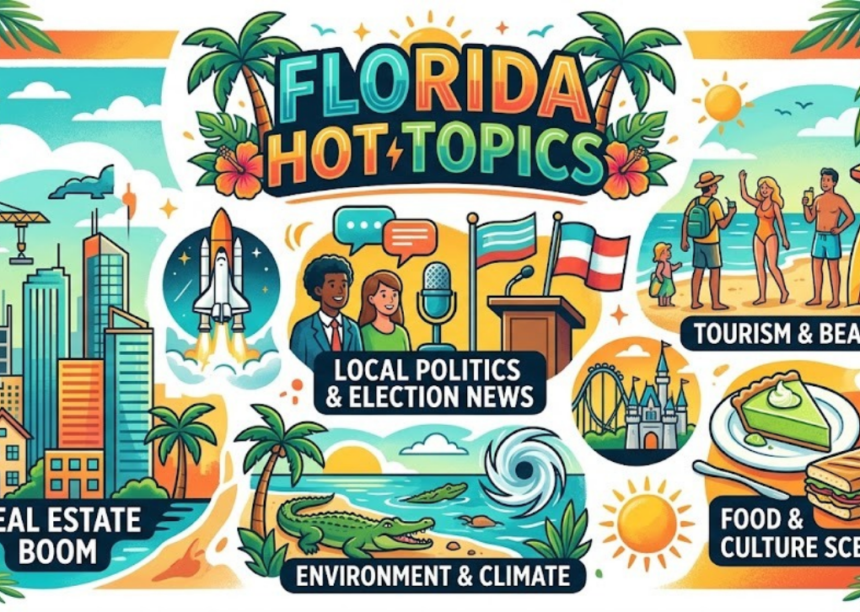
The category structure at Floridahottopics.com is broader than its name suggests. That matters: a Florida-specific search may land on a relevant local article, but a casual browser will also encounter stories about other states and countries. Here are the areas most likely to shape the experience.
Florida News, Communities, and Everyday Decisions
Floridahottopics.com publishes material connected to Florida cities and common resident concerns. Examples visible in its 2026 archive include checking a used car before buying in Tampa, preparing an Estero garage door for hurricane season, and starting a new U.S. passport application while living in Florida.
These stories can help readers recognize questions they have not yet asked. A used-car article, for instance, may remind a buyer to review vehicle history, inspect for water damage, and compare ownership costs. But purchase rules, filing requirements, and emergency advice still need confirmation with qualified professionals or current official resources.
Lifestyle, Home, and Personal Interests
Lifestyle coverage moves beyond regional news into home design, jewelry, travel choices, personal comfort, and household improvements. The publication has featured topics such as minimalist interiors, bathroom accessibility, water quality, and moving from Florida to Tennessee after retirement.
On Floridahottopics.com, these articles are most useful when they help you create a checklist or compare options. A home-remodeling overview may clarify what to ask a contractor, for example, without replacing a site assessment, written quote, or local permitting guidance. Treat lifestyle advice as a starting framework rather than a one-size-fits-all recommendation.
Technology, Business, and Finance
The technology category includes articles about Miami’s artificial intelligence startups, smart-home leak prevention, digital tools, and business technology. Other categories explore operational expenses, credit recovery, insurance-related questions, and financial decisions.
This breadth makes Floridahottopics.com useful for spotting connections between everyday life and emerging technology. A smart-home piece may lead homeowners to investigate leak sensors, while a business article may introduce a workflow problem worth discussing with a specialist. Technical specifications, pricing, financial claims, and projected returns should be checked against primary evidence before influencing spending.
Entertainment, Culture, and Viral Stories
Readers also encounter celebrity profiles, music, sports, entertainment, and social-media-oriented subjects. Some pieces discuss Florida’s cultural identity; others focus on broader international interests, historical figures, or internet trends.
The key is to understand the genre. A celebrity net-worth estimate is not the same kind of evidence as a public financial filing, and an entertainment opinion is not a verified breaking-news report. Floridahottopics.com is easier to use when visitors recognize whether a page is commentary, background information, or a report of a checkable event.
Why Its Florida Focus Needs a Closer Look
A website’s name can create expectations its complete archive does not fulfill. The publication does feature Florida-related content, yet recent posts have also addressed topics such as motorcycle repair abroad, events outside the state, and broader business or lifestyle subjects. That variety is not inherently a problem, but it changes how readers should navigate.
If you want a Florida-specific answer, check whether the article names the applicable city, county, agency, or state law. If the post discusses a general national trend, do not assume its advice applies without changes in Miami, Orlando, Jacksonville, Tampa, or the Panhandle. Local conditions, rules, and service availability can differ substantially.
Floridahottopics.com works best as an entry point into a topic rather than a substitute for geographic precision. This distinction is especially important for hurricane preparation, permits, legal claims, healthcare access, and insurance decisions where the wrong jurisdiction can lead to a costly mistake.
How to Navigate Floridahottopics.com Efficiently
The homepage displays newer articles alongside category links and older content. Visitors can use its visible keyword search field, browse sections such as Tech or Lifestyle, and follow older-post links when the front page does not surface what they need.
A practical search routine is to start with a specific problem instead of a broad category. Searching for “Tampa used car flood damage,” for example, is more likely to lead to actionable advice than searching for “cars.” If the site search is unhelpful, a search engine query combining your subject with site:floridahottopics.com can locate indexed pages without scrolling through archives.
Use this six-part reading checklist whenever you open a post:
- Check the publication date. A helpful article from a previous year may contain outdated deadlines, fees, technologies, or recommendations.
- Read the complete headline and introduction. Confirm that the article actually addresses the location and question you searched for.
- Identify the author. Look for credentials or relevant reporting experience when expertise is essential.
- Follow original sources. Prefer linked agency documents, studies, company filings, or firsthand statements over unsupported numerical claims.
- Separate advice from promotion. Notice whether particular products or providers are highlighted and whether the relationship is explained.
- Save the useful takeaway. Record the next verification step, not just the article URL, so the reading leads to an informed decision.
This method makes browsing less passive. Instead of collecting dozens of open tabs, you finish with a question answered, a source identified, or a concrete task to complete.
How to Assess Accuracy and Expertise
An article can be readable without being authoritative. Strong online research depends on experience, expertise, author transparency, and independent verification, especially when money, health, safety, or legal rights are involved. A publication date and polished formatting are helpful context, not proof that every statement was independently checked.
When assessing a claim on Floridahottopics.com, first identify what kind of evidence would settle it. A reported government fee requires an agency page; a medical recommendation calls for clinical guidance and professional advice; an investment statistic should have an identifiable dataset and methodology. If a number appears without a source, treat it as something to investigate rather than repeat.
Match the Source to the Stakes
For hurricane alerts, evacuation plans, and preparedness resources, check the Florida Division of Emergency Management and your county’s emergency-management office. For health advisories, provider licensing, and public-health information, use the Florida Department of Health or the relevant licensing authority.
Consumer complaints and potentially misleading sales practices can be researched through the Florida Attorney General’s Consumer Protection Division. These sources serve different purposes, and none replaces individualized legal or medical advice. They do, however, provide an essential reference point when a general-interest article covers a regulated or time-sensitive topic.
Watch for Commercial Context
Not every article is independent reporting, and not every mention of a brand is improper advertising. The useful question is whether readers can understand who supplied the information, what evidence supports it, and whether a commercial relationship is disclosed.
A third-party publication marketplace has listed paid advertorial placement opportunities for Floridahottopics.com. That listing does not establish that any particular story is sponsored. It does make it sensible to examine author information, attribution, links, disclosures, and the balance of an article before treating a product recommendation as independent evaluation.
Privacy, Cookies, and Advertising on Floridahottopics.com
The site has a publicly accessible Privacy Policy covering comments, cookies, account information, embedded material, advertising, and data-related requests. According to that policy, comment submissions may involve the collection of information entered into the form, along with IP addresses and browser details used for spam detection.
The policy also discusses cookies for remembering commenter details or login settings, and it notes that embedded content can behave like a visit to another website. It states that the publication uses AdSense advertising and describes tracking used for ad personalization. These are the site’s own policy statements, not evidence of an independent privacy audit.
If privacy is important to you, review that page before creating an account, submitting a comment, or interacting with embedded media. Browser privacy controls can limit certain cookies, but their exact effect depends on your browser and the services involved. Avoid placing sensitive personal, health, or financial information in a public comment field.
Is Floridahottopics.com a Reliable Source?
There is no single honest yes-or-no answer for a general-interest publication covering many subjects. The site visibly provides categories, dated posts, bylines, an About page, a contact route, a privacy policy, and a Disclaimer. These are useful transparency features, though they do not amount to third-party certification of its reporting.
Its disclaimer says the content is provided for general information and does not guarantee completeness, accuracy, or reliability. That is a reason to calibrate reliance on individual posts, not a reason to dismiss every article. Floridahottopics.com may be valuable for background reading while still being insufficient as the final authority for high-stakes decisions.
A fair evaluation should be article-specific. Check whether the post identifies original reporting, names qualified sources, explains limitations, and provides links that actually support its claims. Be more cautious with anonymous statistics, sweeping medical promises, unverifiable celebrity wealth figures, or legal advice presented without jurisdiction and dates.
Who Will Find the Website Most Useful?
Florida residents may discover articles about homes, vehicles, travel paperwork, consumer issues, and seasonal preparation. Visitors and newcomers can use regionally framed explainers to learn which questions to investigate before arriving, renting, relocating, or booking a service.
Small-business owners and professionals may find introductions to technology adoption, finance workflows, or practical maintenance topics. General-interest readers may prefer entertainment, culture, health, and lifestyle features that do not require a Florida connection.
The best use of Floridahottopics.com depends less on your location than on your purpose. For exploration, its variety can be convenient; for an urgent weather warning or precise official procedure, a dedicated authority is more appropriate. Knowing that distinction saves time and reduces preventable mistakes.
Two Real-World Ways to Use an Article Responsibly
Example 1: Researching a First-Time Passport Application
An October 13, 2026 article discusses how Florida residents can start a new U.S. passport application. It can help a reader organize questions about proof of citizenship, identification, application forms, appointment planning, and common delays.
The critical next move is to verify current rules, fees, forms, and processing times at the U.S. Department of State passport website. In other words, let Floridahottopics.com help you prepare your questions, but use the issuing agency for the final instructions. This avoids relying on details that may change after an article is published.
Example 2: Preparing a Home for Hurricane Season
A regional home-preparation story can remind an Estero homeowner to inspect a garage door, look for loose hardware, and think about wind exposure. Those are useful prompts, but the story cannot determine whether a particular garage door assembly satisfies applicable building requirements or whether repairs are safe to perform personally.
Pair that reading with current local building-department guidance, a qualified garage-door professional, and official emergency information. The same principle applies to flood insurance, storm warnings, and evacuation zones: general guidance prompts action; primary guidance determines the decision.
Common Mistakes Readers Should Avoid
One common error when reading Floridahottopics.com is treating the newest-looking page as the newest available guidance. A recently published explainer may cite older research, and an evergreen post may remain useful for years. Check both the article date and the dates of the documents it relies upon.
Another is assuming a broad category label establishes expertise. A story filed under Health may be useful general reading, but that label does not make it clinical advice. Similarly, a Finance label cannot substitute for reviewing official disclosures or speaking with a licensed professional where appropriate.
Finally, avoid confusing a third-party website with an official Florida service. Floridahottopics.com is a publication, not a government application system, emergency-alert service, or public-records authority. When an article sends you to an outside provider, inspect the destination and its terms independently before entering payment details or personal information.
Floridahottopics.com FAQs
1. What is Floridahottopics.com mainly about?
It is a multi-topic online publication with an emphasis on Florida and subjects trending in the wider United States. Coverage includes news, lifestyle, technology, entertainment, finance, health, and practical advice. Because the editorial range is broad, the best starting point is an article’s actual subject, location, date, and sources rather than the website name alone.
2. Is Floridahottopics.com an official Florida news or government website?
No. The publication identifies itself as a general-interest news site, not an official Florida government service. It can introduce readers to subjects affecting the state, but government filings, legal requirements, public-health advisories, and emergency instructions should be checked on the responsible agency’s own website.
3. Does the website publish only Florida-related stories?
No. Many articles relate directly to Florida cities, residents, or industries, but the archive also features national business topics, overseas locations, celebrities, technology, and broader lifestyle trends. Readers looking for strictly local reporting should verify that an article discusses the relevant Florida community rather than a general issue that may apply elsewhere.
4. Can readers trust health, finance, and legal information on the site?
Such posts may provide background and useful questions, but they should not be the sole basis for a medical treatment, financial commitment, or legal decision. Examine author expertise, check sources, confirm the date and jurisdiction, and consult the relevant licensed professional or public agency when necessary. The higher the consequences, the stronger the verification should be.
5. How can I contact the publication or ask for a correction?
The site provides a Contact Us page inviting questions, feedback, story suggestions, and typo reports. When requesting a correction, include the article title, URL, exact statement in question, and a supporting primary source. A precise, evidence-backed message gives the publisher something concrete to review, although response times and correction outcomes are not guaranteed.
Conclusion: Read Widely, Verify Carefully
Floridahottopics.com offers a varied collection of Florida-oriented features and wider trending subjects, making it a practical place to explore new questions. Its strength for readers is discovery: finding topics, building a research checklist, and learning which details deserve closer attention. Its limits are those of any broad publication operating across very different areas of expertise.
Start with a relevant article, check its date and evidence, then follow the most important claims to current primary sources. If the topic affects your health, safety, finances, or legal rights, do not stop at an engaging explanation. Use the site to become better informed—and make the final decision with verified information in hand.