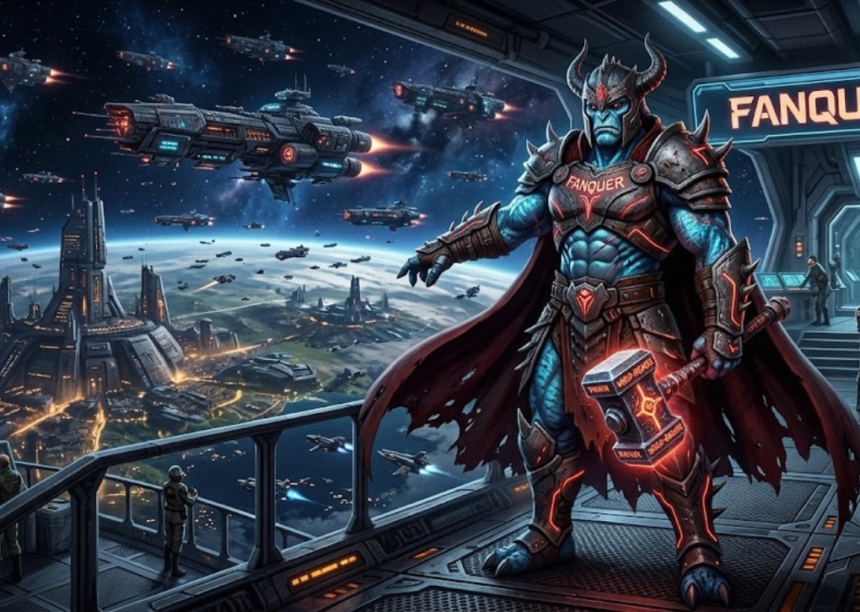
The word Fanquer is unusual enough to make people curious. It looks like the name of a digital platform, sounds like a modern internet expression, and appears across websites discussing online communities, branding, and digital culture. But what does Fanquer actually mean? Is it an established word, a new online concept, or simply a creative name?
The answer requires a closer look. Unlike familiar expressions such as fan engagement, digital community, or online fandom, Fanquer does not have one universally accepted meaning. Different websites associate it with different ideas, and some interpretations are presented with more certainty than the available evidence supports.
Understanding that distinction is important. This guide examines Fanquer from linguistic, digital, branding, and search perspectives. It separates documented information from speculation and explains how readers can evaluate claims about unfamiliar internet terms.
What Does Fanquer Actually Mean?
The most important discovery is that Fanquer has a documented historical meaning that is often overlooked in online explanations.
The authoritative Diccionari català-valencià-balear (DCVB) records Fanquer as a masculine noun in Mallorcan Catalan, with two distinct meanings:
-
A large quantity of mud: The word can describe a substantial amount of mud or muddy ground.
-
A traditional agricultural worker: It describes a man who follows a grafter and applies mud to the grafts of trees.
The dictionary also identifies its etymological connection to the Catalan word fang, meaning mud.
dcvb.iec.cat+1
This is more than an interesting linguistic detail. It gives the word a genuine historical identity rather than leaving it entirely in the category of invented internet vocabulary.
The Meaning of Fanquer in Everyday Language
In simple English, the two historical meanings can be understood as follows:
| Context | Meaning |
|---|---|
| Landscape and soil | A large quantity of mud or muddy ground |
| Traditional agriculture | A worker who applies mud to tree grafts |
| Etymology | A derivative of the Catalan word fang |
| Modern internet discussions | An inconsistently defined expression or proposed name |
The first meaning describes a physical condition of the ground. The second describes a specific agricultural responsibility.
Neither historical meaning refers to a celebrity follower, social media influencer, or digital community member. Those are newer interpretations appearing in online articles, not meanings established by the historical dictionary.
dcvb.iec.cat+1
The Historical Origins of Fanquer
To understand the word properly, it helps to examine the language and agricultural practices associated with its origins.
Mallorca, one of Spain’s Balearic Islands, has a distinctive Catalan linguistic tradition. Its vocabulary contains regional expressions connected with agriculture, rural occupations, landscapes, food production, and traditional ways of working.
Fanquer belongs to this linguistic environment.
The DCVB is particularly useful here because it documents historical, literary, and regional Catalan vocabulary. According to the Pompeu Fabra University Language Office, the dictionary contains more than 160,000 entries and represents an important lexicographical and etymological resource for Catalan.
Gabinet Lingüístic (UPF)
The Connection Between Fanquer and Fang
The clearest explanation of the word’s origin comes from its root.
Fang is a Catalan noun meaning mud, sludge, or wet earth. The DCVB records the word as deriving from the Gothic fani, which also refers to mud or a marshy substance. Fanquer is explicitly identified as a derivative of fang.
dcvb.iec.cat+1
This linguistic connection explains why the historical meanings are related to soil and agricultural work.
Rather than assuming that the word originated from English expressions such as fan and conquer, it is more accurate to recognize its documented Catalan etymology.
How Fanquer Was Connected to Traditional Agriculture
The agricultural meaning is especially interesting because it preserves a small detail of historical orchard management.
Tree grafting, known as empeltar in Catalan, involves joining a portion of one plant to another so that they grow together. The technique is used to reproduce desirable fruit varieties, improve trees, and combine useful characteristics.
The DCVB documents several traditional grafting methods, including shield budding, cleft grafting, and bark grafting.
dcvb.iec.cat
In the historical definition, the Fanquer was the person responsible for applying mud to the graft after the grafter had performed the main operation.
This was a practical supporting role. It helped complete the traditional grafting process, rather than describing the person who actually performed the grafting itself.
Why the Agricultural Meaning Matters
Historical vocabulary often preserves occupations and activities that have become less familiar as technology and working practices change.
A word connected with a particular rural task can reveal:
-
How agricultural work was divided between different workers.
-
Which materials were used in traditional farming.
-
How specialized rural occupations were described.
-
How regional vocabulary developed around everyday activities.
The agricultural definition therefore provides genuine cultural and linguistic information. It is a much stronger foundation for understanding the historical word than an unsupported modern interpretation.
Is Fanquer an Official English Word?
No. Fanquer is not an established everyday English vocabulary item with a standardized English definition.
However, saying that it is not an English word is different from claiming that it does not exist. Its historical appearance in a recognized Catalan dictionary demonstrates that the spelling has a documented linguistic identity.
This distinction matters when researching unfamiliar words.
A term can be:
-
A recognized word in one language but unfamiliar in another.
-
A regional expression rather than a widely used national term.
-
A historical occupation or descriptive noun.
-
A commercial product name.
-
A newly proposed internet expression.
These categories should not be mixed together.
Is Fanquer Internet Slang?
Some online publications present Fanquer as an emerging internet expression associated with enthusiastic fans, creator communities, and digital participation.
For example, one interpretation combines the ideas of a fan and a connoisseur, suggesting someone with unusually deep knowledge of a particular interest. Other publications present it as a combination of fan culture and the idea of conquering or achieving something.
Tumfweko+2
The problem is consistency.
There is no demonstrated universal definition, established community-wide usage, or reliable linguistic evidence showing that these interpretations have become standard slang.
A responsible explanation should therefore describe them as proposed online interpretations, not official definitions.
Fanquer as a Brand or Product Name
An unfamiliar word can also function as a commercial identity. A company, seller, or independent creator may choose a distinctive name even when that name already has a meaning in another language.
There is at least one concrete retail example. Desertcart lists a product under the brand name Fanquer: a two-pattern floral embroidery and cross-stitch kit. The listing describes an adjustable wooden hoop, multicolour threads, five needles, printed fabric patterns, and instructions. It also displays an Amazon product identifier and a first-available date of April 2022. This confirms that the spelling has been used commercially for a craft product; it does not, by itself, establish the existence of a large manufacturer, registered corporate group, or official brand website.
Desertcart
That distinction is important for shoppers and researchers. A marketplace brand field can identify how a seller labels an item, but it is not equivalent to a corporate registry, trademark certificate, or verified company profile.
What the Embroidery Listing Tells Us
The product is described as a beginner-oriented kit for floral cross-stitch and embroidery. The listing mentions two patterned fabric pieces, an adjustable hoop measuring approximately 7.9 inches, a set of coloured threads, five needles, and instruction sheets. It also displays customer ratings and written reviews, although marketplace ratings can change and should be checked again before purchase.
Desertcart
For a potential buyer, the practical lesson is simple: inspect the current seller, product photographs, package contents, return policy, delivery terms, and recent reviews. Do not assume that every item using the same name comes from the same source.
Is the Name Connected to a Verified Technology Platform?
There is not enough reliable evidence to identify a widely established software service or creator platform under this name. Some articles describe a hypothetical fan-engagement ecosystem with subscriptions, exclusive content, community rewards, and creator monetisation. Those descriptions are best treated as conceptual proposals unless they are supported by a working product, official documentation, identifiable operator, and transparent terms.
hellogreeting.com+1
A website address alone is not proof that a functioning service exists. When the spelling Fanquer appears in a domain or social profile, verify the operator before assuming that it represents an established platform.
A search-indexed snapshot of fanquer.com displays generic placeholder copy, including Lorem Ipsum text, rather than a clear explanation of a product or organisation. The page therefore does not substantiate claims about a working fan platform.
fanquer.com
Before creating an account, making a payment, or sharing personal information with any site using this name, look for verifiable ownership, contact details, privacy terms, payment protections, and independent user feedback.
Why Online Explanations Do Not Always Agree
Search results can create the impression that a word has a settled meaning simply because several pages repeat similar descriptions. Repetition, however, is not the same as independent evidence.
In this case, online explanations range from a passionate fan or knowledgeable enthusiast to a community-engagement concept. Other pages treat the spelling as a possible brand or an abstract digital identity. These interpretations do not share a clearly documented origin or a consistent definition.
Tumfweko+3
There are several reasons this kind of disagreement happens:
-
Search-driven publishing: Writers sometimes create explanatory pages around low-competition keywords before a stable meaning has emerged.
-
Repeated assumptions: One article may repeat an interpretation from another page without checking a dictionary or primary source.
-
Brand-name ambiguity: A product name, username, domain, and dictionary word can have the same spelling without referring to the same thing.
-
Context loss: A word found in a regional language may be interpreted as English slang when readers do not know its linguistic background.
-
Automated content production: Similar article structures and unsupported definitions can spread across multiple sites, making a weak claim appear more established than it is.
The better research method is to move from primary evidence outward. Check a recognized dictionary for linguistic meaning, an official company source for a platform, a retailer for a product listing, and a trademark database for legal brand status. Each source answers a different question.
How to Evaluate Claims About the Term
If you encounter a page claiming that the word represents an app, community, online movement, or business, use a short verification process before accepting the description.
-
Identify the exact claim. Is the page discussing a historical word, a product, a website, or a proposed digital concept?
-
Find the primary source. Look for an official dictionary entry, company website, product manufacturer, or first-party announcement.
-
Check whether the source is independent. Several articles repeating the same unsupported statement do not amount to several confirmations.
-
Look for operational evidence. A real platform should normally have identifiable operators, working features, support information, policies, and a clear way to access the service.
-
Separate existence from popularity. One retail listing proves a commercial use, not widespread recognition or a large user community.
-
Check dates. Old product listings, inactive websites, and recycled articles may no longer describe the current situation.
This process is useful well beyond one unfamiliar word. It is a practical form of digital literacy that helps readers distinguish a documented fact from a plausible-sounding explanation.
Could It Be Used as a Modern Brand Name?
A distinctive name can be attractive to a startup, creative project, online shop, or community. Short, unusual spellings may be memorable and can sometimes be easier to distinguish in search results than generic names.
However, a prospective owner should not assume that a name is legally available just because it has no obvious mainstream meaning in English. The historical dictionary entry and the existing retail use are reasons to conduct proper checks before investing in branding.
A sensible naming review should include:
-
Trademark searches in the countries where the business will operate.
-
Domain checks for the exact spelling and common variations.
-
Social username checks across the platforms that matter to the business.
-
Pronunciation testing with people from the intended audience.
-
Language checks in markets where the name may be interpreted differently.
-
Competitor research to identify similar names in the same product category.
The name should also be accompanied by a clear descriptor. If it is used for a craft shop, explain that it sells embroidery or needlework supplies. If it is used for a creator community, describe the actual service instead of expecting visitors to infer its purpose from the name alone.
Fan Engagement as a Separate Digital Concept
Although some websites use the word in discussions about fandom, the underlying idea of fan engagement is real and well established. It describes the ways audiences interact with a creator, artist, sports team, entertainment property, or brand.
That interaction can include watching content, attending events, commenting, joining a membership, purchasing merchandise, sharing fan-made work, voting in polls, or participating in a moderated community.
A healthy fan community is not measured only by follower numbers. More useful indicators include repeat participation, meaningful comments, event attendance, member retention, voluntary recommendations, and the quality of feedback.
Creators and organisations can encourage participation through practical methods:
-
Ask specific questions instead of posting generic engagement prompts.
-
Give members a genuine opportunity to influence selected decisions.
-
Credit fan art and other contributions when permission is granted.
-
Explain community rules and moderation decisions.
-
Offer clear membership benefits and transparent cancellation terms.
-
Protect members’ personal information and avoid manipulative engagement tactics.
These are useful community-building practices regardless of what label a website chooses to use. They should not be presented as proof that a new platform or formal movement exists.
Frequently Asked Questions
1. What does Fanquer mean?
It is a documented Mallorcan Catalan word with two historical meanings: a large quantity of mud, and a worker who applies mud to tree grafts after a grafter has carried out the main operation. The DCVB traces it to the Catalan word fang, meaning mud. Modern online explanations sometimes propose other meanings, but those should be treated as informal interpretations rather than established definitions.
dcvb.iec.cat+1
2. Is it an English slang word?
There is no strong evidence that it is established English slang with a widely accepted definition. Some online articles use it for highly engaged fans or knowledgeable supporters, but these descriptions are inconsistent and do not establish standard usage. The documented historical meaning comes from Mallorcan Catalan.
3. Is there a website or app with this name?
A domain using the spelling exists, but the indexed homepage snapshot examined for this article contains placeholder text rather than verifiable product information. There is insufficient evidence from that page to confirm a functioning fan community, subscription service, or software platform. Check the current site and its ownership details before relying on claims about its services.
fanquer.com
4. Is it used as a product or brand name?
Yes. A third-party retail listing identifies an embroidery and cross-stitch kit under this brand name. That is evidence of at least one commercial product use, but it does not establish that every similarly named website or seller belongs to the same business.
Desertcart
5. Can I safely use it as a business name?
Possibly, but conduct trademark, domain, and social-handle checks first. Also review the word’s existing linguistic meaning and commercial use, especially in the countries where you plan to sell. A distinctive name is not automatically an available or legally protected trademark.
Conclusion: Look Beyond the First Search Result
The most useful way to understand Fanquer is to separate its documented history from the newer stories built around it. The historical dictionary evidence connects it to Mallorcan Catalan, mud, and a traditional role in tree grafting. Modern websites sometimes attach ideas about fan communities, digital identity, and creator engagement, while a retail listing demonstrates a separate use as an embroidery-kit brand.
For readers, the next step is to match the claim to the right evidence. Use a recognized dictionary for word origins, first-party documentation for software, retailer information for products, and official trademark resources for brand decisions. That approach produces a more accurate understanding than accepting the first confident definition appearing in search results.