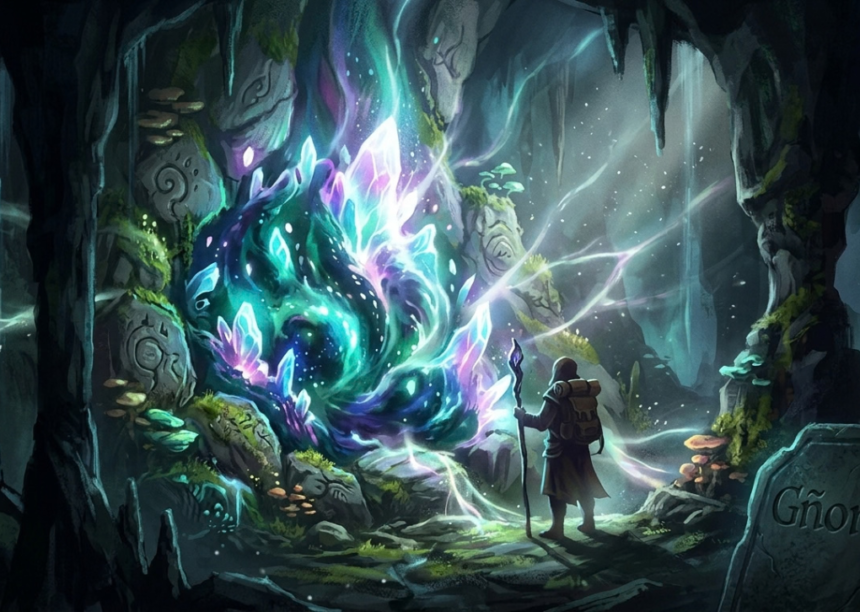
Gñory is one of those internet terms that looks as if it should have a clear definition, yet the deeper you search, the less stable that definition becomes. Some websites describe it as a digital subculture. Others call it a philosophy of self-expression, a privacy-first identity system, a branding framework, or even a form of digital memory. The most useful answer is therefore not to repeat one confident-sounding story, but to separate verifiable facts from online speculation.
That distinction matters. As of September 16, 2026, this research did not surface an authoritative dictionary, academic paper, recognized cultural institution, or identifiable first-party manifesto establishing one universally accepted meaning for the term. What does exist is a growing cluster of web pages assigning significantly different meanings to the same unusual word. That makes the subject interesting, but it also means definitive origin claims deserve careful scrutiny.
What Is Gñory?
The safest definition is that Gñory is an emerging, loosely defined internet neologism whose meaning changes depending on the source using it. In current search results, the term is associated with digital culture, individuality, creativity, glitch aesthetics, identity, online philosophy, branding, memory, and experimental expression.
That does not mean every interpretation is equally established. The word currently functions more like an open semantic container than a standardized term. Its novelty gives writers, creators, brands, and online communities considerable freedom to attach new meanings to it.
Several competing descriptions appear online. The most common include:
- a digital-art or glitch-inspired subculture;
- a mindset built around authenticity and nonconformity;
- a concept related to digital identity and privacy;
- a framework involving memory, selfhood, and online narrative;
- a branding or creative philosophy centered on nuance;
- a general symbol of mystery, originality, or transformation.
The striking point is not that one definition has clearly won. It is that these definitions conflict with one another, sometimes substantially. That inconsistency strongly suggests that the term is still being constructed and interpreted in public rather than documented as a mature cultural category.
Why Is Gñory So Hard to Define?
Most established cultural concepts leave an evidence trail: an identifiable creator, dated manifesto, product launch, movement archive, dictionary history, academic discussion, recognizable artworks, or sustained community usage. The term currently has a much thinner evidentiary footprint.
A number of articles published during 2025 and afterward offer surprisingly precise origin stories. Some place the concept inside underground glitch-art communities, while others connect it to Latin American self-expression, digital memory, identity systems, privacy, or a philosophy of technology. Those narratives do not consistently point to primary evidence identifying who coined the word, when it was coined, or which community first adopted it.
The key evidence gap
This is the information gap many existing explainers overlook: a repeated claim is not automatically an established fact. That matters particularly when multiple sites appear to be explaining an emerging term but provide mutually incompatible histories.
If ten websites say a movement began in a particular year, but none points to an original post, creator, archived forum, interview, publication, artwork, trademark, or other primary evidence, its claimed history remains unverified. For readers, researchers, and publishers, that distinction is critical. Responsible coverage should therefore use phrases such as “has been described as,” “is sometimes interpreted as,” or “appears in recent web content as” instead of transforming speculation into settled history.
The Linguistic Curiosity Behind Gñory
Part of the term’s appeal is immediately visual. The ñ makes the word highly distinctive to readers accustomed to English-language spelling, while naturally evoking Spanish and several other languages in which the character appears.
Technically, ñ is not simply an “n with decoration.” Unicode identifies the lowercase character as U+00F1, LATIN SMALL LETTER N WITH TILDE, while an equivalent representation can also be constructed from an ordinary “n” followed by a combining tilde. This distinction can matter in databases, search systems, text processing, and other digital environments where character normalization is relevant.
In Spanish, ñ represents a palatal nasal sound and is treated as a distinct letter. Its history reaches back to medieval scribal practices used to represent sounds that the inherited Latin alphabet did not conveniently express.
The presence of ñ in Gñory therefore gives the coined word a strong visual and potentially phonetic identity. It does not, however, prove that the word itself originated in Spain, Latin America, or another Spanish-speaking culture.
How Is Gñory Pronounced?
There is no verified pronunciation standard because no authoritative origin source currently defines one. Existing online articles variously suggest forms resembling “nyo-ree,” “nyor-ee,” and other interpretations, demonstrating the same lack of consensus found in definitions of the term itself.
The practical approach is not to present any particular pronunciation as official without a primary source. If you adopt the word for a brand, artistic project, fictional universe, product, or community, publish the pronunciation you intend people to use.
Gñory and the Rise of Internet-Born Words
The internet creates almost perfect conditions for new vocabulary to emerge. A word can begin as a username, meme, aesthetic label, fictional expression, project name, typo, in-group joke, or deliberate branding device and then acquire additional meaning through repetition.
Gñory fits that pattern unusually well because it combines three characteristics that make coined terms memorable: visual distinctiveness, ambiguity, and search uniqueness. An unfamiliar word immediately makes people ask what it means. Once that question starts producing searchable articles, more publishers have an incentive to answer it.
This can create a self-reinforcing loop. Search demand produces explanatory pages; explanatory pages increase the perceived legitimacy of the expression; increased visibility generates new searches and additional explanations.
The eventual result can resemble an established cultural trend before a stable offline or community-based definition actually exists. Language really can emerge through this process, but researchers need to distinguish documented adoption from content-driven amplification.
Common Interpretations of Gñory Online
1. Digital Art and Glitch Aesthetics
One recurring interpretation links Gñory with glitch art, fragmented interfaces, broken typography, coded poetry, surreal imagery, distortion, and intentionally imperfect digital design. In this version, the concept favors ambiguity, experimentation, and digital irregularity over conventional visual polish.
The interpretation makes intuitive creative sense because the unusual spelling itself feels visually disruptive. What is harder to substantiate is the stronger claim that a formally recognizable art movement exists with established membership, canonical artworks, exhibitions, founding figures, or a documented manifesto.
2. Authenticity and Self-Expression
Another group of pages describes the term as a philosophy of uncompromising individuality. Within this interpretation, it becomes associated with personal style, anti-conformity, fashion, music, confidence, cultural identity, and expressive freedom.
This definition is emotionally accessible and highly shareable, which may partly explain its appeal. Claims that it descends directly from a particular historical or regional movement, however, require stronger primary evidence before they can responsibly be presented as fact.
3. Digital Identity, Privacy, and Memory
Other writers use the word in distinctly technological ways. They have described it as everything from a privacy-oriented digital identity concept to a framework for understanding digital memory and online selfhood.
These interpretations can be intellectually interesting without constituting proof that a deployed protocol, technical standard, software platform, or recognized architecture exists under the name. When encountering such claims, look for actual specifications, repositories, named developers, technical documentation, working products, and independent adoption.
4. Branding and Creative Strategy
A fourth interpretation treats Gñory as a branding idea: stand out through nuance, originality, and memorable detail rather than sheer volume or manufactured attention. That version is comparatively easy to apply because it does not require proving that a historical movement existed.
As a creative principle, the expression could represent distinctiveness with intention. A brand might use it to describe unusual visual design, culturally layered storytelling, deliberate imperfection, or memorable micro-details.
That would be a contemporary application created by that brand or creator. It should not automatically be presented as proof of an older universal philosophy.
Is Gñory a Real Word?
The answer depends on what “real” is intended to mean. Words can have genuine social usage long before lexicographers recognize them formally.
If the question is whether people are publishing, discussing, and searching for the expression, the answer is clearly yes. It now has a measurable digital footprint across explanatory sites, social platforms, and search results.
If the question is whether it is a standardized dictionary word carrying one established meaning, the evidence reviewed for this article does not support that conclusion. A more precise description is an emerging neologism or coined expression whose semantics remain unsettled.
This is not inherently unusual. Language routinely develops through informal usage before dictionaries document it, and lexical recognition normally depends on meaningful, sustained usage across independent contexts rather than the simple existence of web pages containing a term.
Is Gñory Connected to Spanish or Latin American Culture?
The spelling makes that interpretation tempting because ñ is strongly associated with Spanish orthography, where it has centuries of documented linguistic history. Yet visual association and genuine etymological origin are two different things.
No reliable primary source located during this research establishes that the coined term itself originated inside a Spanish-speaking community. Some recent articles attribute Latin American roots to it, but those claims need supporting evidence such as dated cultural publications, archived posts, interviews, named creators, contemporary references, or community records.
The responsible approach is therefore to acknowledge the obvious cultural resonance of the letter ñ without assigning an undocumented cultural provenance to the entire word. This protects both factual accuracy and the historical significance of the character itself.
Gñory, Gnory, and Search Intent
Users may type the word with or without its tilde. That creates an important distinction between Gñory and Gnory from both linguistic and search-intent perspectives.
“Gnory” already appears independently as a commercial proper name, including in connection with a Shenzhen electronics manufacturer. Dropping the tilde can therefore broaden the query and introduce search results that have nothing to do with the emerging concept discussed here.
For content architecture, use the accented spelling consistently when discussing the cultural or conceptual query. The unaccented variant can still appear naturally where it genuinely helps users understand alternative searches or distinguish unrelated entities.
Avoid creating two substantially identical pages solely to target each spelling. Separate pages make sense only when they satisfy genuinely different search intent.
Technical SEO Considerations for the “ñ”
The unusual character introduces an additional technical consideration for publishers. Google recommends simple, descriptive URLs and supports non-ASCII characters, while advising that such characters be percent-encoded where necessary in links.
You therefore have two clean implementation options. Both can work when your canonicalization and internal linking remain consistent:
- use a Unicode URL slug if your CMS, server, analytics stack, and redirect logic handle character normalization reliably;
- use an ASCII slug such as
/gnory/while retaining the accented spelling in the H1, title tag, body text, relevant metadata, and page entities.
Whichever route you choose, use the same canonical destination across internal links, XML sitemaps, redirects, social metadata, and structured references. Creating multiple near-identical URLs merely to capture spelling variations can introduce duplication without providing additional value.
How to Evaluate New Claims About Gñory
Because the topic remains fluid, new explanations will probably continue appearing. Instead of assuming the newest or most frequently repeated version is correct, apply a straightforward source-verification framework.
Use these questions as a source-checking checklist. Ask each one before repeating an origin story:
- Who made the claim? Is there a named creator, researcher, institution, organization, artist, or community?
- What is the earliest evidence? Look for dated primary material instead of relying entirely on later summaries.
- Can the origin be independently corroborated? Several websites repeating substantially identical wording are not necessarily independent evidence.
- Is there a stable community or product behind it? Search for archives, events, documentation, repositories, artworks, publications, or sustained social usage.
- Does the source separate fact from interpretation? Strong sources clearly identify uncertainty instead of disguising hypotheses as facts.
- Has the meaning remained consistent? Rapidly changing definitions are evidence that the semantic identity of a new expression may still be evolving.
This method is useful far beyond this particular subject. It provides a practical defense against polished but poorly sourced histories attached to viral phrases, aesthetics, movements, products, and other internet-born concepts.
Why the Term Matters Even If Its Meaning Is Unsettled
Ambiguity can be culturally productive. The word is interesting precisely because people appear to be negotiating its meaning in real time.
It also provides a useful case study in how modern vocabulary can move from obscurity toward perceived legitimacy through search engines, online publishing, social sharing, and repetition. That makes information literacy particularly important because a polished article can make a speculative narrative appear historically established even when supporting evidence remains thin.
For creators, there is another lesson. A novel word can become culturally meaningful when a community gives it consistent semantics, recognizable symbols, useful applications, and traceable authorship.
Meaning is rarely established by a definition alone. It becomes durable through repeated, socially shared usage.
What Gñory Could Become
The future of the term remains open. It could fade as a short-lived search curiosity, settle into a niche digital aesthetic, become a commercial brand, develop into a genuine creative philosophy, or acquire an entirely different meaning as new communities adopt it.
The decisive factor will not simply be the number of generic explanatory articles published about it. What matters more is whether identifiable people begin using the word consistently for the same idea across independent contexts.
That is the threshold worth watching: usage before mythology. When creators, communities, artworks, projects, products, or publications establish a durable usage pattern, researchers will be able to describe the concept with much greater confidence.
FAQ About Gñory
What Does Gñory Mean?
There is currently no single verified definition. Online usage variously connects the expression with digital culture, creativity, identity, authenticity, glitch aesthetics, branding, memory, technology, and self-expression.
The most evidence-conscious description is that it is an emerging neologism whose meaning remains under construction. Any more specific definition should identify the particular source, community, or creative context in which that meaning is being used.
Where Did Gñory Originate?
No authoritative primary source located for this article establishes a definitive creator, location, coinage date, or first documented use. Existing websites provide several incompatible origin stories, ranging from digital-art communities to cultural self-expression and online identity.
Until a dated primary source can establish provenance, the origin should be described as uncertain. Repetition across later websites is not a substitute for contemporary evidence.
Is Gñory a Digital Movement or Subculture?
Some articles describe it as a subculture connected with glitch art, experimental coding, unconventional visual design, and emotionally expressive digital experiences.
The evidence reviewed here does not clearly document a formalized movement with recognized founders, organizations, canonical works, established events, or an original manifesto. Calling it an emerging label in digital-culture commentary is therefore more precise than presenting its movement status as settled fact.
How Do You Pronounce Gñory?
There is no universally verified pronunciation. Because ñ commonly represents a palatal nasal sound in Spanish, many readers may naturally introduce a sound resembling “ny,” but existing web sources disagree over the complete pronunciation.
A company, artistic project, community, or creator adopting the expression should explicitly state its preferred pronunciation. Until a documented originator emerges, competing pronunciations should be treated as interpretations rather than linguistic rules.
Is Gñory the Same as Gnory?
Not necessarily. The unaccented spelling is independently used as a proper name in other contexts, including commercial ones, which means a search for “Gnory” can produce a different entity mix.
When discussing the emerging cultural concept, preserving ñ makes the intended spelling clearer. Mentioning the ASCII form naturally can still help readers who cannot easily type the character or who encountered an alternate spelling elsewhere.
Conclusion: Treat Gñory as an Evolving Term, Not a Settled History
Gñory is compelling because it sits at the intersection of language, digital culture, aesthetics, identity, branding, and search behavior. Available evidence supports its existence as an emerging online expression, but it does not yet substantiate many of the confident historical narratives circulating around it.
The next step is practical. If you are researching the concept, preserve primary evidence instead of relying exclusively on recycled explainers. If you are using the term creatively, clearly define your intended meaning, document how you use it, and distinguish between an established tradition and something you are deliberately creating.
That approach gives readers something more valuable than manufactured certainty. It produces content that is more transparent, more defensible, and more genuinely informative—exactly what an ambiguous emerging topic needs.