Zimblefronk is one of those internet terms that looks as if it should have a definition, a creator, and a neat origin story. Search for it, though, and the picture becomes much messier. Several websites describe it as slang for playful chaos, weird creativity, spontaneity, or absurd humor, yet the available sources disagree about when it began, how it spread, and whether there was ever a single viral moment behind it.
That uncertainty is not a problem to hide. It is the most important fact about the term. As of August 2026, the safest evidence-based description is that it is a recent, loosely defined online neologism or nonsense word whose meaning is being constructed by repetition rather than a long-established slang expression with a documented history.
What Does Zimblefronk Mean?
In current web usage, Zimblefronk is generally presented as a flexible label for something strange, playful, chaotic, whimsical, unexpectedly funny, or creatively unconventional. It can function like a noun, an adjective-like label, a reaction, or simply an absurd punchline.
That definition should be treated as descriptive rather than official. Vents Magazine frames the term as internet-native slang for chaotic, funny energy, while Tumfweko describes it as shorthand for things that are delightfully strange, oddly creative, or unexpectedly humorous. Septosis pushes the meaning further toward joyful, chaotic creativity. These descriptions overlap, but they are not identical.
A practical translation might be: “This is weird in a funny, creative, hard-to-categorize way.” The point is less about dictionary precision and more about tone.
Common implied meanings include:
- Playful absurdity — something intentionally ridiculous or surreal.
- Creative chaos — an idea that feels messy but entertaining.
- Unexpected humor — a moment that becomes funny because it breaks the expected pattern.
- Internet in-group language — a word whose use can signal familiarity with meme-style communication.
- Semantic flexibility — a term that changes meaning according to context.
That flexibility is precisely why the word can appear meaningful even when no stable definition exists.
Is Zimblefronk a Real Word?
The answer depends on what “real word” means.
Language does not need permission from a dictionary to exist. New expressions often appear in communities long before lexicographers document them. Research on social-media neology shows that online platforms produce unusually creative forms, including blends, respellings, abbreviations, wordplay, and completely novel coinages.
At the same time, a word appearing on several websites does not automatically prove that it has widespread organic usage. Oxford lexicographic research also highlights a modern complication: social platforms and the wider web contain automated accounts and large amounts of machine-generated text, which can make evidence of genuine usage harder to evaluate.
So the most accurate answer is this: Zimblefronk is real as an attested web expression, but its status as established slang is not well documented. That distinction matters.
The Origin of Zimblefronk: What Can Be Verified?
This is where many competing articles become too confident.
An Afterbreak Magazine article dated December 2, 2025 says the term appeared online “seemingly out of nowhere” and suggests that it developed from whimsical, nonsensical sounds. It does not identify a creator, original post, archive link, or first known use.
Vents Magazine, updated February 1, 2026, gives a different account. It says the word began as a nonsense placeholder and refers to a viral clip that supposedly used it as a plot-twist punchline. Yet the article does not identify that clip, its creator, its upload date, or a traceable primary source.
SM Athletics, published February 16, 2026, makes a more specific claim: it says the expression first appeared on an obscure online forum in late 2021 and later spread through Tumblr and TikTok. Again, the cited page does not provide the forum name, post URL, archived capture, username, or other primary evidence for that origin story.
Those accounts cannot all be treated as established history simply because they appear in search results.
The Evidence-Based Origin Verdict
The documented answer is therefore narrower but stronger: there is no verified single creator or securely sourced first use in the material reviewed for this article.
That does not prove an earlier use never happened. It means the origin has not been demonstrated with evidence strong enough to repeat as fact.
For E-E-A-T purposes, this is a crucial difference. A trustworthy article should say “one site claims…” when the underlying source is missing, rather than converting repetition into certainty.
Why a Nonsense Word Can Feel Meaningful So Quickly
The rise of Zimblefronk makes more sense when viewed through the way internet language evolves.
New online expressions do not always spread because they have precise definitions. They can spread because they are memorable, remixable, socially useful, or easy to attach to an existing format. A 2026 study of neologisms in published writing and Twitter data found that social-media coinages are especially diverse and creative, with unconventional word formation playing a larger role online than in traditional published text.
Recent research on platformed language also argues that meme-like linguistic units circulate through repetition, mutation, recognizable formats, and platform mechanics. Their communicative force can depend as much on shared recognition and performance as on literal semantic content.
That gives us a useful framework. A strange word can acquire meaning through use first and definition later.
1. Sound Creates Memorability
The word has a deliberately cartoonish sound structure. “Zimble” feels light and bouncy; “fronk” ends more abruptly. That contrast makes the whole construction sound invented, which is useful when absurdity is part of the joke.
This is a linguistic observation, not proof of etymology. There is no reliable evidence that the term was intentionally built from those sound effects.
2. Ambiguity Makes It Remixable
A narrowly defined phrase has limited uses. An undefined expression can be placed almost anywhere.
People can use it as a reaction, a label for an image, a fictional object, a caption, a punchline, or a description of a mood. Each new use adds a little context without permanently locking the word into one meaning.
3. Repetition Creates Social Meaning
Internet language often becomes useful because people recognize the performance. A repeated phrase can signal, “I understand the joke,” even if its literal definition is thin.
That is why a nonsense term can work as a marker of participation. The meaning lives partly in the community response.
How Zimblefronk Is Used Online
Because the term has no stable grammatical role, examples are best understood as possible usage patterns, not formal rules.
A reaction might look like: “That entire video was pure chaos. Absolute zimblefronk.” As a descriptive label, someone might call an intentionally strange design “very zimblefronk.” In a meme, the word may do almost nothing semantically; its job is simply to make the caption more absurd.
The safest usage categories are:
- Reaction: a compact response to something bizarre or unexpectedly funny.
- Mood or aesthetic: shorthand for surreal, messy, eccentric, or playful energy.
- Punchline: an intentionally meaningless final word that breaks the pattern of a sentence.
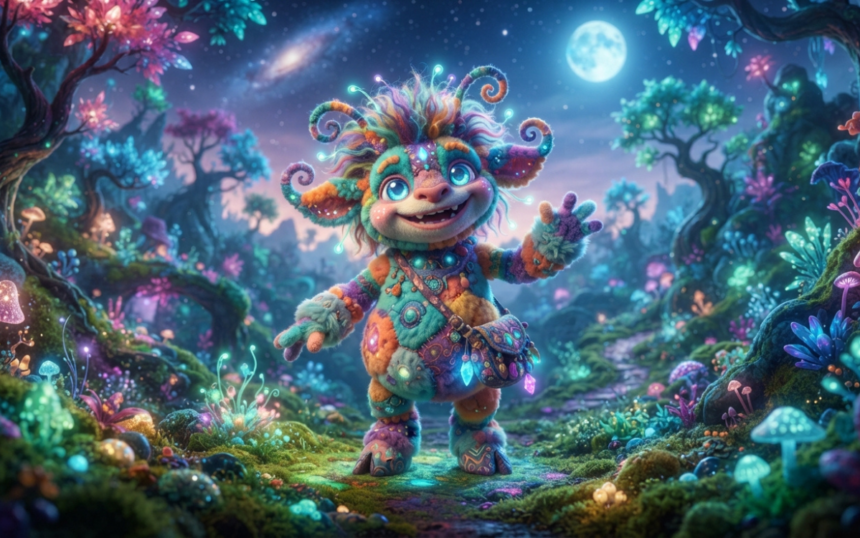
- Fictional label: a made-up name for an object, creature, process, challenge, or imaginary concept.
- Community joke: a flexible expression whose exact meaning is understood locally rather than universally.
Writers should avoid presenting any one of these as the official definition.
Is It a Meme, Slang Term, or Neologism?
Zimblefronk sits most comfortably under the umbrella of a neologism, meaning a relatively new lexical item or expression.
Calling it “slang” is plausible when people use it informally, but slang usually implies meaningful adoption by a social group. Calling it a “meme” is also plausible when the word is circulated as a repeatable joke or format, but a meme normally involves observable replication across users, contexts, or media.
The strongest classification, based on what can currently be verified, is: an emerging internet neologism with meme-like and slang-like uses.
That phrasing leaves room for the term to evolve without overstating its cultural reach.
Claims About Virality Need More Scrutiny
A recurring weakness in existing coverage is the use of phrases such as “taken the internet by storm,” “exploded on social media,” or “viral sensation” without public metrics.
Afterbreak says the expression became a cultural phenomenon and claims hashtags went viral on Instagram and TikTok. Vents describes a lifecycle involving million-plus uses and brand commercialization. SM Athletics similarly presents widespread adoption as established. Yet the pages reviewed do not provide platform analytics, hashtag counts, Google Trends data, original viral posts, or independent measurement supporting those scale claims.
That does not mean nobody is using the term. It means visibility in search results should not be confused with measured virality.
For readers, marketers, and journalists, this is the most useful test: ask for the underlying signal. Where are the posts? How many independent users are involved? When did usage spike? Are the examples organic, coordinated, copied, or generated?
Without those answers, “viral” is marketing language, not evidence.
Zimblefronk and the Problem of Circular Web Sourcing
There is another possibility worth considering: a term can appear popular because websites repeatedly write about it, with later pages borrowing the assumptions of earlier pages.
This creates a citation loop without citations. Page A calls something a trend. Page B sees similar search results and repeats that it is a trend. Page C then treats the volume of articles as proof of the trend itself.
Modern lexicography has to account for similar noise. Oxford research discussing social-media evidence warns that bots and generated content complicate the task of distinguishing meaningful linguistic evidence from artificial repetition.
For Zimblefronk, the responsible position is neither “definitely fake” nor “definitely viral.” It is: the term is demonstrably present on the web, while the scale, origin, and organic spread remain insufficiently documented.
That is a much more useful answer than a fabricated origin story.
How Creators and Brands Should Use Zimblefronk
If you want to use the word in content, treat it as a playful experiment rather than a proven mass-culture reference.
Start with context. A surreal meme account, gaming community, creative project, or informal brand voice may be able to use it naturally. A law firm, medical organization, financial institution, or serious B2B brand would probably need to explain the joke or skip it entirely.
A sensible approach is:
- Use it where ambiguity is part of the humor.
- Do not claim a historical origin you cannot source.
- Avoid calling it viral unless you have current platform data.
- Explain the term when writing for a broad audience.
- Monitor how the surrounding usage changes before tying it to a campaign.
- Measure audience response instead of assuming recognition.
The term works best when the reader does not need a five-paragraph backstory to understand why the sentence is funny.
Could Zimblefronk Become an Established Word?
Yes. But there is no guarantee.
English constantly absorbs new expressions, while thousands of other coinages disappear. Dictionary inclusion usually follows evidence of meaningful, sustained usage rather than causing that usage in the first place. Oxford’s research into X/Twitter as lexicographic evidence shows that social media can provide early attestations for new words and senses, but lexicographers still have to evaluate the quality and reliability of that evidence.
For Zimblefronk to become more than a curiosity, it would need broader, independently observable adoption over time. Consistent meaning would help, but total semantic stability is not required; many successful slang terms remain flexible.
The decisive factor will be usage, not the number of SEO pages defining it.
Frequently Asked Questions
What is Zimblefronk?
It is a recently documented internet expression commonly described as a nonsense word for playful absurdity, creative chaos, weird humor, or an unexpectedly strange situation. There is no single authoritative definition in the sources reviewed, so its meaning is best understood from context rather than treated as fixed.
Where did Zimblefronk come from?
Its exact origin is unverified. One 2026 page claims a late-2021 forum origin, another describes an unidentified viral clip, and an earlier December 2025 article simply says the expression appeared seemingly out of nowhere. None of those pages supplies enough primary evidence to establish the first use.
Is Zimblefronk actually viral?
There are multiple articles describing it as viral or widespread, but the pages reviewed do not provide strong public metrics proving the scale of that popularity. The safest statement is that the term has web visibility; its true level of organic social-media adoption remains unclear.
How do you use the word naturally?
Use it when the point is playful ambiguity. It can describe a bizarre meme, a chaotic creative idea, a surreal aesthetic, or an event that feels too odd for a normal label. Because recognition is not guaranteed, provide enough context for readers to infer the joke.
Is Zimblefronk in the dictionary?
The research reviewed for this article did not establish a recognized dictionary entry for the exact term. That does not make the expression invalid; new words routinely circulate before formal lexicographic recognition. What matters is whether usage becomes sustained, widespread, and well attested.
Conclusion: Treat the Mystery as the Story
The most interesting thing about Zimblefronk is not a dramatic origin tale. It is the gap between what the web confidently says and what the available evidence actually proves.
Right now, the term is best understood as a flexible internet neologism associated with absurdity, playfulness, and creative weirdness. Its precise origin is unresolved, its “viral” status is difficult to quantify from the available evidence, and several published explanations repeat claims without showing primary sources.
If you are writing about it, using it in content, or trying to understand the trend, do one thing next: check the context before repeating the claim. Look for dated primary posts, archived examples, platform metrics, and independent usage. That approach will keep your content accurate even if the meaning changes tomorrow.