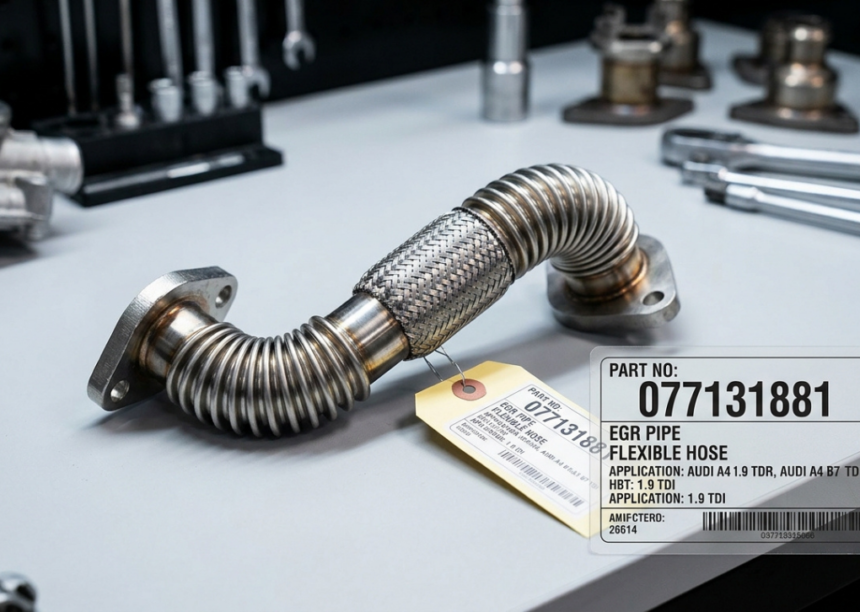
When searching for 077131881, many people expect to find a phone number, code, or random identifier. In automotive contexts, however, 077131881 is best understood as an Audi-related OEM-style part reference connected with an exhaust gas recirculation (EGR) component. It commonly appears in discussions surrounding EGR tubes, connecting pipes, and emissions-system hardware.
This small sequence of numbers carries more meaning than it appears to. A single missing digit, incorrect suffix, or mistaken assumption about compatibility can result in purchasing the wrong component.
For owners of older Audi performance and luxury models, especially vehicles equipped with V8 engines, understanding 077131881 can save time, money, and frustration. The right identification process matters because emissions components are not always interchangeable, even when they look almost identical.
What Is 077131881 and Why Does It Matter?
077131881 refers to an automotive component identifier used to locate a specific part within Audi’s parts ecosystem. It is commonly linked with an EGR tube, also called an exhaust gas recirculation pipe, EGR connecting tube, or emissions connector pipe.
An EGR tube is a metal passage that helps route exhaust gases through the emissions control system. Its purpose is not to create engine power directly. Instead, it supports emissions management by allowing controlled exhaust gas flow under specific operating conditions.
The importance of 077131881 comes from precision.
Automotive manufacturers assign part numbers because thousands of components may appear similar while having different:
- Mounting positions
- Pipe shapes
- Flange designs
- Engine applications
- Production revisions
- Emission specifications
A buyer who searches only for “Audi EGR pipe” may find several visually similar options. The part number provides a much stronger starting point.
077131881 Audi EGR Tube: Understanding the Component
How the 077131881 EGR Tube Works
The EGR system reduces certain exhaust emissions by redirecting a controlled amount of exhaust gas back into the combustion process.
The tube associated with 077131881 works as a physical connection inside this system. It must withstand:
- Extreme engine temperatures
- Exhaust pressure pulses
- Constant vibration
- Thermal expansion and contraction
- Long-term exposure to combustion byproducts
Although the component looks simple, its operating environment is demanding.
A damaged EGR tube may not immediately stop the vehicle from running. Instead, problems often appear gradually through symptoms such as unusual noises, exhaust leaks, warning lights, or inconsistent engine behavior.
Why the Part Number May Appear in Different Formats
Automotive catalogues often display the same reference in multiple formats. For example, 077131881 may also appear as:
- 077 131 881
- 077-131-881
- 077131881A
The final letter is important.
A suffix usually indicates a revision, updated design, or production change. It may represent improvements in manufacturing, changes in mounting design, or compatibility adjustments.
Never assume that 077131881 without a suffix automatically matches every version carrying a similar number.
Which Vehicles Use 077131881?
The strongest online parts associations connect 077131881 with selected older Audi applications, particularly vehicles using large-displacement V8 engines. Some listings connect related EGR tube references with Audi A6, S6, A8, and S8 models.
However, vehicle compatibility is more complicated than simply matching the model name.
A proper fitment check should consider:
- Vehicle identification number (VIN)
- Engine code
- Manufacturing year
- Market region
- Emissions package
- Original component markings
A 4.2-liter V8 badge alone is not enough information.
Audi produced multiple versions of engines and emissions systems. Two vehicles may share the same engine size but use different pipes, brackets, or connection layouts.
Why Engine Code Matters More Than Engine Size
One of the biggest mistakes when purchasing 077131881 is relying only on engine displacement.
For example, a seller may advertise a component as fitting an “Audi 4.2 V8.” That description sounds convincing, but it may cover several different applications.
The engine code provides a much more accurate identification method.
Before ordering, compare:
- The original part number.
- The engine code.
- The VIN-based catalogue information.
- The physical shape of the existing tube.
This four-step approach dramatically reduces incorrect purchases.
Common Failure Symptoms of an EGR Tube
A failing 077131881 related component may show different symptoms depending on the type of damage.
Exhaust Leak Sounds
A cracked or damaged tube can create a ticking, hissing, or unusual exhaust noise.
The sound may become more noticeable:
- During cold starts
- Under acceleration
- When engine load increases
Visible Soot Marks
One of the clearest signs of an exhaust leak is black soot around connection points.
Carbon deposits may appear near:
- Flanges
- Joints
- Cracked sections
- Mounting areas
A visual inspection can often reveal clues before a complete failure occurs.
Engine Warning Lights
Because the EGR system interacts with emissions monitoring, a damaged pipe may contribute to diagnostic trouble codes.
However, a fault code alone does not automatically prove that 077131881 is the failed component.
Sensors, valves, wiring, and control systems can create similar symptoms.
How to Inspect 077131881 Safely
A proper inspection begins with a cold engine.
Avoid touching EGR-related components immediately after driving because temperatures can become extremely high.
A basic inspection checklist includes:
- Look for cracks or rust damage.
- Check mounting brackets for stress.
- Inspect flange connections.
- Look for soot deposits.
- Compare the installed part number with replacement listings.
If the tube has been removed, compare every connection point before installation.
A replacement should match the original design, not just the general appearance.
Buying a Replacement: What You Need to Know
Finding 077131881 may be challenging because older OEM components are often supplied through specialist sellers, dismantlers, or aftermarket channels.
Before purchasing, verify:
1. Complete Part Number
Do not rely on a shortened listing title.
Ask the seller for:
- Full stamped number
- Revision letter
- Clear photographs
2. Condition
Used OEM parts can be valuable, but inspect carefully.
Check for:
- Previous welding repairs
- Corrosion
- Bent sections
- Damaged mounting points
A used component with a clean history may be better than a poorly repaired replacement.
3. Correct Seals and Hardware
Replacing the tube without checking related seals can create future leaks.
Always consider:
- Gaskets
- Fasteners
- Clamps
- Mounting hardware
A perfect pipe cannot seal correctly with damaged supporting parts.
077131881 vs Similar Audi Part Numbers
A common source of confusion is mixing 077131881 with similar-looking Audi references.
Some EGR-related Audi parts use closely related numbering patterns. A single digit difference may indicate a completely different component.
For example, visually similar pipes may differ in:
- Routing direction
- Engine position
- Connection angle
- Vehicle generation
Never purchase based only on photographs.
The correct approach is matching technical data first, appearance second.
Is 077131881 a Phone Number?
The sequence 077131881 can look like a telephone number because it contains several digits. However, without a country code, complete formatting, or additional numbers, it is not enough information to identify a caller.
Context changes everything.
If you found 077131881 on:
- An Audi repair invoice
- A parts website
- A workshop document
- A vehicle component
it is likely a part reference.
If you found it in a call history, more information would be required before making any assumptions.
A responsible identification process requires the full number format and country information.
Why Correct Identification Saves Money
Ordering the wrong automotive component creates more than inconvenience.
It can lead to:
- Shipping costs
- Installation delays
- Additional repair time
- Incorrect troubleshooting
- Potential damage from forced installation
The safest method is simple:
Verify first. Purchase second. Install third.
For 077131881, the best confirmation process combines the OEM reference, vehicle information, and physical inspection.
Frequently Asked Questions About 077131881
What does 077131881 mean?
077131881 is commonly associated with an Audi EGR-related tube or connecting pipe reference. It is an automotive part identifier rather than a complete vehicle description.
The exact application depends on the revision, vehicle model, engine code, and catalogue information.
Does 077131881 fit every Audi V8 model?
No. Even vehicles with the same engine size may require different emissions components.
Always confirm compatibility through VIN, engine code, and the complete part number.
Is 077131881 the same as similar Audi EGR pipe numbers?
No. Similar-looking numbers should not automatically be considered interchangeable.
Audi uses many related part references, and small numbering differences can represent major design changes.
Can a damaged EGR tube be repaired?
Sometimes repairs are technically possible, but the decision depends on the location and severity of the damage.
A professional assessment is recommended because poor repairs can create leaks or future failures.
Should I buy a used 077131881 component?
A used OEM component can be a practical option, especially for older vehicles.
Before buying, inspect photos carefully, confirm the part number, and check for corrosion, cracks, and previous repairs.
Final Thoughts: What Should You Do Next?
If you are searching for 077131881, do not treat it as just a number. Treat it as an identification starting point.
Confirm the complete reference, check the vehicle VIN, verify the engine code, and compare the physical component before spending money.
A few minutes of careful verification can prevent expensive mistakes. For older Audi vehicles, accuracy matters more than speed. The correct part is not the one that looks close — it is the one that matches the engineering specification.