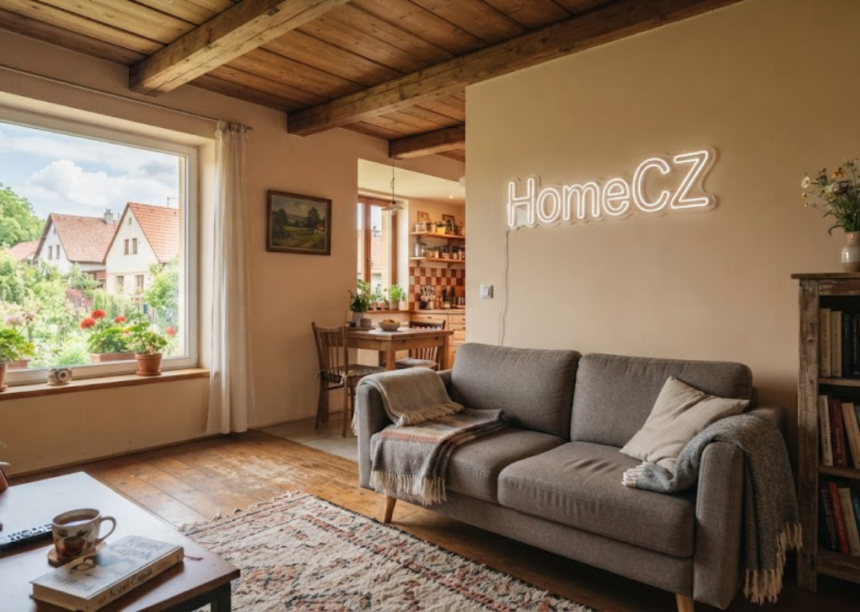
The term HomeCZ looks straightforward, but search for it online and the picture becomes surprisingly complicated. One website may describe HomeCZ as a modern living philosophy. Another connects it with smart homes, minimalist interiors, internet services, CCTV, property rentals, or home technology.
That inconsistency matters.
Current search results do not support the idea that HomeCZ has one universally accepted meaning. Instead, the name appears in connection with real businesses and services, while a growing collection of third-party articles also uses it as shorthand for smart, functional, technology-supported home living. The Fox Posts
This guide separates those two things. Rather than inventing a history or presenting an emerging online interpretation as an established brand, we’ll examine what can actually be verified, why the term has become associated with modern homes, and how the useful ideas surrounding it can be applied in real life.
What Is HomeCZ?
At the simplest level, HomeCZ is an ambiguous term rather than one clearly established global brand or design movement.
One documented use relates to CV. Home Connection Z Group, an Indonesian business associated with internet connectivity, CCTV installation, and application development. Separately, similar naming appears in Czech property and rental contexts. The Fox Posts
Then there is a third meaning—the one increasingly visible in lifestyle content.
Several publishers use HomeCZ to describe an approach combining:
- Smart-home technology
- Functional interior design
- Minimalist or uncluttered spaces
- Home security
- Energy-conscious living
- Flexible furniture and layouts
- Natural materials and lighting
- Comfort and everyday convenience
This broader interpretation is useful for understanding search intent, but it needs an important qualification: available evidence does not establish it as a formally defined international design philosophy with a recognized founder, governing organization, or universal standard. Some publishers explicitly acknowledge this distinction, while others present the concept much more confidently. Just another WordPress site
That is the first thing consumers should understand before researching the subject further.
Why Is There So Much Confusion Around HomeCZ?
The confusion surrounding HomeCZ is partly a search-engine problem.
When a relatively uncommon term begins appearing on multiple websites, writers often attempt to define it using the context of existing search results. One article associates it with smart homes; another expands that idea into minimalist living; a third introduces wellness or Zen design.
Over time, those interpretations can begin to look like established facts simply because they are repeated frequently.
Recent search results demonstrate exactly that variation. Some pages characterize the term as a smart-living and interior-design concept, while others specifically warn readers that those descriptions should not be confused with verified information about businesses using the HomeCZ name. Finance Lowell
The Important Difference Between an Entity and a Concept
This distinction is particularly important for evaluating information online.
A verified entity can normally be connected to identifiable evidence: a business registration, official website, physical location, named services, products, contact information, or documented leadership.
A concept can exist more loosely. Writers and communities may use a term to group related ideas even when there is no organization formally defining it.
HomeCZ currently appears in both contexts.
Readers should therefore ask a simple question whenever they encounter a claim:
Is the writer describing a documented HomeCZ organization, or their interpretation of HomeCZ as a modern-living concept?
That one check prevents much of the confusion.
HomeCZ and Modern Smart Living
The smart-living interpretation has gained visibility because it fits a genuine shift in how homes are being designed.
Homes increasingly contain connected lighting, cameras, locks, thermostats, speakers, appliances, sensors, energy-monitoring equipment, and other networked devices. At the same time, people want interiors that remain comfortable rather than looking like technology showrooms.
That creates a useful principle often associated with HomeCZ-style living: technology should solve a household problem without becoming the focus of the room.
Start With the Problem, Not the Gadget
This is where many smart-home projects go wrong.
People buy devices because they are new, inexpensive, or compatible with an app. Six months later, they have several applications, multiple accounts, incompatible ecosystems, unnecessary notifications, and devices that require more attention than the original manual task.
A better approach is to identify friction first.
For example:
- Constantly forgetting lights → consider automated lighting.
- Concerned about entrances → investigate appropriate security solutions.
- High heating or cooling usage → consider temperature and energy controls.
- Regularly losing keys → evaluate secure smart-access options.
- Too many visible cables → redesign charging and cable management.
- Limited floor area → prioritize multifunctional furniture before adding technology.
This problem-first approach is more valuable than attempting to make every object “smart.”
HomeCZ Interior Design: Function Before Decoration
Another recurring interpretation of HomeCZ connects the term with modern, uncluttered interior design.
The underlying idea is practical: a beautiful room that repeatedly interferes with everyday activities isn’t particularly well designed.
Several articles discussing the concept emphasize clean layouts, natural light, flexible furniture, concealed storage, neutral or earthy palettes, and carefully integrated technology. themarketfashion.com
Build Around Movement
Before buying furniture, consider how people actually move through the room.
Where do you enter? Where do you put your keys? Which chair gets used every evening? Where does clutter naturally accumulate?
These observations are often more valuable than inspiration photographs.
A stylish coffee table positioned in a natural walking route will become irritating. A beautiful kitchen with insufficient preparation space creates daily friction. A bedroom with excessive furniture can feel smaller regardless of how attractive each individual piece looks.
Good design supports behavior.
Use Visual Simplicity Without Creating an Empty Home
Minimalism doesn’t require blank white rooms.
A practical HomeCZ-inspired interior could combine restrained furniture with warmer elements such as wood, linen, ceramics, textured fabrics, plants, personal photographs, and carefully selected artwork.
The goal is not “own as little as possible.”
It is reduce visual noise while preserving personality.
That difference produces homes that feel lived-in rather than staged.
Natural Materials and Biophilic Elements
Natural materials frequently appear in articles discussing this style of modern living.
Common choices include wood, stone, bamboo, linen, cotton, ceramic, and understated metal finishes. Plants and daylight are also frequently used to soften technology-heavy interiors. raceordie2.com
The important principle isn’t simply buying products labeled “natural.”
Think in layers.
A room with hard flooring, glass tables, bare walls, and metallic electronics can feel visually and acoustically harsh. Introducing fabric curtains, an upholstered chair, a timber surface, rugs, or greenery changes both texture and atmosphere.
This is particularly useful when smart equipment is present because warmer materials prevent the space from feeling like an electronics showroom.
Smart Technology in a HomeCZ-Inspired Home
Technology works best when it quietly supports an existing routine.
A sensible system might include connected lighting, climate controls, security devices, energy monitoring, smart plugs, or selected appliances. Several third-party interpretations of HomeCZ emphasize precisely this combination of automation and unobtrusive interior design. Fine Magazine
But interoperability deserves more attention than novelty.
Ask These Questions Before Buying Smart Devices
Before purchasing anything, check:
- Does it work without a subscription?
- What happens if the internet connection fails?
- Can essential functions still be controlled manually?
- How long does the manufacturer provide security updates?
- Does it integrate with devices you already own?
- What personal information does it collect?
- Can recordings or data be stored locally?
- Can another household member operate it easily?
- Will replacing the device require changing the entire ecosystem?
Those questions aren’t glamorous.
They can, however, save far more money than chasing the newest feature.
HomeCZ and Home Security
Security is particularly relevant because one verified HomeCZ-related business has been associated with CCTV installation alongside internet and application services. Just another WordPress site
For consumers, though, “smart security” should never be reduced to installing more cameras.
Think in layers.
Physical door and window security comes first. Lighting, access control, alarms, cameras, network security, account protection, and alerts can then supplement those fundamentals.
Connected security devices also create digital responsibilities. Default passwords should be changed, multi-factor authentication should be enabled when available, firmware should be maintained, and devices should come from vendors with credible security-support practices.
A camera protecting the front door should not become an unnecessary vulnerability inside the network.
Energy Efficiency and Sustainable Home Design
Sustainability frequently appears alongside HomeCZ in modern-living articles, but the strongest approach is practical rather than decorative.
Buying an expensive connected appliance does not automatically make a house sustainable.
Start with the building and household behavior.
Look for unnecessary heating or cooling losses, inefficient lighting, standby consumption, poor insulation, inappropriate appliance sizes, and equipment running when nobody needs it.
Only then decide whether automation will produce meaningful improvements.
Smart plugs and energy monitors can be useful because they make invisible consumption visible. Automated schedules can also reduce unnecessary operation.
Technology should support efficiency—not substitute for it.
How to Create a HomeCZ-Inspired Space
You don’t need to renovate an entire property.
Start with one room and examine it through four lenses: function, clutter, comfort, and technology.
A practical process looks like this:
- Audit the room. Identify clutter, awkward movement, poor lighting, wasted storage, visible cables, noise, and repetitive daily inconveniences.
- Remove friction first. Rearrange furniture and eliminate unnecessary items before spending money.
- Improve storage. Give frequently used objects obvious, accessible locations.
- Fix lighting. Combine useful task lighting with softer ambient illumination rather than relying on one harsh source.
- Introduce texture. Use fabrics, wood, plants, ceramics, or other appropriate materials to create warmth.
- Add technology selectively. Automate only routines that genuinely benefit from automation.
- Review after several weeks. If a feature isn’t saving time, improving comfort, strengthening security, or reducing consumption, reconsider whether you need it.
That final step is important.
The most successful modern home isn’t necessarily the one containing the most technology. It is the one that requires the least unnecessary attention from its occupants.
HomeCZ for Small Apartments
Small spaces are especially suited to function-first design.
Every object consumes valuable visual or physical space, so multifunctional furniture can have an outsized impact. Storage beds, nesting tables, extendable dining surfaces, wall-mounted desks, and concealed storage can help a single room support several activities.
But avoid the temptation to fill every available wall with storage.
Negative space matters too.
A compact apartment with one clear walking route and carefully proportioned furniture can feel significantly more comfortable than a larger room filled with oversized pieces.
Technology can also help when it replaces rather than adds objects. One well-designed control system may be useful; five separate hubs probably aren’t.
HomeCZ for Remote Work
Remote work has changed what people expect from residential spaces.
A dining table may become a desk during working hours. Bedrooms sometimes double as offices. Living rooms need to support meetings, relaxation, entertainment, and family life.
That makes zoning valuable.
You don’t necessarily need permanent walls. A rug, shelving unit, lighting change, folding screen, desk orientation, or furniture arrangement can visually establish separate functions.
More importantly, create a clear end-of-work routine.
If possible, hide the laptop, keyboard, paperwork, and charging equipment after work. Turning a workspace back into living space creates a stronger psychological distinction between the two activities.
Common HomeCZ Claims You Should Treat Carefully
This is where better information becomes particularly valuable.
Search results contain some extremely specific claims about the supposed history, philosophy, products, engineering origins, wellness effects, and even case studies associated with HomeCZ. Not all are supported by equally strong evidence.
For example, some publishers describe a defined Zen/Czech design philosophy, whereas more evidence-focused coverage notes the lack of primary documentation establishing such a movement. The Fox Posts
Be cautious when you encounter:
- An exact origin story without a primary source
- A named founder who cannot be independently verified
- Specific proprietary products without official documentation
- Precise health improvements attributed to a design style
- Customer numbers without company records
- “Case studies” without identifiable projects or methodology
- Technical performance figures without product documentation
- Claims that HomeCZ is an internationally established design standard
Repetition across several blogs is not independent verification if those blogs are repeating the same unsupported source.
For significant purchasing decisions, look for primary evidence.
Is HomeCZ a Brand, Platform, or Lifestyle?
The most accurate answer is: the context determines the meaning.
HomeCZ is connected with identifiable commercial uses, including an Indonesian internet-related business. Similar naming also appears in Czech property contexts. Meanwhile, publishers increasingly use the term conceptually when discussing smart living, minimalist design, technology, security, and home management. The Fox Posts
Those meanings shouldn’t be silently merged into a fictional global organization.
This distinction is particularly important because search engines increasingly reward content that satisfies intent rather than simply repeats keywords.
Someone searching “HomeCZ” may actually be looking for:
a specific company, the meaning of the term, smart-home information, modern interior inspiration, or verification of claims they’ve encountered elsewhere.
A useful resource should help with all five.
What Could HomeCZ Mean for the Future of Modern Living?
Regardless of whether the broader interpretation ultimately becomes an established term, the ideas associated with it reflect genuine changes in residential design.
Homes are becoming multifunctional.
Technology is becoming less visible.
Consumers increasingly expect devices to communicate with each other. Energy consumption, privacy, cybersecurity, flexible working, compact living, and accessibility are becoming design considerations rather than afterthoughts.
The interesting shift isn’t toward houses packed with gadgets.
It’s toward responsive homes that demand less effort.
That may ultimately be the most useful way to understand the modern-living interpretation of HomeCZ: not as a requirement to automate everything, but as a framework for questioning whether each design and technology decision genuinely improves everyday life.
FAQs About HomeCZ
What does HomeCZ mean?
HomeCZ does not currently have one universally established meaning. The name is associated with different businesses and online contexts. One documented commercial use involves an Indonesian internet, CCTV, and application-services business, while many third-party publishers use the term when discussing smart homes and modern interior design. The Fox Posts
Is HomeCZ a smart-home company?
That description requires context. Some third-party articles portray HomeCZ as a broad smart-home concept, but available evidence does not establish one universal HomeCZ smart-home organization matching all of the products, design principles, and lifestyle claims found across those articles. Just another WordPress site
Is HomeCZ a Zen interior-design philosophy?
Several recent articles connect the term with Zen-inspired minimalism, natural materials, calm spaces, and discreet technology. However, stronger evidence is needed before treating those interpretations as proof of a formally established HomeCZ design movement. Finance Lowell
What does a HomeCZ-inspired home look like?
Under the broader modern-living interpretation, it would typically emphasize functional layouts, controlled clutter, flexible furniture, natural materials, good lighting, discreet smart technology, security, and energy awareness. These should be understood as commonly associated ideas rather than mandatory standards established by a single authority.
How can I apply HomeCZ ideas without renovating?
Start with one problematic room. Improve its layout, remove unnecessary clutter, organize storage, correct the lighting, conceal cables, and identify repetitive inconveniences. Only then introduce smart technology where it solves a specific problem. This approach costs less and prevents unnecessary devices from becoming additional household clutter.
Conclusion: Understand HomeCZ Before Following the Hype
HomeCZ is more interesting—and more complicated—than many search results suggest.
The term has identifiable commercial uses, while online publishers have also developed a broader interpretation around smart living, minimalist interiors, security, sustainability, automation, and flexible home design. Those two categories should remain clearly separated unless reliable evidence connects them.
For readers, the next step is simple: verify the context before trusting a HomeCZ claim. If you’re interested in the modern-living interpretation, start with your actual household problems—poor storage, inefficient lighting, security concerns, wasted energy, awkward layouts, or repetitive tasks—and solve those first.