Toastul is one of those search terms that looks familiar and mysterious at the same time. Depending on where you encounter it, it may refer to a Romanian word form, a modern label for creative topped toast, or even the name of a food-focused website. That overlap explains why online definitions often conflict—and why a useful guide needs to separate what is verifiable from what is merely repeated.
The clearest way to understand the term is to start with the language, then look at the newer food usage. In Romanian, “toast” is an established noun associated primarily with a ceremonial toast or short speech, while Romanian grammar commonly attaches the definite article to the end of a noun. That makes forms ending in “-ul” entirely normal. Romanian dictionaries also record “toast” in the food sense in some entries, while ordinary “toasted bread” is commonly expressed as “pâine prăjită.”
What Is Toastul?
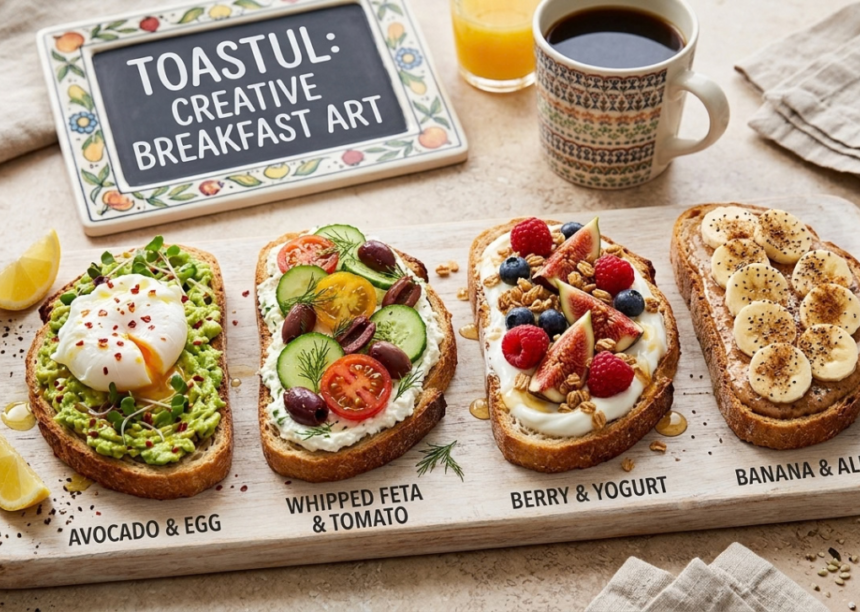
In current English-language food content, Toastul is best understood as an emerging, informal name for creative toast built as a complete dish. Think sturdy toasted bread plus a spread, one or more toppings, and finishing ingredients chosen for contrast in flavor, texture, color, or nutrition.
There is no authoritative culinary standard that defines one official recipe. Recent food pages use the label for combinations built around sourdough, avocado, eggs, yogurt, berries, hummus, seeds, nut butter, fruit, cheese, and similar toppings. Some pages even describe completely different preparations, which is strong evidence that the name is still fluid rather than a fixed culinary category.
That distinction matters. Calling it a centuries-old national dish, a proprietary appliance, or a universally recognized recipe goes beyond what reliable evidence currently supports.
What Does Toastul Mean in Romanian?
This is the part many competing articles oversimplify.
Romanian uses enclitic definite articles, meaning the equivalent of English “the” is typically attached to the end of the noun. For masculine and neuter singular nouns ending in a consonant, “-ul” is a common definite form. For example, băiat becomes băiatul, or “the boy.”
The Romanian noun toast is documented in dictionaries, most prominently for a short ceremonial speech or a drink raised in someone’s honor. Some dictionary entries also include a toasted-bread meaning. So, linguistically, Toastul can function as a Romanian definite form—roughly “the toast”—but context determines whether the speaker means a ceremonial toast, a food-related use, or something else.
For everyday toasted bread, pâine prăjită is a standard Romanian expression. That is why it is misleading to present the newer English-language food trend as though Toastul were simply the traditional Romanian name for loaded gourmet toast.
Why the Meaning Became Confusing Online
Search results show several competing narratives. Some sites describe the term as “toast plus soul,” some frame it as a lifestyle philosophy, one presents it as a smart-toaster brand, and another calls it an emerging online platform. These claims are not mutually compatible, and many are unsupported by primary documentation.
There is also an active website, Toastul.net, focused on food, recipes, culinary features, and related lifestyle content. Its homepage uses the name as a publication identity and includes a “Toastul Cuisine” section, which adds another legitimate but distinct use of the word.
The practical takeaway is simple: treat the term as context-dependent. If you see it in a recipe article, it probably refers to topped toast. If you see it in Romanian prose, grammar and sentence context matter. If you see it as a site or brand name, it may be a proper noun.
Is Toastul Really a Viral Food Trend?
There is clear evidence that the label has spread across food and lifestyle publishing, especially during 2025 and 2026. Multiple sites now use it for visually styled toast, often with sourdough, fruit, nut butter, eggs, hummus, cheese, seeds, or vegetables.
What is harder to prove is a single origin story. Several pages confidently describe an “original” recipe or claim that the trend began on a particular social platform, but the search record is inconsistent. One article even provides a detailed social-media backstory without corroborating primary evidence.
A more defensible description is that the name has been attached to an already familiar food format: open-faced, highly customizable toast. The food itself is not new. The emerging keyword, visual styling, and trend framing are the newer elements.
That is also why the concept feels instantly understandable. People were already eating avocado toast, ricotta toast, beans on toast, cheese toast, nut-butter toast, and open-faced sandwiches long before this label appeared.
The Four-Part Toastul Formula
A useful version is not defined by one ingredient list. It works better as a construction framework.
- 1. Choose a sturdy bread base. Sourdough, whole-grain bread, rye, seeded bread, ciabatta, or a dense gluten-free loaf all work. Thin, fragile slices tend to collapse under moist toppings.
- 2. Add a spread or moisture barrier. Hummus, ricotta, cottage cheese, Greek yogurt, avocado, tahini, cream cheese, nut butter, or seed butter helps toppings adhere and prevents the slice from tasting dry.
- 3. Build the main topping layer. Use fruit, roasted vegetables, tomatoes, mushrooms, eggs, beans, smoked fish, shredded chicken, tofu, or another ingredient with enough substance to make the toast satisfying.
- 4. Finish for contrast. Seeds, nuts, herbs, chili flakes, citrus zest, pepper, pickled onions, honey, balsamic reduction, or a small drizzle of olive oil can add crunch, acidity, heat, sweetness, or aroma.
This formula is more useful than memorizing a so-called official recipe because it lets you design around what you already have.
How to Make Toastul That Actually Tastes Good
Presentation may help a dish perform on social media, but flavor structure decides whether anyone wants a second bite.
Start with the bread. Toast it until the surface is crisp enough to resist wet ingredients while the center retains some chew. If you plan to use tomatoes, yogurt, juicy fruit, or other moisture-rich toppings, a firmer toast is especially important.
Next, think in contrasts. Creamy avocado benefits from acid and crunch. Sweet banana becomes more interesting with nut butter, cinnamon, and a pinch of salt. Rich ricotta pairs well with bright fruit or tomatoes. Hummus can handle sharp pickles, fresh herbs, and toasted seeds.
A Simple Flavor-Balancing Checklist
Before serving, ask five questions:
- Does the dish have enough salt to wake up mild ingredients?
- Is there acidity from lemon, lime, vinegar, pickles, or tart fruit?
- Is there a textural contrast between creamy, crisp, juicy, or crunchy components?
- Is one ingredient dominating everything else?
- Can you pick it up or cut it without the toppings sliding off?
That last point is underrated. A photogenic slice that disintegrates after one bite is badly engineered toast.
Five Easy Toastul Ideas
These combinations are not “official” versions. They are practical templates built around the food format now associated with the term.
1. Avocado, Egg, and Chili
Use toasted sourdough, mashed avocado, a cooked egg, lemon juice, black pepper, and chili flakes. Add pumpkin seeds for crunch.
If you use eggs, handle them safely. The U.S. FDA advises keeping eggs refrigerated and cooking them thoroughly; people at higher risk from foodborne illness should take particular care with raw or undercooked eggs.
2. Hummus, Tomato, and Cucumber
Spread hummus over whole-grain toast, then add sliced cucumber, tomato, parsley, cracked pepper, and a squeeze of lemon. A little feta can add saltiness if you eat dairy.
This version works well for lunch because the chickpea-based spread provides more substance than butter or jam alone.
3. Ricotta, Berries, and Pistachio
Use ricotta as the creamy base, then add strawberries or blueberries, chopped pistachios, and a light drizzle of honey. Lemon zest keeps the flavor from becoming flat.
For a less sweet version, skip the honey and add a few flakes of sea salt.
4. Peanut Butter, Banana, and Chia
Toast whole-grain bread, spread with peanut or seed butter, layer banana slices, and finish with chia seeds and cinnamon. This is fast, inexpensive, and easy to adapt.
If nutrition is a priority, bread choice matters. USDA MyPlate guidance encourages making at least half of grain choices whole grains and recommends variety across fruits, vegetables, grains, protein foods, and dairy or fortified alternatives.
5. Mushroom, Ricotta, and Herbs
Sauté mushrooms until browned rather than watery. Spread ricotta on crisp toast, add the mushrooms, then finish with parsley or thyme and black pepper.
A small splash of vinegar or lemon at the end makes the savory flavors feel sharper and less heavy.
Is Toastul Healthy?
It can be. It can also be dessert on bread.
The label itself tells you almost nothing about nutritional quality. A slice made with whole-grain bread, hummus, vegetables, seeds, and a protein-rich topping has a very different nutrient profile from brioche covered with chocolate spread, candy, and syrup.
A more useful question is: what is the meal built from? Look at the bread, protein source, produce, fats, added sugars, sodium, and portion size rather than assuming a trendy name automatically means “healthy.”
For a more balanced everyday version, consider:
- choosing whole-grain bread more often;
- adding a meaningful protein source such as eggs, beans, yogurt, cottage cheese, tofu, fish, or nut/seed butter;
- including fruit or vegetables;
- using seeds, nuts, avocado, or olive oil thoughtfully for texture and richness;
- keeping sweet syrups, highly processed meats, and heavy sauces proportionate rather than making them the entire meal.
This approach aligns better with mainstream dietary guidance than chasing a single “superfood” topping.
Common Mistakes That Ruin Creative Toast
The concept is simple, but small technique errors make a large difference.
Using bread that is too soft. Soft sandwich bread can work for light toppings, but heavy or wet combinations need more structure.
Adding watery ingredients without preparation. Salt and drain tomatoes when necessary. Cook mushrooms until their moisture evaporates. Pat pickled vegetables dry.
Overloading the slice. More toppings do not automatically create more flavor. Too many ingredients blur the taste and make the dish difficult to eat.
Ignoring temperature contrast. Warm toast with cold ricotta or yogurt can be excellent, but leaving a hot slice under delicate greens for too long makes them wilt.
Skipping acid. Rich spreads and fatty toppings often need lemon juice, vinegar, pickles, or tart fruit to taste balanced.
Toastul vs. Avocado Toast: What Is the Difference?
Avocado toast is a specific preparation centered on avocado. Toastul, in its emerging food-trend usage, is a broader umbrella for creatively composed toast and can be savory, sweet, plant-based, protein-heavy, minimalist, or elaborate.
That means avocado toast can fit inside the broader format, but the format is not limited to avocado. A ricotta-and-peach slice, hummus-and-cucumber toast, or peanut-butter-and-banana version can follow the same design logic.
The distinction is conceptual rather than formally regulated. There is no culinary authority policing the label.
Why the Term Has SEO Momentum
From a search perspective, the keyword has three characteristics that naturally generate curiosity: ambiguity, novelty, and low consensus. People encountering an unfamiliar word immediately search for meaning, origin, legitimacy, recipes, and examples.
That creates multiple overlapping intents:
- “What does Toastul mean?”
- “Is it Romanian?”
- “Is it a food or a brand?”
- “How do I make it?”
- “Is it healthy?”
- “Is there an official recipe?”
- “What is Toastul.net?”
The best content should answer those intents without pretending they all describe the same entity. That is the information gap many current pages miss.
Frequently Asked Questions
Is Toastul a real word?
Yes, but the answer depends on context. Romanian uses postposed definite articles, and “toast” is documented as a Romanian noun, so a definite form ending in “-ul” is linguistically plausible and appears in Romanian usage. Separately, English-language websites have adopted the same spelling as a food-trend label and as a site name.
Does Toastul mean toasted bread in Romanian?
Not exactly in the simplistic way some articles claim. Romanian dictionaries document “toast” primarily in the ceremonial sense, while some also list a food meaning. The common Romanian expression for toasted bread is pâine prăjită, so the modern gourmet-toast usage should not be presented as a direct traditional translation without qualification.
What ingredients are used in Toastul?
There is no mandatory ingredient list. A practical version usually combines toasted bread, a spread, a substantial topping, and finishing elements such as herbs, seeds, spices, fruit, vegetables, eggs, cheese, hummus, or nut butter. Recent recipe-oriented pages show considerable variation, which reinforces that the format is flexible rather than standardized.
Is Toastul the name of a website or brand?
It can be. Toastul.net is an active food-oriented website featuring recipes, food-and-health content, cooking tips, and a “Toastul Cuisine” category. Other websites have used the word for unrelated claimed products or platforms, so readers should verify the specific source rather than assuming every use refers to the same company or service.
Can I make Toastul gluten-free or vegan?
Yes. For a gluten-free version, use a bread specifically labeled gluten-free and choose toppings that meet your dietary needs. For a vegan version, options include hummus, avocado, tahini, nut or seed butter, beans, tofu, fruit, vegetables, herbs, seeds, and plant-based spreads; check packaged ingredients when allergies or strict dietary requirements matter.
Final Takeaway
Toastul is interesting precisely because it does not have one universally accepted modern definition. The strongest evidence points to three overlapping uses: a Romanian linguistic form, an emerging online label for creative topped toast, and a proper name used by at least one food-focused website.
If you came here for the food, keep it simple: choose sturdy bread, add a flavorful spread, build one strong topping layer, and finish with contrast. If you came here for the meaning, pay attention to context and be skeptical of overly precise origin stories that lack primary evidence.
Your next step is practical: pick one of the five combinations above, make it once, then adjust the bread, spread, acidity, protein, and crunch to suit your taste. That is where the concept becomes useful—not as another mysterious internet buzzword, but as a flexible way to turn a basic slice of toast into a meal worth repeating.