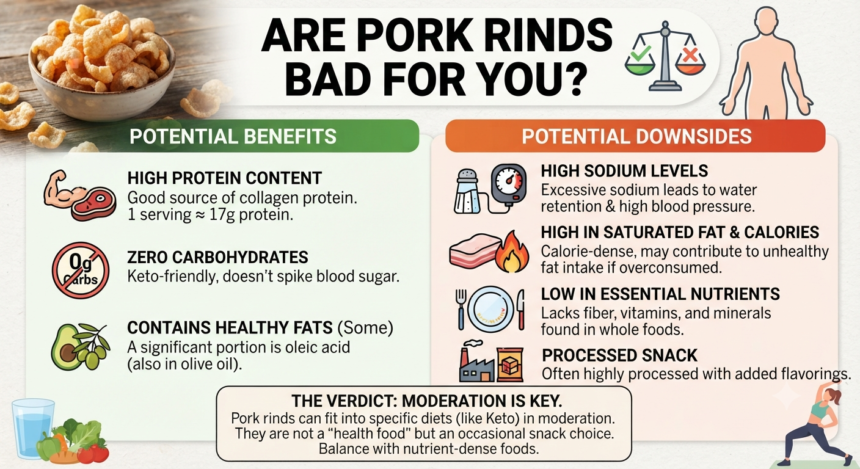
Are pork rinds bad for you? Not automatically. A small, occasional serving can fit into many eating patterns, especially when it replaces a larger portion of chips or another refined-carbohydrate snack. The problem arises when pork rinds become a daily habit, portions grow beyond the label serving, or the rest of the diet is already high in sodium, saturated fat and processed foods.
Pork rinds offer a few advantages. They are usually low in carbohydrates, contain some protein and deliver the crunchy texture many people crave. Yet they are not a nutrient-dense protein food. Most varieties provide substantial sodium, varying amounts of saturated fat and few vitamins, minerals or fiber.
The most accurate answer depends on how much you eat, how often you eat it, which product you choose and what your overall diet looks like.
What Are Pork Rinds?
Pork rinds are made from pig skin that is cooked until much of its moisture and fat are removed. The skin is then fried, baked or air-puffed until it expands into a light, crispy snack.
Traditional versions may contain only:
- Pork skin
- Salt
- Rendered pork fat or frying oil
Flavored products can include seasoning blends, sugar, maltodextrin, monosodium glutamate, smoke flavoring, cheese powder and preservatives. This means two bags that look nearly identical can have meaningfully different nutrition profiles.
Pork rinds may also be called pork skins, chicharrones, cracklings or scratchings, although these terms are not always interchangeable. Cracklings are generally denser and may retain more attached fat, while commercially packaged pork rinds are usually puffier and lighter.
Are Pork Rinds Bad for You Based on Their Nutrition?
A typical one-ounce serving of plain pork rinds commonly supplies approximately:
| Nutrient | Typical amount per 1-ounce serving |
|---|---|
| Calories | 150–180 |
| Protein | 15–18 grams |
| Total fat | 8–11 grams |
| Saturated fat | 3–4 grams |
| Carbohydrates | 0–2 grams |
| Fiber | 0 grams |
| Sodium | 300–600 milligrams |
Exact values vary significantly by brand, flavor and preparation method. Always use the package’s Nutrition Facts panel rather than assuming every product has the same composition.
At first glance, the protein content may look impressive. However, much of that protein comes from collagen, which is not nutritionally equivalent to eggs, fish, dairy, soy, legumes or lean meat.
Collagen is particularly low in some essential amino acids and does not provide all essential amino acids in ideal proportions. Pork rinds should therefore not be treated as your primary protein source, even when the label shows a high protein number.
Why Are Pork Rinds Considered Unhealthy?
The main concerns are not carbohydrates or calories alone. They are sodium, saturated fat, serving size, limited nutrient density and the ease of overeating.
Pork Rinds Can Be Very High in Sodium
For many people asking, “Are pork rinds bad for you?” sodium is the most important issue.
A single one-ounce serving can contain several hundred milligrams of sodium. Eat two or three servings while watching television, and the snack may contribute 900 milligrams or more before any other food is counted.
The American Heart Association recommends no more than 2,300 milligrams of sodium per day, with an ideal target of no more than 1,500 milligrams for most adults. High sodium intake can increase blood pressure, particularly among people who are salt-sensitive or already have hypertension.
This deserves attention because many people underestimate how much they eat. A small package may contain two or more labeled servings, yet it is easy to finish the entire bag.
Frequent high-sodium intake may be especially concerning for people with:
- High blood pressure
- Heart failure
- Chronic kidney disease
- A history of stroke
- Fluid-retention problems
- A physician-prescribed sodium restriction
Salt can also make pork rinds highly palatable. That intense flavor encourages continued snacking even after physical hunger has faded.
Some Varieties Contain Significant Saturated Fat
The answer to “Are pork rinds bad for you?” also depends on their fat composition.
Pork rinds contain both saturated and unsaturated fats. The exact balance depends on how much fat remains attached to the skin and whether additional oil is used during processing.
The American Heart Association recommends keeping saturated fat below approximately 6% of total daily calories for people trying to protect cardiovascular health. On a 2,000-calorie diet, that is about 13 grams or less per day. Saturated fat can raise LDL cholesterol, a recognized cardiovascular risk factor.
One serving of pork rinds may use a noticeable share of that daily amount. Add cheese, fatty meat, butter, cream or coconut oil elsewhere in the day, and saturated fat can accumulate quickly.
This does not mean one serving directly causes heart disease. Health outcomes reflect long-term eating patterns. Still, eating pork rinds frequently while consuming few fruits, vegetables, whole grains and unsaturated fats creates a less favorable dietary pattern.
They Provide No Fiber
Pork rinds contain virtually no dietary fiber.
Fiber supports digestive regularity, feeds beneficial gut bacteria and helps improve fullness. Higher-fiber eating patterns are also associated with better blood-glucose control and cardiovascular health.
A snack can contain protein and fat yet still be nutritionally incomplete. Without fiber and water-rich ingredients, pork rinds may not satisfy hunger as effectively as foods such as fruit, vegetables, beans, whole grains or nuts.
This is one reason a bag can disappear surprisingly quickly.
They Are Calorie-Dense for Their Weight
Pork rinds feel light because they are puffed, but that does not make them calorie-free. Fat provides nine calories per gram, so relatively small amounts can contribute substantial energy.
A measured ounce may fit into a balanced diet. A large bowl eaten without attention can easily provide several hundred calories.
Anyone pursuing weight loss should focus on portion size and total daily intake, not merely the fact that the snack contains few carbohydrates.
Flavored Products May Contain More Than Pork and Salt
Plain pork rinds can have a short ingredient list. Barbecue, spicy, cheese-flavored and sweet varieties may be more complex.
Depending on the manufacturer, these products may contain:
- Added sugar
- Maltodextrin
- Artificial or natural flavorings
- Smoke flavor
- Preservatives
- Monosodium glutamate
- Milk ingredients
- Wheat-derived ingredients
- Multiple sources of sodium
These ingredients are not inherently dangerous at normal permitted levels. The practical concern is that strongly seasoned varieties may contain more sodium, hidden carbohydrates or allergens than expected.
People following a strict ketogenic or gluten-free diet should check the label instead of relying on the front-of-package marketing.
Are Pork Rinds Bad for Your Heart?
Pork rinds are not usually considered a heart-healthy snack because they may combine high sodium with saturated fat while providing no fiber, potassium or meaningful plant nutrients.
Sodium can contribute to elevated blood pressure. Saturated fat may raise LDL cholesterol when it replaces unsaturated fats in the diet. Together, those factors become more relevant when pork rinds are eaten regularly.
The broader dietary pattern matters most. Someone who eats vegetables, fruits, beans, fish, whole grains and unsaturated fats most of the time is in a different position from someone whose diet is dominated by processed meats, fried foods and salty packaged snacks.
The American Heart Association recommends an eating pattern centered on vegetables, fruit, whole grains, legumes, nuts, fish and minimally processed foods while limiting sodium, saturated fat and heavily processed products.
For cardiovascular health, pork rinds are best viewed as an occasional snack, not a staple.
Are Pork Rinds Bad for Your Cholesterol?
Dietary cholesterol and blood cholesterol are not the same thing. Blood LDL levels are influenced by genetics, overall diet, body weight, activity, smoking status and medical conditions.
The more relevant issue with pork rinds is often saturated fat. Regularly replacing foods rich in unsaturated fat with foods high in saturated fat can raise LDL cholesterol in many people.
For example, replacing nuts, seeds or olive-oil-based snacks with pork rinds every day would generally make the fat profile of the diet less favorable. Replacing a large portion of heavily refined chips with a small portion of pork rinds may produce a more mixed result, depending on the products involved.
People with high LDL cholesterol, familial hypercholesterolemia or established cardiovascular disease should follow individualized guidance from a qualified clinician or registered dietitian.
Are Pork Rinds Bad for Blood Pressure?
They can be problematic for blood pressure because many brands are heavily salted.
Eating sodium causes the body to retain more water. In susceptible people, this increases blood volume and places additional pressure on blood-vessel walls.
The effect varies. Some people are more salt-sensitive than others, but it is difficult to know your sensitivity without monitoring your intake and blood pressure.
A practical rule is to compare brands and select a product with the least sodium per serving. Then measure the serving instead of eating directly from the bag.
Remember that “reduced sodium” is a relative claim. It means the product contains less sodium than its standard version, not necessarily that it is objectively low in sodium.
Are Pork Rinds Bad for Weight Loss?
Pork rinds can either help or hinder weight loss.
Their protein and fat may feel more satisfying than a sugary snack, and their low carbohydrate content can make them useful for people following carbohydrate-restricted diets. A pre-portioned serving may reduce the desire for crackers or chips.
However, pork rinds are energy-dense and extremely easy to overeat. They also lack fiber, one of the dietary components most useful for creating fullness with fewer calories.
Weight loss depends largely on maintaining an energy deficit over time. The label “keto” does not override calorie intake.
Pork rinds may fit a weight-loss plan when you:
- Measure one serving before eating
- Pair them with vegetables or a fiber-rich food
- Avoid eating directly from a large bag
- Choose a lower-sodium product
- Count the calories in the full portion
- Use them occasionally rather than automatically
They are less helpful when eaten mindlessly, used as an unrestricted “free food” or paired with high-calorie cheese dips and creamy sauces.
Are Pork Rinds Good for a Keto Diet?
Pork rinds are popular in ketogenic diets because plain varieties generally contain little or no carbohydrate. They can replace breadcrumbs, tortilla chips or crackers in certain meals.
Common keto uses include:
- Crushing them as a coating for chicken or fish
- Using them as a crunchy salad topping
- Serving a measured amount with guacamole
- Replacing breadcrumbs in meatballs
- Eating a small portion as a savory snack
Yet carbohydrate content is only one measure of food quality. A food can be keto-compatible while still being high in sodium, low in micronutrients and easy to overconsume.
A better ketogenic pattern emphasizes fish, eggs, non-starchy vegetables, avocados, olives, nuts, seeds and unsaturated oils. Pork rinds can be included, but they should not displace these more nutrient-dense foods.
Check flavored varieties carefully. Seasoning powders may add sugar, starch or maltodextrin even when the front label suggests the product is low-carb.
Is the Protein in Pork Rinds Healthy?
Pork rinds contain protein, but the number on the label can be misleading without context.
Most of the protein comes from collagen. Collagen contains large amounts of glycine, proline and hydroxyproline, amino acids associated with connective tissue. It is not a complete, balanced substitute for high-quality dietary proteins.
Pork rinds are particularly limited in tryptophan, an essential amino acid. That means they should not be counted as your only protein source at a meal.
More nutritionally complete protein options include:
- Eggs
- Fish
- Poultry
- Greek yogurt
- Cottage cheese
- Soy foods
- Beans and lentils
- Lean meat
Collagen-containing foods can still be part of a varied diet. The key is not mistaking a high protein total for complete nutritional adequacy.
Are Pork Rinds Healthier Than Potato Chips?
Neither food automatically wins in every category.
Pork rinds usually contain more protein and fewer carbohydrates than potato chips. Potato chips may provide a small amount of potassium and sometimes less saturated fat, depending on the cooking oil.
Both can be calorie-dense and high in sodium. Both are easy to overeat.
| Comparison | Pork rinds | Potato chips |
| Carbohydrates | Usually very low | Usually high |
| Protein | Higher, mostly collagen | Low |
| Fiber | Usually none | Small amount |
| Sodium | Often high | Often high |
| Saturated fat | Can be significant | Varies by oil |
| Micronutrients | Limited | Limited |
| Keto compatibility | Usually suitable | Usually unsuitable |
The better choice depends on your medical needs and the individual labels. Someone managing diabetes may prefer the lower-carbohydrate option, while someone limiting sodium or saturated fat may find a carefully selected chip more suitable.
The most nutritious alternative to either is usually a minimally processed snack with protein, fiber or both.
Do Pork Rinds Increase Cancer Risk?
This question requires careful wording.
The International Agency for Research on Cancer has concluded that processed meat causes colorectal cancer, with the evidence primarily involving foods preserved through methods such as curing, smoking, salting or adding chemical preservatives. Daily consumption of 50 grams of processed meat was associated with an estimated 18% increase in colorectal cancer risk in the research reviewed by IARC.
That statistic should not be applied directly to every pork rind product or occasional serving. Plain fried pork skin is not nutritionally identical to bacon, sausage or cured deli meat, and product manufacturing methods vary.
Some pork rinds may be heavily salted, smoked, preserved or flavored, while others have very short ingredient lists. Evidence does not establish that eating a small serving of plain pork rinds occasionally creates the same measured risk as consuming 50 grams of processed meat every day.
The sensible approach is to avoid making highly processed pork products a major part of your routine and to maintain a diet rich in fiber-containing plant foods.
Can People With Diabetes Eat Pork Rinds?
Plain pork rinds generally have little effect on blood glucose because they contain minimal carbohydrate. That can make them useful when replacing crackers, sweets or chips.
Still, “does not spike blood sugar” does not mean “unlimited” or “heart healthy.”
People with diabetes face an elevated risk of cardiovascular and kidney complications. Sodium, saturated fat, blood pressure and overall food quality therefore remain important.
A more balanced snack might combine a small serving of pork rinds with:
- Raw cucumber or bell-pepper slices
- Fresh salsa without excessive sodium
- A modest serving of guacamole
- A vegetable-based dip
- A side salad
Anyone using insulin or glucose-lowering medication should make food choices according to their individualized care plan.
Who Should Limit or Avoid Pork Rinds?
Asking “Are pork rinds bad for you?” becomes especially important when a medical condition affects how your body handles sodium or fat.
You may need to limit them if you have:
- High blood pressure: Sodium may make blood-pressure control more difficult.
- Heart disease: Saturated fat and sodium may conflict with a heart-protective eating plan.
- Kidney disease: Sodium, protein and mineral targets may require individualized management.
- High LDL cholesterol: Frequent saturated-fat intake may be counterproductive.
- Gout: Pork is a source of purines, although the exact amount in pork skin products varies.
- Digestive sensitivity: High-fat snacks can worsen symptoms for some people.
- A pork allergy: Pork products must be avoided.
- Alpha-gal syndrome: Mammalian products may trigger an allergic reaction in affected individuals.
- Religious or ethical restrictions: Pork is unsuitable for several dietary traditions.
People with gallbladder disease, pancreatitis or medically prescribed low-fat diets should ask their healthcare professional whether fried pork products are appropriate.
How to Choose Healthier Pork Rinds
Not all products are equal. A few label-reading habits can meaningfully improve your choice.
Compare Sodium Per Serving
Look at milligrams of sodium, not just the percentage shown on the front of the package. Compare products using the same serving weight.
A product with fewer milligrams per ounce is generally the better option for sodium control.
Check the Saturated Fat
Select the product with less saturated fat when serving sizes are comparable. Also consider what else you will eat that day.
A moderate serving may fit more easily when the rest of the day emphasizes fish, vegetables, beans and unsaturated fats.
Choose a Short Ingredient List
Plain products with pork skin and salt make it easier to understand what you are eating. A longer list is not automatically unsafe, but it may signal more flavoring agents, sweeteners, allergens or sodium sources.
Watch the Serving Size
Some labels list a serving by ounce, grams or number of pieces. The visual amount may be smaller than expected.
Place one portion in a bowl and put the bag away before eating.
Avoid Misleading Health Halos
Terms such as keto, zero-carb, artisanal, natural and high-protein do not tell you whether a product is low in sodium, low in saturated fat or nutrient-dense.
Turn the package over. The Nutrition Facts panel provides more useful information than the marketing claims.
How Often Can You Eat Pork Rinds?
There is no universal medically established frequency that applies to everyone.
For a generally healthy adult, a small serving occasionally is unlikely to determine overall health. Problems are more likely when pork rinds are eaten daily, replace nutrient-rich foods or push sodium and saturated-fat intake above recommended levels.
A reasonable approach is to treat them as a discretionary snack rather than an everyday protein source. Think of them as something to enjoy deliberately, not something to keep within reach during every work session or television program.
Your personal frequency should be lower if you have hypertension, kidney disease, elevated LDL cholesterol or a prescribed sodium restriction.
Healthier Ways to Eat Pork Rinds
The context of the snack can make a substantial difference.
Instead of eating several servings alone, use a small amount as a crunchy component in a more balanced meal.
Try these ideas:
- Crush a few over a large salad instead of using croutons.
- Pair one measured serving with raw vegetables.
- Use a small amount as breading rather than eating a full bag.
- Serve with fresh tomato salsa instead of a cheese-heavy dip.
- Combine with avocado for fiber and unsaturated fat.
- Drink water rather than a sugary beverage.
- Avoid pairing them with other salty processed meats.
These strategies add volume, fiber and micronutrients while keeping the pork-rind portion controlled.
Better Snack Alternatives
When you want crunch but also want better nutrient density, consider:
- Air-popped popcorn with limited salt
- Roasted chickpeas
- Unsalted nuts
- Pumpkin seeds
- Whole-grain crackers with hummus
- Carrots and cucumber with yogurt dip
- Apple slices with peanut butter
- Edamame
- Lightly salted broad beans
- Baked tortilla wedges with salsa
No alternative is automatically healthy in unlimited quantities. The advantage is that many of these options provide fiber, vitamins, minerals or higher-quality protein that pork rinds lack.
The Bottom Line: Are Pork Rinds Bad for You?
So, are pork rinds bad for you? They can be when eaten frequently or in large portions, particularly because many products are high in sodium, contain saturated fat and provide no fiber.
They also have some practical benefits. Plain pork rinds are low in carbohydrates, contain protein and may satisfy a desire for a crunchy snack. For people following a ketogenic diet or controlling carbohydrate intake, a measured serving may be useful.
The healthiest decision is not based on whether pork rinds are “good” or “bad.” It is based on dose, frequency, product quality and dietary context.
Use this simple approach:
- Choose a lower-sodium variety.
- Compare saturated fat between brands.
- Measure a one-ounce portion.
- Pair it with vegetables or another fiber-rich food.
- Do not rely on pork rinds as a complete protein.
- Keep them occasional if you have cardiovascular or kidney concerns.
A single snack rarely defines health. Repeated habits do.
Frequently Asked Questions
Are pork rinds bad for you if you eat them every day?
Daily consumption is not ideal for most people, especially when the product is high in sodium or saturated fat. Eating pork rinds every day can make it harder to stay within recommended sodium limits and may displace foods containing fiber, potassium, vitamins and healthier fats.
A small portion may fit some diets, but daily use should be evaluated alongside your complete eating pattern. People with high blood pressure, kidney disease, high LDL cholesterol or heart disease should be particularly cautious.
Are pork rinds healthier than regular chips?
Pork rinds are lower in carbohydrates and higher in protein than most potato chips. However, they usually contain no fiber, may have more saturated fat and can be just as salty or calorie-dense.
Neither should be considered a highly nutritious staple. Compare the labels and choose according to your health priorities rather than assuming the low-carb option is always healthier.
Can pork rinds make you gain weight?
Yes, when they contribute to a consistent calorie surplus. Pork rinds are relatively calorie-dense, and several servings can be consumed quickly because the pieces are light and crunchy.
They do not automatically cause weight gain. Portion-controlled pork rinds can fit into a weight-loss plan when total calorie intake remains appropriate.
Are pork rinds inflammatory?
No strong evidence shows that an occasional serving of pork rinds directly causes systemic inflammation in every person. However, dietary patterns high in processed foods, sodium and saturated fat and low in fruits, vegetables and fiber are generally less supportive of metabolic and cardiovascular health.
Individual reactions can differ. Someone with a food allergy, alpha-gal syndrome or digestive intolerance may experience symptoms unrelated to the snack’s general nutritional profile.
How many pork rinds should you eat at one time?
Start with the labeled serving, which is commonly about one ounce or 28 grams. Measure it into a bowl because estimating directly from the bag is unreliable.
Your appropriate amount may be smaller if the product contains substantial sodium or saturated fat. Pairing the serving with vegetables, salsa or avocado can create a more satisfying snack without requiring multiple portions.