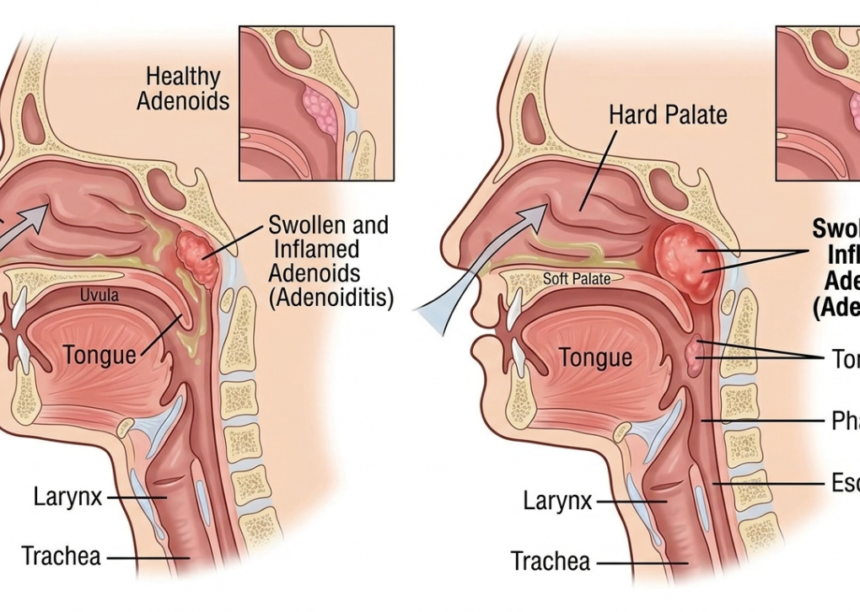
If you searched for Adenoidid, you are most likely looking for information about adenoiditis, the medically recognized term for inflammation of the adenoids. Adenoids are immune-system tissue located high behind the nose, where the nasal cavity meets the throat. When they become inflamed or infected, they can contribute to nasal blockage, mouth breathing, snoring, sore throat, postnasal drainage, ear problems, and disturbed sleep.
The spelling matters because Adenoidid is not a standard medical diagnosis. “Adenoiditis” describes inflammation of the adenoids, whereas adenoid hypertrophy refers to enlarged adenoid tissue that may occur with or without active infection. Those problems can overlap, but they are not interchangeable.
What Is Adenoidid?
In practical search terms, the query usually refers to adenoiditis, meaning inflammation of adenoid tissue in the nasopharynx. The adenoids form part of Waldeyer’s ring, a collection of lymphoid tissues positioned around the upper airway that participates in immune responses to material entering through the nose and mouth.
Adenoids are particularly prominent during childhood. They typically reach their greatest relative size during early childhood and begin regressing as children get older, which helps explain why symptomatic adenoid disease occurs much more often in children than adults.
Adenoiditis vs. enlarged adenoids
This is one of the most important distinctions for anyone researching this topic. Adenoiditis means inflamed adenoid tissue, often in association with infection, while adenoid hypertrophy means the tissue has enlarged enough to potentially obstruct airflow or interfere with nearby structures.
A child may have:
- Adenoiditis without major hypertrophy, particularly during an acute infection.
- Adenoid hypertrophy without active infection, causing chronic nasal obstruction or snoring.
- Both conditions simultaneously, potentially producing persistent blockage, recurrent infections, disturbed sleep, or ear problems.
The distinction matters because treatment targets the cause. An appropriate antibiotic may be considered for bacterial adenoiditis, while uncomplicated hypertrophy may instead be managed through observation, treatment of nasal inflammation, or surgery when clinically significant obstruction persists.
Adenoidid Symptoms: What Parents Usually Notice First
Symptoms related to adenoid inflammation can look surprisingly similar to an ordinary cold. The pattern becomes more important when nasal obstruction, mouth breathing, snoring, or ear problems persist beyond a typical respiratory infection or repeatedly return.
Common symptoms can include:
- Nasal congestion or obstruction
- Mouth breathing, particularly at night
- Runny nose
- Postnasal drip
- Sore throat
- Snoring
- Fever during acute infection
- Hyponasal or “blocked-nose” speech
- Restless or disrupted sleep
- Feeding difficulty in some infants
- Recurrent ear problems or hearing concerns
Children with enlarged adenoids can also experience sleep-disordered breathing. When upper-airway obstruction becomes significant, parents may notice habitual loud snoring, pauses in breathing, gasping, restless sleep, unusual sleeping positions, or daytime consequences of poor-quality sleep.
Those signs should not simply be dismissed as “normal snoring.” Persistent sleep-related breathing symptoms deserve assessment because adenoid enlargement can be one component of pediatric obstructive sleep apnea.
Why ear symptoms can happen
The adenoids are located near the openings of the Eustachian tubes, which ventilate the middle ears. Chronic inflammation or enlarged adenoid tissue can contribute to Eustachian tube dysfunction, middle-ear fluid, recurrent otitis media, and conductive hearing problems.
That connection has practical consequences. Persistent hearing difficulty in young children can interfere with speech and language development, so apparent “not listening” should not automatically be treated as a behavioral issue when chronic nasal and ear symptoms are also present.
Adenoidid Symptom Patterns: Infection, Obstruction, or Allergy?
One useful way to understand Adenoidid symptoms is to look at the pattern rather than any single complaint. Several conditions can produce nasal congestion, but their accompanying features often differ.
| Symptom pattern | What it may suggest | What clinicians may investigate |
|---|---|---|
| Fever, sore throat, nasal discharge with sudden onset | Acute respiratory infection or adenoiditis | Viral vs. bacterial illness |
| Long-term mouth breathing and snoring | Adenoid hypertrophy or another nasal obstruction | Adenoid size, tonsils, turbinates, sleep symptoms |
| Sneezing, itching, clear drainage, seasonal symptoms | Allergic rhinitis | Allergy history or testing |
| Recurrent ear fluid and hearing problems | Eustachian tube dysfunction associated with adenoid disease | Otoscopy, hearing testing, tympanometry |
| Loud snoring with gasping or breathing pauses | Sleep-disordered breathing | Airway assessment and sometimes polysomnography |
Symptoms overlap, so this table is not a diagnostic tool. Its value is in helping parents describe the pattern accurately when speaking with a pediatrician or ENT specialist.
What Causes Adenoidid?
Most cases associated with this search term involve inflammation of the adenoids. Viral upper-respiratory infections are common triggers, while bacterial infection can occur during or after a respiratory illness.
Potential causes and contributors include:
- Respiratory viruses, including viruses responsible for common respiratory infections
- Bacterial infections
- Repeated upper-respiratory infections
- Allergic rhinitis and persistent nasal inflammation
- Environmental airway irritation
- Reflux-related irritation in some patients
Children in the preschool and early school years are particularly prone to adenoid-related symptoms. During these years, adenoid tissue is relatively prominent while exposure to respiratory infections is also common.
Is Adenoidid contagious?
The inflamed adenoid tissue itself is not something another person “catches.” However, if acute adenoiditis is caused by a contagious respiratory virus or bacterium, the underlying infection may spread from one person to another.
Good hand hygiene, avoiding shared drinking utensils during illness, covering coughs, and following recommended vaccination schedules can reduce exposure to common infections. These measures cannot prevent every episode, but they address several common routes of respiratory pathogen transmission.
Acute vs. Chronic Adenoidid
For people researching this condition, the difference between acute and chronic or recurrent symptoms is important. Acute adenoiditis may occur alongside an upper-respiratory infection and improve as the illness clears.
Persistent disease requires a different perspective. Ongoing nasal obstruction, recurrent purulent drainage, habitual mouth breathing, frequent snoring, chronic ear disease, or repeated episodes despite treatment can justify evaluation for adenoid hypertrophy, persistent inflammation, allergic rhinitis, sinus disease, or another cause of nasal obstruction.
Repeatedly treating every episode with leftover antibiotics is not appropriate. Symptoms may be viral or noninfectious, and unnecessary antibiotic exposure contributes to side effects and antimicrobial resistance.
How Adenoidid Is Diagnosed
Adenoids sit behind the nasal cavity, so they cannot usually be evaluated simply by asking a child to open their mouth. This is why a proper Adenoidid evaluation often goes beyond a routine throat look.
A clinician generally starts with the medical history. Important details include symptom duration, fever, nasal blockage, sleep quality, snoring, breathing pauses, recurrent ear infections, hearing changes, allergy symptoms, speech concerns, and previous treatment.
When symptoms are persistent or clinically significant, evaluation can include:
- Physical examination of the nose, throat, ears, palate, and neck
- Flexible nasal endoscopy to directly inspect the nasopharynx and adenoid tissue
- Microbiologic testing when a specific bacterial infection is suspected
- Hearing evaluation or tympanometry when middle-ear fluid or hearing loss is suspected
- Allergy assessment when the history suggests allergic rhinitis
- Polysomnography, or a sleep study, in selected children when obstructive sleep apnea requires further assessment
Nasal endoscopy is particularly informative because it permits direct assessment of adenoid tissue and the degree of nasopharyngeal obstruction. A 2025 clinical review described endoscopy as the reference method for evaluating adenoid hypertrophy and guiding treatment decisions.
Imaging may still be useful in selected situations. However, when direct visualization is feasible, it can avoid unnecessary radiation exposure while providing detailed anatomical information.
Adenoidid Treatment: What Actually Helps?
Treatment depends on what is causing the symptoms, not simply on the presence of enlarged adenoids. There is no universal medication appropriate for every child with congestion, inflammation, or hypertrophy.
Viral illness and supportive care
If adenoid inflammation accompanies a viral respiratory infection, symptoms may improve as the immune system clears the infection. Supportive care can include fluids, rest, appropriate fever or pain management, and saline nasal care when recommended.
Antibiotics do not treat viral infections. Whether antibacterial treatment is appropriate should therefore be based on the clinical picture rather than nasal congestion alone.
Antibiotics for bacterial adenoiditis
A clinician may prescribe antibiotics when bacterial adenoiditis is suspected or identified. Medication choice and duration depend on factors such as the clinical presentation, age, allergy history, recent antibiotic use, and local prescribing considerations.
Parents should avoid starting leftover antibiotics, sharing another person’s medication, or changing the prescribed course without medical advice. Failure to improve as expected should prompt reassessment rather than repeated self-treatment.
Intranasal corticosteroids for enlarged adenoids
One of the most important recent evidence developments concerns intranasal corticosteroids for children with symptomatic adenoid hypertrophy. A 2025 systematic review and meta-analysis involving 30 studies and 2,301 children found that intranasal corticosteroids were associated with improved clinical symptom scores, reduced adenoid size, and a lower rate of adenoidectomy compared with control groups.
Another 2025 meta-analysis of 16 studies and 1,156 patients also reported improvement in adenoid hypertrophy and nasal obstruction among children treated with intranasal corticosteroids. These findings support medical therapy as an option for selected patients, although treatment still needs to be individualized.
That evidence does not mean every congested child should automatically start a steroid spray. Diagnosis, age, technique, treatment duration, coexisting allergies, symptom severity, and clinician supervision all matter.
Saline care and allergy treatment
Saline nasal spray or irrigation can help remove mucus and allergens for some patients. When allergic rhinitis is contributing to persistent nasal inflammation, appropriate allergy management may also reduce symptoms.
Treatment should target the mechanism. Symptoms driven primarily by allergic inflammation require a different strategy from recurrent bacterial infection or severe mechanical obstruction.
When Does Adenoidid Require Surgery?
Surgical removal of the adenoids is known as an adenoidectomy. It can be considered when symptoms are severe, recurrent, persistent despite appropriate treatment, or associated with meaningful airway, sleep, hearing, or middle-ear problems.
American Academy of Otolaryngology–Head and Neck Surgery clinical indicators identify several circumstances in which adenoidectomy may be considered. Examples include persistent symptoms of adenoiditis despite antibiotic treatment, chronic nasal obstruction affecting sleep, recurrent purulent rhinorrhea, hyponasal speech, and certain patterns of persistent otitis media with effusion.
These indicators are not a one-size-fits-all surgical rule. The Academy itself notes that individual clinical circumstances determine whether a procedure is appropriate.
What happens during an adenoidectomy?
An adenoidectomy is performed under anesthesia by an appropriate surgical specialist, usually an otolaryngologist. The tissue is generally removed through the mouth, meaning no external skin incision is required.
Recovery is commonly relatively short, but families should follow their surgical team’s specific instructions. Hydration, pain management, activity restrictions, diet, bleeding precautions, and follow-up recommendations can vary according to the individual procedure and patient.
Can adenoids grow back?
Some adenoid tissue can remain after surgery, and regrowth is possible. Recurrent symptoms, however, should not automatically be blamed on regrown adenoids because allergic rhinitis, turbinate enlargement, tonsillar obstruction, and other nasal or airway problems can create similar symptoms.
An ENT reassessment can determine whether adenoid tissue has become clinically important again or another condition is responsible.
Adenoidid in Adults: Why It Deserves More Attention
Although adenoid-related disease predominantly affects children, adults can retain adenoid tissue and occasionally develop enlargement or inflammation. Because adenoids normally regress with age, persistent or unusual nasopharyngeal tissue in an adult deserves a broader diagnostic approach.
Adult nasal obstruction should therefore not automatically be treated as the same condition seen in young children. Clinicians may need to evaluate chronic inflammation, structural causes, benign masses, and less commonly malignancy when features such as abnormal tissue, bleeding, persistent enlargement, or unexplained hearing symptoms are present.
This does not mean adenoid enlargement in adults usually represents cancer. It means persistent adult symptoms deserve appropriate examination rather than assumption or prolonged self-treatment.
Complications of Untreated Adenoidid
Many uncomplicated episodes improve without long-term consequences. Persistent obstruction or recurrent inflammatory disease, however, can affect structures and functions beyond the nose itself.
Possible complications can include:
- Recurrent middle-ear infections
- Otitis media with effusion
- Conductive hearing loss
- Sleep-disordered breathing
- Obstructive sleep apnea
- Persistent mouth breathing
- Changes in speech resonance
- Daytime attention, mood, or behavioral issues associated with poor sleep
- Dental or orofacial growth concerns in children with prolonged severe obstruction
Duration and severity are crucial. A child who breathes through the mouth for several days during a cold represents a very different clinical situation from one who has spent months habitually mouth breathing, snoring loudly, sleeping poorly, or struggling to hear.
When to See a Doctor for Adenoidid Symptoms
Arrange a medical assessment when symptoms are persistent, repeatedly recur, interfere with hearing, or significantly disturb sleep. A pediatric clinician or ENT specialist can assess whether infection, hypertrophy, allergic disease, middle-ear dysfunction, or another condition is responsible.
Seek prompt medical help when a child develops:
- Significant difficulty breathing
- Repeated breathing pauses or serious respiratory distress
- Blue or gray coloration of the lips or skin
- Severe dehydration or inability to drink
- Unusual drowsiness or difficulty waking
- Significant bleeding
- Rapidly worsening symptoms
- Persistent high fever accompanied by a seriously unwell appearance
Potential emergencies should not be managed solely with home remedies or information found online. When breathing or consciousness is affected, urgent medical evaluation is the priority.
How to Reduce Recurrent Adenoidid Problems
There is no guaranteed strategy for preventing every episode, especially in younger children who encounter respiratory infections frequently. What families can do is reduce avoidable triggers and create a clearer symptom history for clinicians.
Useful steps include:
- Maintain a symptom diary covering snoring, nasal discharge, fever, ear infections, antibiotic treatments, sleep disturbances, and missed school.
- If safe and practical, document snoring or unusual nighttime breathing to describe the pattern accurately to the treating clinician.
- Manage diagnosed allergic rhinitis consistently, following the clinician’s treatment plan.
- Minimize exposure to tobacco smoke and airway irritants.
- Encourage good hand hygiene and respiratory etiquette during infection seasons.
- Follow through with hearing testing when hearing, speech, language, or school performance becomes a concern.
- Ask whether persistent symptoms justify an ENT referral or nasal endoscopy.
This converts a vague complaint such as “my child is always congested” into a much more useful clinical history. Frequency, duration, nighttime symptoms, ear problems, and treatment response can reveal patterns that a single office examination may not capture.
Frequently Asked Questions About Adenoidid
1. Is Adenoidid the same as adenoiditis?
Adenoidid is not the standard medical spelling. People searching for it are generally seeking information about adenoiditis, which means inflammation of the adenoids.
Adenoiditis should also be distinguished from adenoid hypertrophy, meaning enlarged adenoids. Enlargement can occur with inflammation, but a child can have enlarged adenoids without an active infection.
2. What are the most common Adenoidid symptoms in children?
Typical symptoms of adenoid inflammation or enlargement include nasal blockage, mouth breathing, snoring, runny nose, postnasal drainage, sore throat, and sometimes fever. Children may also experience recurrent ear infections, middle-ear fluid, hearing difficulty, restless sleep, or hyponasal speech.
The duration of symptoms is often as important as the symptoms themselves. Persistent mouth breathing or habitual snoring for weeks or months deserves more attention than temporary congestion during an uncomplicated cold.
3. Can adenoid problems cause sleep apnea?
Yes. Significantly enlarged adenoids can contribute to sleep-disordered breathing and pediatric obstructive sleep apnea by narrowing the upper airway during sleep.
Habitual loud snoring, gasping, witnessed breathing pauses, restless sleep, or daytime consequences of poor sleep warrant clinical assessment. Tonsils and other parts of the airway may also contribute, so the adenoids are not always the only cause.
4. Can Adenoidid be treated without surgery?
Yes. Many patients do not require an operation.
Viral inflammation may improve with supportive care, bacterial adenoiditis may require clinician-directed antibiotic therapy, and selected children with symptomatic adenoid hypertrophy can benefit from intranasal corticosteroids or management of coexisting allergic inflammation. Current systematic-review evidence supports intranasal corticosteroids as an effective nonsurgical option for some children with adenoid hypertrophy.
Surgery becomes more relevant when significant obstruction, recurrent disease, hearing problems, persistent middle-ear disease, or sleep-related breathing problems continue despite appropriate management.
5. At what age do adenoid problems usually improve?
Adenoid tissue is relatively prominent during childhood and generally begins to regress as children get older. It typically becomes much less prominent by adolescence and adulthood.
That natural regression means observation can be reasonable for selected children with mild symptoms. Waiting is not appropriate, however, when significant airway obstruction, suspected sleep apnea, persistent hearing loss, developmental concerns, or recurrent clinically important infections are present.
Conclusion: What to Do If You Searched for Adenoidid
If you searched Adenoidid because a child has chronic nasal blockage, snoring, mouth breathing, repeated ear problems, or poor-quality sleep, focus on the pattern and duration of symptoms, not just the spelling. The recognized medical conditions to discuss with a healthcare professional are adenoiditis and adenoid hypertrophy, and their treatment depends on whether infection, obstruction, allergy, middle-ear dysfunction, or sleep-disordered breathing is driving the problem.
Start by documenting how long the symptoms have lasted, whether they occur every night, whether hearing or sleep is affected, and which treatments have already been tried. Persistent or recurrent symptoms warrant assessment by a pediatric clinician or ENT specialist, while significant breathing difficulty, serious respiratory distress, or other emergency warning signs require urgent medical care.
Getting the diagnosis right comes before choosing the treatment. That distinction can prevent unnecessary antibiotics, identify children who may benefit from medical therapy, and ensure that significant airway, hearing, or sleep problems receive specialist attention at the right time.