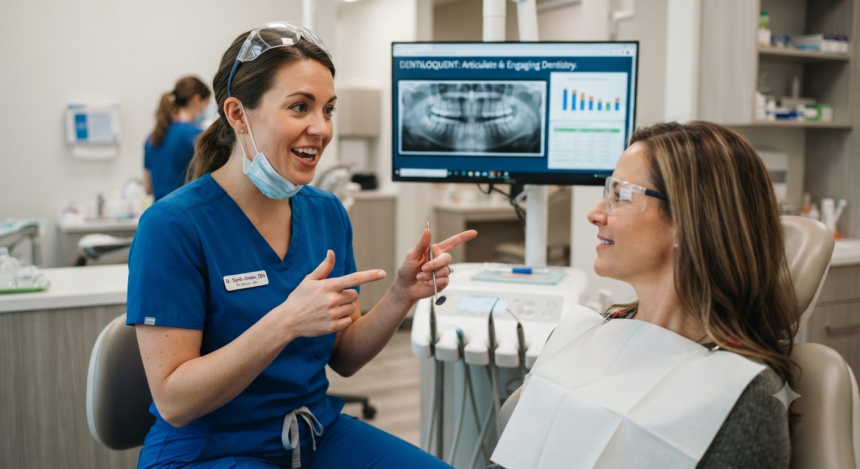
Dentiloquent is a unique term that combines the ideas of dental knowledge and eloquent communication. While it is not a widely established medical diagnosis or officially recognized dental procedure, the word is often understood as describing someone or something connected with clear, skilled, and effective communication about dentistry and oral health.
In simple terms, Dentiloquent refers to the ability to speak, explain, or communicate dental topics in a confident, understandable, and professional way. It represents the bridge between complex dental science and the everyday language patients need to make informed decisions about their oral health.
Dental care is not only about treatments, instruments, and procedures. A major part of successful dentistry depends on how well professionals explain conditions, recommendations, prevention methods, and treatment options. This communication-focused approach is where the concept of Dentiloquent becomes valuable.
A dentist may have excellent technical skills, but if they cannot explain a diagnosis clearly, patients may feel confused or uncertain. Strong dental communication creates trust, improves patient cooperation, and helps people take better care of their teeth and gums.
Why Dentiloquent Communication Matters in Modern Dentistry
Modern dentistry has evolved from purely mechanical and reconstructive to one that values communication. Patients now expect to be informed, to ask questions and to receive guidance. They want to know about dental implants, periodontal disease, cosmetic dentistry, orthodontics, preventive dentistry and proper home care before ever setting foot in a dental office.
As such, the ability to communicate effectively is now one of the most important skills of a competent dentist.
A Dentiloquent approach focuses on creating information that is
simple,
evidence-based,
patient-centric,
devoid of unnecessary jargon
and
most importantly,
informs the patient and helps them make better decisions about their dental care.
For example, instead of stating:
“You have periodontal inflammation caused by bacterial biofilm accumulation.”
A dentist should say:
“Your gums are inflamed due to the presence of bacteria around your teeth. The inflammation can be resolved by improving your oral hygiene and thoroughly removing the bacteria.”
Both statements are essentially the same but the second one helps the patient understand the issue and informs them of the course of action.
Dentiloquent and the Importance of Patient Education
How Clear Dental Explanations Improve Oral Health
Patient education is one of the strongest tools in preventive dentistry. Many oral health problems develop because people do not fully understand their causes or warning signs.
A Dentiloquent communication style helps patients understand:
- Why regular dental checkups matter
- How cavities develop
- The connection between gum health and overall wellness
- Proper brushing and flossing techniques
- The benefits and limitations of different treatments
When people understand the reason behind a recommendation, they are more likely to follow it.
A dentist who explains treatment options clearly can help patients feel more comfortable choosing procedures such as:
- Dental crowns
- Root canal therapy
- Tooth replacement options
- Teeth whitening treatments
- Clear aligners
- Gum treatments
The Role of Dentiloquent Skills in Building Patient Trust
Trust is a foundation of healthcare. Many patients experience dental anxiety because they fear pain, unexpected costs, or complicated procedures.
Strong communication reduces these concerns.
A Dentiloquent dental professional does not simply tell patients what treatment they need. They explain:
- What the problem is
- Why treatment may be necessary
- What alternatives exist
- How long recovery may take
- What results patients can realistically expect
This creates transparency.
Patients who feel informed are more confident and more likely to maintain long-term relationships with their dental providers.
Dentiloquent in Dental Marketing and Online Content
Why Dental Websites Need Better Communication
Dental clinics today compete not only through location and pricing but also through online visibility and patient experience.
A website filled with complicated medical terminology may fail to connect with potential patients. People searching online usually want simple answers to questions like:
- “Why are my gums bleeding?”
- “How much does a dental implant cost?”
- “Is teeth whitening safe?”
- “How can I stop tooth sensitivity?”
A Dentiloquent content strategy focuses on answering these questions in a way that combines expertise with readability.
High-quality dental content should include:
- Clear explanations
- Professional insights
- Accurate health information
- Practical advice
- Patient-centered language
This approach supports Google E-E-A-T principles, especially experience, expertise, authority, and trust.
How Dentiloquent Writing Helps Dental SEO
Search engines increasingly reward content that genuinely helps users. Dental websites need more than keyword placement. They need meaningful information.
A Dentiloquent SEO strategy naturally includes related topics such as:
- Oral health education
- Dental hygiene tips
- Tooth decay prevention
- Gum disease symptoms
- Dental treatment explanations
- Cosmetic dentistry information
- Emergency dental care
Instead of creating shallow pages, dental brands can create resources that answer real patient concerns.
This improves:
- Search visibility
- User engagement
- Website credibility
- Patient conversions
Key Characteristics of a Dentiloquent Communication Style
A strong Dentiloquent style usually includes several important qualities.
1. Simplicity Without Losing Accuracy
Dental science can be complicated. However, simplifying information does not mean removing important details.
The goal is to explain difficult concepts while maintaining medical accuracy.
For example:
A dentist can explain tooth decay by discussing bacteria, acids, enamel damage, and prevention without overwhelming the patient with unnecessary scientific terminology.
2. Empathy and Understanding
Good communication requires more than facts.
Patients are real people with concerns, fears, budgets, and personal experiences.
A Dentiloquent professional considers emotional factors by:
- Listening carefully
- Acknowledging patient concerns
- Explaining procedures calmly
- Avoiding judgment about oral hygiene habits
3. Confidence and Professional Knowledge
Effective communication comes from expertise.
Patients want answers from professionals who understand:
- Dental anatomy
- Treatment procedures
- Preventive methods
- Modern technologies
- Patient safety standards
Knowledge combined with communication creates authority.
Dentiloquent vs Traditional Dental Communication
Traditional dental communication often focuses on delivering information from professional to patient.
The dentist explains. The patient listens.
A Dentiloquent approach creates a conversation.
The patient becomes an active participant.
Traditional Approach:
- Uses more technical terms
- Focuses mainly on diagnosis
- Gives limited explanation
- May create confusion
Dentiloquent Approach:
- Uses understandable language
- Encourages questions
- Explains different options
- Builds patient confidence
The difference is not only in the words used. It is in the overall patient experience.
How Dental Professionals Can Develop Dentiloquent Skills
Improve Listening Before Speaking
Communication begins with understanding.
Dentists can improve their communication by asking patients:
- What concerns you most?
- What questions do you have?
- What are your expectations?
- Are you worried about anything?
Listening helps create personalized conversations.
Practice Explaining Complex Topics
Dental professionals can strengthen their Dentiloquent abilities by practicing explanations of common procedures.
Useful practice topics include:
- Explaining cavities to children
- Discussing implants with adults
- Explaining gum disease progression
- Describing cosmetic treatment options
The goal is to explain the same concept at different levels depending on the audience.
Use Visual Communication Tools
Many patients understand better through visuals.
Helpful tools include:
- Dental diagrams
- Before-and-after images
- Treatment animations
- Educational videos
- Digital scans
Combining spoken explanations with visual aids improves understanding.
The Future of Dentiloquent Dental Communication
Healthcare is becoming increasingly digital. Patients now interact with dental brands through websites, social media, online reviews, and virtual consultations.
This creates a growing need for professionals and organizations that communicate effectively.
The future of Dentiloquent communication may include:
- AI-powered dental education tools
- Personalized oral health guidance
- Interactive treatment explanations
- Video-based patient education
- Multilingual dental resources
Technology can provide information, but human-centered communication remains essential.
A machine can provide facts. A skilled communicator provides understanding.
Benefits of Using a Dentiloquent Approach for Dental Clinics
Dental practices that prioritize effective communication may experience several advantages.
Better Patient Satisfaction
Patients appreciate clinics where they feel heard and respected.
Clear explanations reduce uncertainty and improve the overall experience.
Stronger Treatment Acceptance
When patients understand why a treatment is recommended, they are more likely to proceed confidently.
Improved Reputation
Positive communication often leads to better reviews and recommendations.
Greater Health Awareness
Educational communication helps communities improve their oral health habits.
Common Mistakes That Reduce Dental Communication Quality
Even experienced professionals can struggle with communication.
Common mistakes include:
- Using too many technical terms
- Rushing explanations
- Ignoring patient emotions
- Not explaining treatment alternatives
- Assuming patients already understand dental concepts
A Dentiloquent mindset helps avoid these problems by putting clarity first.
Frequently Asked Questions About Dentiloquent
What does Dentiloquent mean?
Dentiloquent describes a communication style related to dentistry that focuses on speaking about oral health clearly, professionally, and effectively. It combines dental knowledge with strong communication skills.
Is Dentiloquent an official dental treatment or procedure?
No. Dentiloquent is not recognized as a dental procedure, diagnosis, or treatment method. It is better understood as a descriptive term related to dental communication and expression.
Why is Dentiloquent communication important for dentists?
Dentiloquent communication helps dentists explain diagnoses, procedures, and preventive care in ways patients can understand. This improves trust, comfort, and treatment decisions.
How can dental clinics use Dentiloquent principles online?
Dental clinics can apply Dentiloquent principles by creating educational content, writing clear website pages, answering patient questions, and avoiding overly complicated medical language.
Can Dentiloquent communication improve patient relationships?
Yes. Clear and empathetic communication can strengthen relationships between dental professionals and patients by creating confidence, transparency, and better understanding.
Final Thoughts: Why Dentiloquent Communication Is the Future of Patient-Centered Dentistry
Dentistry is built on science, but successful dental care is also built on communication. Patients need more than treatments; they need explanations they can understand and trust.
The idea behind Dentiloquent highlights an important truth: knowledge becomes more powerful when it is shared clearly.
Whether you are a dental professional, clinic owner, healthcare marketer, or patient seeking reliable information, better communication creates better outcomes.